Solar Pumping, PV Protection and Motor Control Applications
Many electrical product inquiries begin with a working problem, not a fixed product list. A farm needs to move water from a deep well. A solar contractor needs DC protection before the inverter. A factory wants to control pump or fan speed. A distributor needs a stock range that local installers can reorder without confusion.
UFELE handles these discussions by starting from the application. Once the job is clear, the product group, rating, packing, documents, and order plan become much easier to confirm. From our electrical supply experience, these application conditions most often determine the correct product family before final model selection.
A few site details can prevent a wrong quotation. Pump data, PV string layout, motor load, and packing needs are often more useful than a short price request.
Main Application Areas
Where UFELE Products Are Usually Used
The same electrical product can behave differently in different jobs. A pump inverter used in a dry farm area is not discussed the same way as a VFD inside a factory cabinet. A combiner box for a rooftop system may need different enclosure details from a ground-mounted PV project. The application groups separate the main applications by how buyers normally describe the job.
Solar Water Pumping
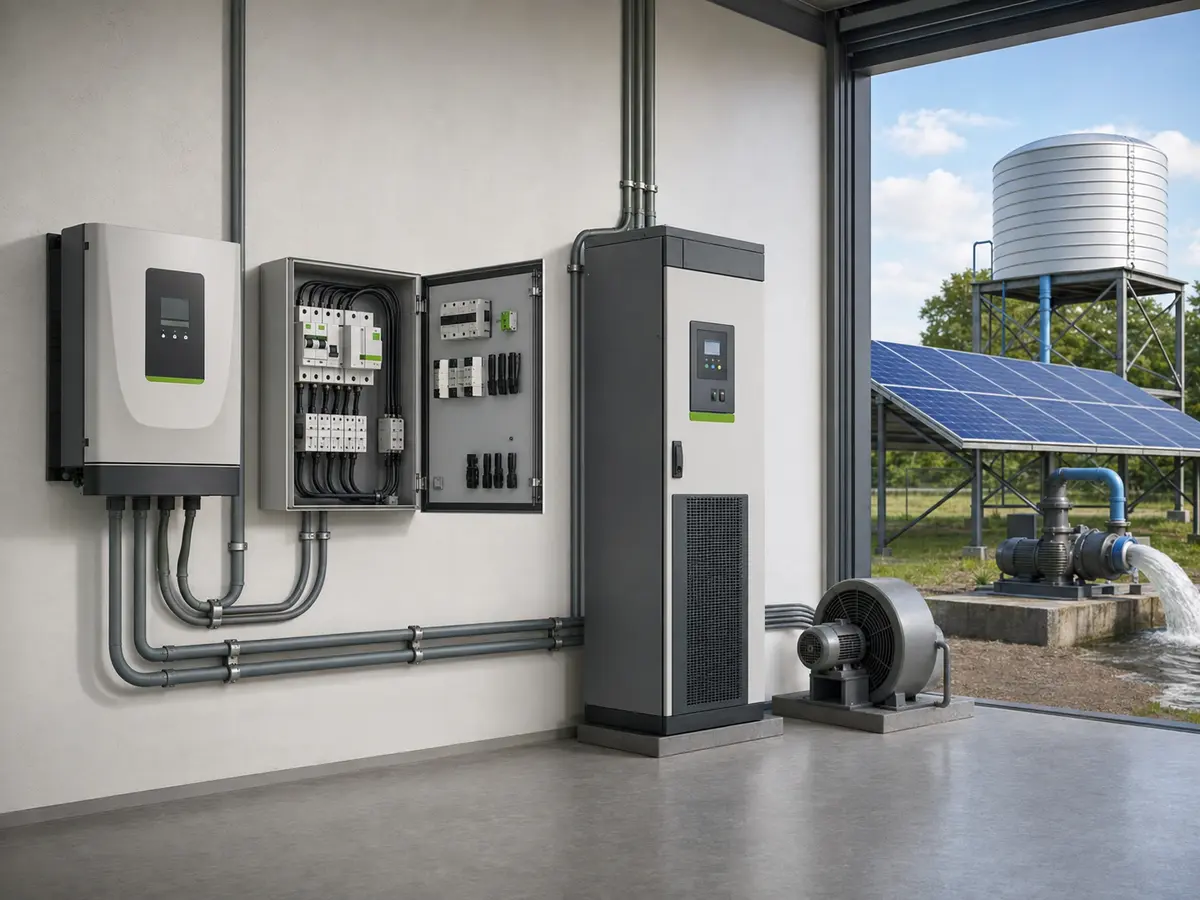
Solar water pumping projects are common in farms, wells, livestock areas, and places where grid power is weak or expensive. The discussion usually starts with the pump, not the inverter. Pump power, voltage, water head, flow demand, and solar panel plan decide whether the product direction is reasonable.
Irrigation buyers often care about reliability more than a long feature list. The pump may run for long hours during the dry season, and the installation site may be far from technical service. We usually check pump size, site conditions, installation habits, and the buyer’s preferred spare parts plan.
PV protection work usually involves combiner boxes, DC breakers, fuses, fuse holders, SPD, enclosures, and cable entry details. The project layout matters. String input, voltage, current, inverter position, and local installation practice can all affect the final configuration.
Pump and fan control is one of the most common VFD applications. Buyers may need speed regulation, soft start, pressure control, energy saving, or smoother equipment operation. Load type, input voltage, control signal, motor power, and cabinet environment should be reviewed before selection.
Industrial motor control may involve conveyors, compressors, workshop equipment, pumps, fans, or machine systems. The VFD selection depends on more than motor kW. Starting behavior, duty cycle, ambient temperature, control method, and protection expectation can change the product choice.
Distributor orders are planned differently from one-site projects. The buyer may need several ratings, clean labels, carton marks, catalogs, small mixed items, and repeatable packing. We normally discuss item mix, local sales habits, and reorder expectations before confirming the first order.
A solar pumping inquiry is much easier to check when the pump information is available. Buyers sometimes send only the water use, such as irrigation or well pumping. That is useful, but the technical check still needs pump power, voltage, phase, and water demand. If the pump is already installed, a clear nameplate photo is often the best first document.
The site also matters. A farm in a dry area may need long daily operation. A remote village water project may need simple maintenance and clear wiring. A livestock water supply project may care more about stable output than a complicated control setup. We do not treat all solar pumping orders as the same because the working conditions are not the same.
Pump details: power, voltage, phase, current if available, and nameplate photo.
Water demand: head, flow, daily water use, and operating hours.
Solar input: panel power, string plan, or available installation space.
Site condition: country, climate, distance from service, and installation habit.
Order purpose: one project, distributor supply, replacement order, or OEM package.
PV Protection Work
Combiner Box and DC Protection Details Should Match the PV Layout
PV protection products look simple when shown as single items, but the project layout controls the final choice. A combiner box needs to match the string number, current, voltage, protection method, enclosure requirement, and wiring route. A DC breaker or fuse holder also needs the right rating and installation position.
For early discussion, buyers do not need to send a complete engineering file. A simple string layout, expected system voltage, number of inputs, and basic site description can already help. If the project has local standard requirements or a preferred component brand, those details should be mentioned before quotation.
The inside layout changes when string quantity, current rating, or enclosure request changes.
DC Breaker
Voltage, current, pole number, breaking capacity, mounting method
Wrong rating can cause product mismatch and safety concerns in DC applications.
DC Fuse and Holder
Fuse size, voltage, current, holder type, quantity, spare part need
PV installers often need matching holders and spare fuses for maintenance.
DC SPD
System voltage, protection level, installation position, standard request
Surge protection must fit the system and local installation practice.
Enclosure and Wiring
Outdoor use, waterproof need, cable glands, terminals, labeling
Packing and installation are easier when the box layout is confirmed early.
For PV protection inquiries, one photo or sketch can be more useful than a long paragraph. String quantity, rated voltage, and protection preference are the first things we check.
Motor Control
VFD Inquiries Should Describe the Load, Not Only the Motor kW
A motor power rating is important, but it does not tell the whole story. A pump, a fan, a compressor, a conveyor, and a machine tool may all use a VFD, yet the working load and control method are different. Some applications need stable speed control. Some need soft start. Some need pressure control. Some are installed in a cabinet with limited cooling.
When buyers send a VFD inquiry, the best starting information is motor power, input voltage, phase, load type, control requirement, and working environment. If the VFD will replace an old unit, a photo of the old label and wiring can make the first reply much faster.
Pumps: water supply, pressure control, circulation, irrigation, and process use.
Fans: ventilation, exhaust, HVAC, workshop airflow, and energy saving projects.
Compressors: check load behavior and protection need before model discussion.
Machines: control signal, speed range, duty cycle, and cabinet conditions matter.
Replacement: old product photos and wiring labels help identify the right direction.
Distributor and OEM Programs
Stock Orders Need a Different Kind of Planning
A project order ends when the site requirement is met. A distributor order continues after the first shipment. The buyer needs item names that sales staff can understand, labels that warehouse staff can identify, cartons that survive handling, and documents that help local customers compare products. This is why we treat distributor and OEM programs as more than a price list.
Range Selection
It is often better to start with a controlled range instead of too many models. Common ratings can be tested first, then expanded after the buyer sees local demand.
Label Consistency
Product labels, carton marks, and model names should stay consistent across repeat orders. This helps warehouse receiving and local resale.
Document Files
Catalogs, datasheets, and manuals should match the product version. Old files should not be used for serious import or channel listing work without checking.
Mixed Orders
Mixed product shipments are useful for distributors, but packing and lead time should be checked item by item before the order is confirmed.
These questions come up often when buyers contact us with an application instead of a fixed product list.
What project information helps UFELE review a solar pumping inquiry?
Pump power, pump voltage, phase, water head, flow requirement, solar panel plan, site country, and pump nameplate are useful. If the pump is already installed, a clear photo of the nameplate is usually the best first file.
Can UFELE support PV protection project discussions?
Yes. For PV protection, send string quantity, system voltage, current, preferred protection parts, enclosure request, and destination market. If you have a simple PV layout drawing, include it with the inquiry.
Is a solution inquiry the same as a final order?
No. A solution inquiry helps us understand the application and product direction. Final order details still need to be checked by product model, datasheet, packing method, document requirement, and quantity.
Can one project include several product categories?
Yes. A solar pumping project may involve inverters, protection parts, cables, and accessories. A PV protection order may include combiner boxes, breakers, fuse holders, SPD, and related DC components.
Can UFELE help if the buyer only has a site photo?
A site photo is a useful starting point. We may still ask for ratings, voltage, power, current, or string details before quoting, but photos often help us understand the working situation faster.
Send the Application, Even If the Product List Is Not Final
Share the job site, pump data, PV layout, motor load, or distributor stock plan. We will review the direction first, then move into product range, datasheets, packing, and quotation details.