Dry-Run and Underload Logic
The controller can detect underload, issue an A-LL alarm and stop or sleep according to the configured delay and reset settings. Commissioning should verify the threshold against the actual pump load.
UFELE Electric — Solar Pumping, Industrial Drives and PV Protection
Email: sale@ufele.com | B2B Supply and OEM Orders

UFELE solar pump inverters use solar energy to run an AC pump for agricultural irrigation, wells, livestock watering, reservoir filling, and off-grid water supply. Each solar pump system can be matched with an indoor IP20 model, an outdoor IP65 model, a compact drive, or a control-panel optimized series.
The first selection check should start from the pump. Pump power, voltage, phase, water head, flow demand, and solar panel input decide which inverter configuration fits the project. For replacement projects, a clear pump nameplate photo and old control cabinet photo can shorten the model review.
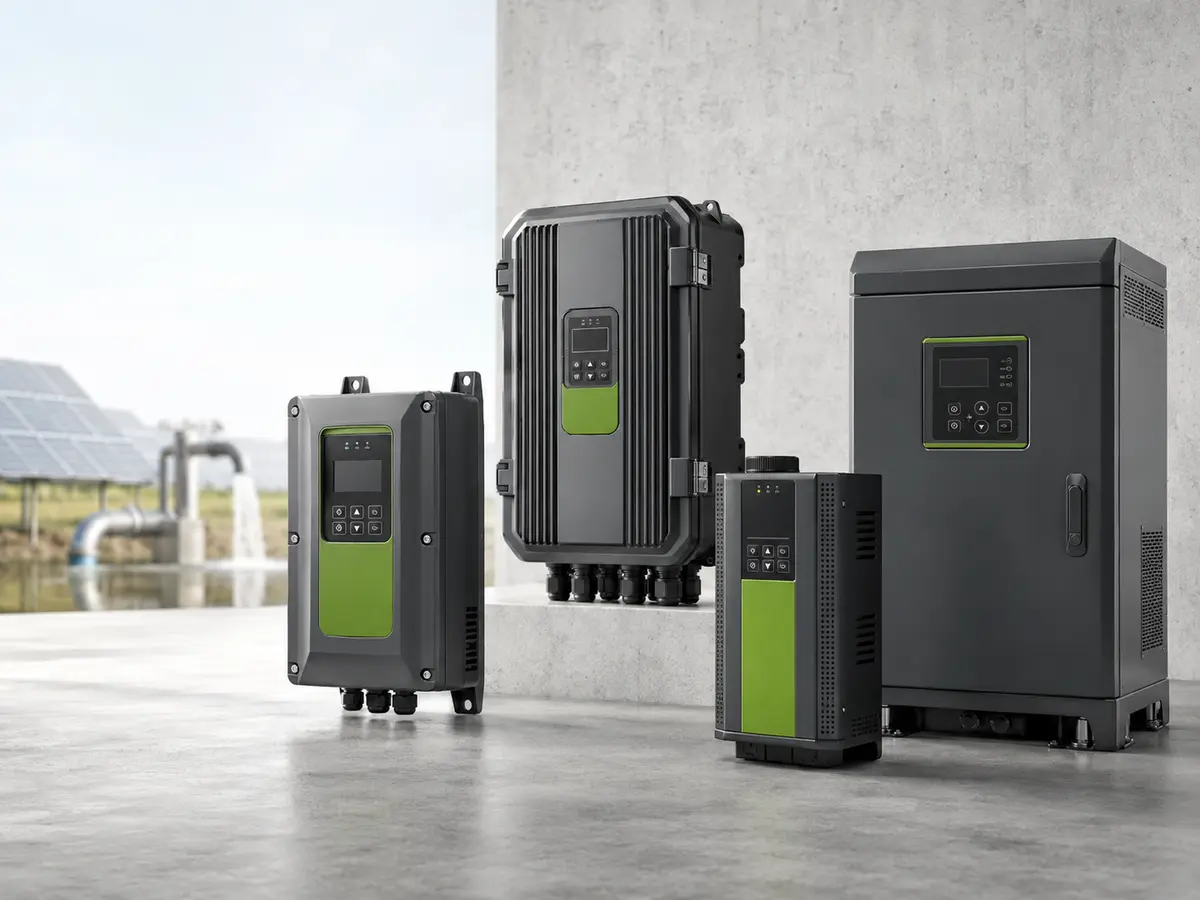
MPPT control, DC/AC input options, AC pump support, and IP20/IP65 enclosure choices for different solar water pumping projects.
The electrical suffix matters more than the front-panel style. The values below come from the December 2025 FU9000SI user manual currently published by USFULL. Always match the suffix on the ordered nameplate and confirm the latest file before installation.
| Electrical suffix | AC input | AC output | Maximum DC | Start-up / lowest working | Recommended DC / MPP reference |
|---|---|---|---|---|---|
| -SS2 | 1-phase, 220–264 V | 1-phase, 220–240 V | 450 V | 200 V / 150 V | 200–450 V / 330 V |
| -S2 | 1-phase, 220–264 V | 3-phase, 220–240 V | 450 V | 200 V / 150 V | 200–450 V / 330 V |
| -4 / -9 | 3-phase, 380–484 V | 3-phase, 380–480 V | 800 V | 300 V / 250 V | 300–750 V / 550 V |
Use rated output current—not motor kW alone—when checking pump compatibility. The table shows commonly requested sizes from the 2026 manual; the downloadable manual continues the high-voltage range through 630 kW.
| Model | Output power | Rated input current | Rated output current |
|---|---|---|---|
| FU9000SI-0R7G-SS2 | 0.75 kW | 13.5 A | 7.2 A |
| FU9000SI-1R5G-SS2 | 1.5 kW | 18 A | 10.2 A |
| FU9000SI-2R2G-SS2 | 2.2 kW | 26 A | 14 A |
| FU9000SI-004G-SS2 | 4 kW | 42 A | 23 A |
| FU9000SI-004G-9 | 4 kW | 16 A | 9.5 A |
| FU9000SI-5R5G-9 | 5.5 kW | 27 A | 14 A |
| FU9000SI-7R5G-9 | 7.5 kW | 32 A | 18.5 A |
| FU9000SI-011G-9 | 11 kW | 38 A | 25 A |
| FU9000SI-015G-9 | 15 kW | 45 A | 32 A |
The controller can detect underload, issue an A-LL alarm and stop or sleep according to the configured delay and reset settings. Commissioning should verify the threshold against the actual pump load.
S2 is assigned to the high-water switch and S3 to the low-water switch by default. Full-water and empty-water delays prevent immediate cycling when a contact changes state.
The manual specifies a two-wire, half-duplex RS485 physical layer using Modbus RTU. Baud rate, address and data settings must match across all devices on the network.
The keypad exposes frequency, acceleration/deceleration, motor, protection, PV/MPPT and communication groups. Parameters should be changed from the manual for the exact suffix—not copied from another site.
P15.32 supports automatic selection, forced mains input or forced PV input. External switching and anti-reverse arrangements must follow the wiring instructions and project design.
USFULL publishes a 1–3 year warranty period, but the applicable term depends on the product and order agreement. The available FU9000SI CE attestation expired on 29 July 2026; request a current certificate before using it for compliance work.
Solar pump inverters are normally selected when water pumping needs to reduce dependence on diesel generators, unstable grid power, or long-distance electrical infrastructure. Unlike general solar inverters used for building loads, a solar pump inverter produces controlled frequency and voltage for driving water pumps while adjusting speed according to available sunlight.
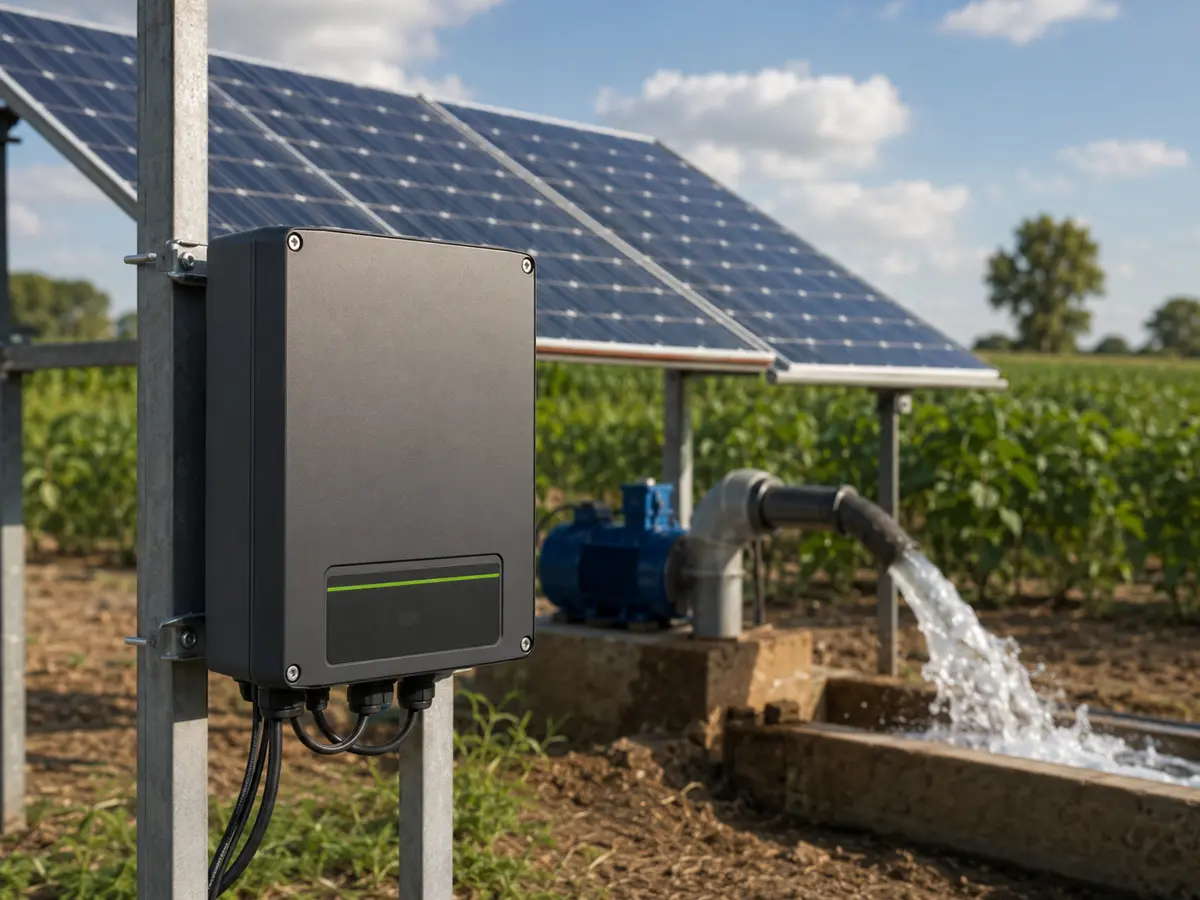
An MPPT inverter follows the available solar energy during the day to optimize power use. When sunlight changes, the controller adjusts pump speed and power output instead of treating the PV array as a fixed power source.

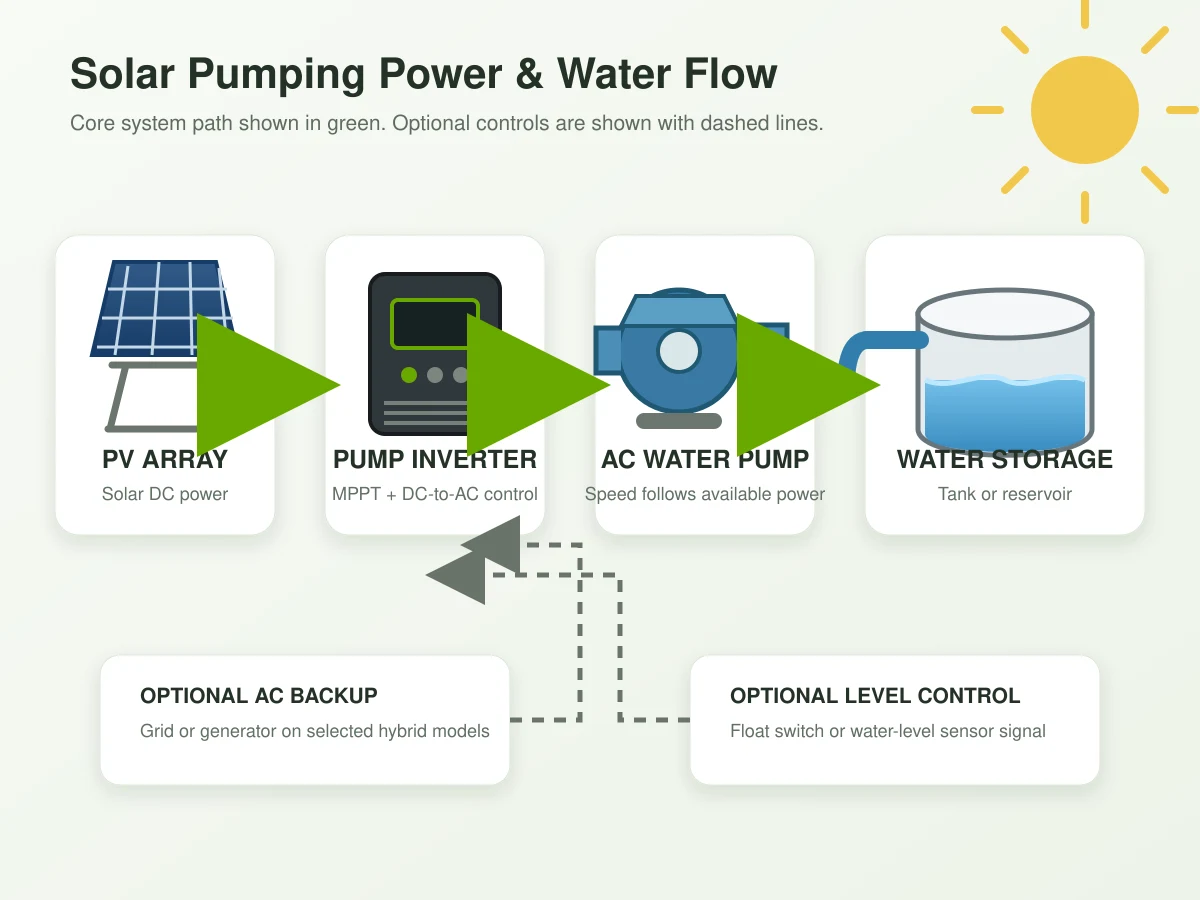
Solar DC input is used for daytime pumping. Grid power or a generator can serve as a backup power supply when the project needs operation during weak sunlight, cloudy weather, or periods of higher water demand.

Automatic start-stop logic and protection functions respond to changing solar conditions. A float switch or water level sensor can stop the pump when a tank is full and restart operation when the water level falls.
FU9000SI covers 220 V and 380 V pump configurations. Start with the 220 V or 380 V electrical configuration, then confirm pump current, phase, PV voltage, control functions, frame size, and installation conditions.
Review MPPT control, PV and mains selection, water-level inputs, pump protection, RS485, optional GPRS monitoring, and installation requirements.
Compare motor kW, HP, rated current, 220 V and 380 V groups, PV string checks, derating, cables, and protective devices.
Send the pump nameplate and panel data to confirm the electrical suffix, output current, frame, dimensions, and available options.
These references come from previously published USFULL project records. Customer names, exact sites and private drawings are not disclosed; the country, application and recorded equipment details remain available for technical comparison.
The recorded project used an FU9000SI-2.2KW-SS2 solar pump inverter for agricultural irrigation and reported water delivery of up to 100,000 liters per day under the documented site conditions.
The published configuration paired a 37 kW / 40 HP, 380 V solar pump inverter with a 30 kW submersible pump and a six-string PV combiner box.
This attestation lists six FU9000SI-SS2 models and references EN 62109-1, EN 62109-2 and EMC standards. It was issued on 29 July 2021 and expired on 29 July 2026, so it is shown as historical evidence—not as a current compliance claim.
Review certificate status and request the current model file
In a solar pump system, PV modules provide DC electricity. The inverter uses MPPT control to optimize power capture, then converts energy from solar panels into AC power for the motor. In practical terms, these units invert solar DC into variable-frequency AC, allowing a correctly matched AC pump to operate without batteries during suitable sunlight.
Solar power generation changes with irradiance, module temperature, shading, and time of day. The inverter regulates frequency and power output so pump operation follows the available input. This affects achievable flow rates: weaker sunlight normally means lower motor speed and reduced water flow rather than a fixed full-speed output.
External controls can manage unattended water supply. A low-water probe can stop the pump to protect a borehole, while a tank float switch can stop filling at the high water level. Hybrid models can transfer to an approved AC power supply when grid power or generator backup is part of the design.
This USFULL product video shows the solar pump inverter display board and front-panel controls. Use it as an interface overview; parameter values still need to follow the exact model manual, motor nameplate and pumping duty.
Solar pump inverters are used wherever water pumping needs a more independent power source. They can be cost effective where extending grid power or operating diesel generators is expensive, but selection still depends on water head, required flow rates, pump type, solar resource, and backup-power needs.

Used for farmland water supply where daytime pumping, seasonal operation, and reduced diesel use matter.

Suitable for groundwater extraction in remote sites where head, pump voltage, and stable operation need careful review.

Used in farms and grazing areas where storage tanks can balance water supply through daytime pumping.

Useful for moving water into storage during sunlight hours so water can be used later when pumping stops.
A solar water pump inverter cannot be selected by motor kW alone. The pump voltage, phase and rated current, required head and flow, and available PV array data determine the inverter rating and solar input range.
Solar Pump Sizing Guide
Solar pump inverter buyers may need more than a unit price. Distributor orders, pump company programs, and OEM supply plans often need catalogs, datasheets, manuals, product photos, packing details, and label discussion.
Ask for current datasheets and manuals after the suitable product series is clear. Documents should match the exact model and product version being discussed.
Packing should be confirmed by order type. Distributor orders, project batches, and mixed shipments may need different carton marks and photo checks.
OEM support can be reviewed by quantity, label position, logo file, carton mark, manual request, and target market before production.
These questions are common before buyers request a solar pumping quotation.
Send pump power, voltage, phase, rated current if available, water head, flow demand, solar panel plan, site country, quantity, and whether the pump is new or already installed.
Many solar pumping systems run directly from solar panels during the day without batteries. The final configuration depends on pump demand, sunlight conditions, and whether backup power is required.
IP20 series are normally used indoors or inside cabinets. IP65 series are designed for outdoor installation where better enclosure protection is needed.
Solar pump inverters are commonly discussed for AC submersible pumps and surface pumps. The pump voltage, phase, and power should be checked before model selection.
OEM support can be discussed according to model series, quantity, label position, carton mark, manual request, and target market. OEM details should be confirmed before production.
Attach the pump nameplate, water head, flow demand, PV panel plan, site country, quantity, and packing request. UFELE will review the suitable product series before preparing quotation details.