
Select a Solar Pump Inverter by Motor Power and Current
Start with the pump nameplate. Match voltage and phase first. Then check rated current, hydraulic duty, PV voltage, panel count, temperature, cable length and installation conditions. Motor power alone cannot confirm the drive.
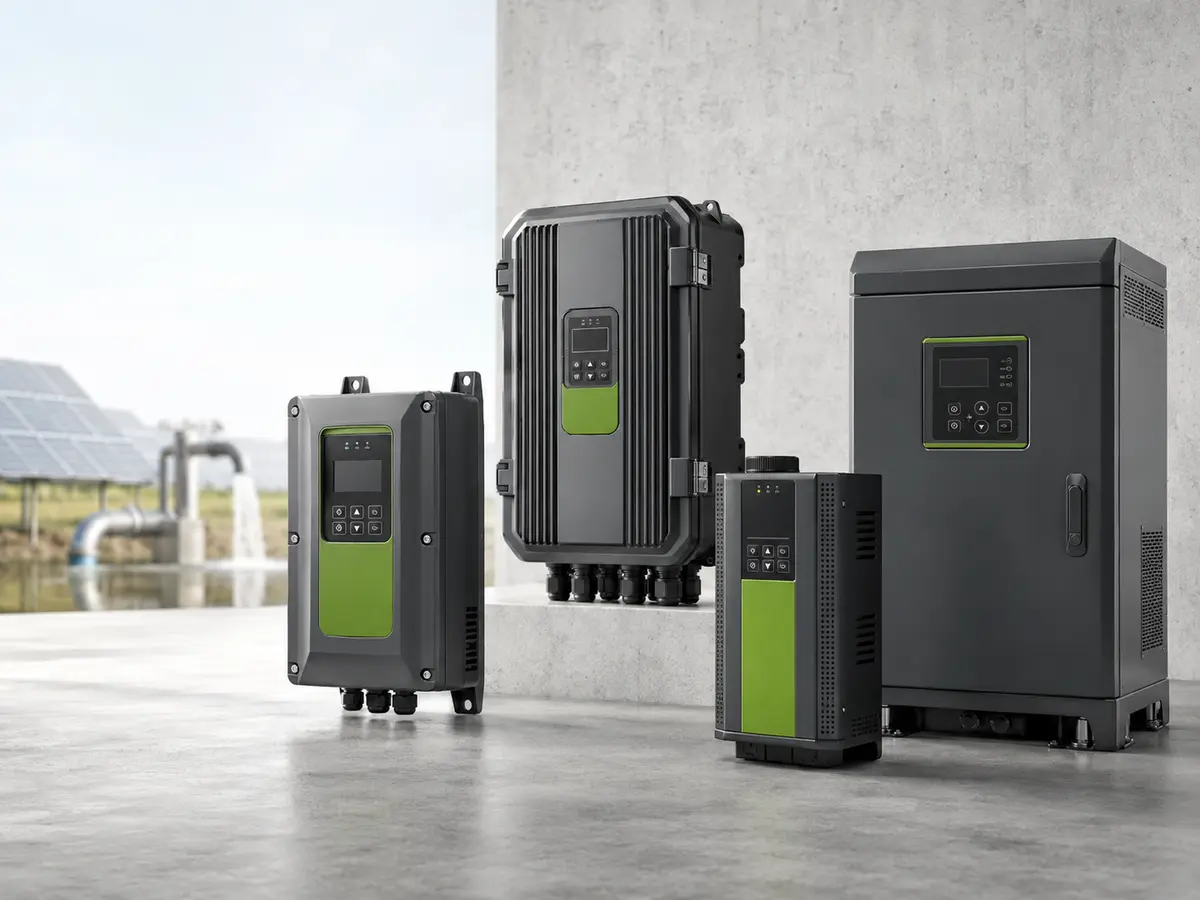
Selection Order
1. Read the pump
Record rated kW, HP, voltage, phase, current, frequency, speed, duty, and capacitor arrangement for a single-phase motor.
2. Check the water duty
Record total dynamic head, target flow, well depth, pipe length, pipe size, and daily water requirement.
3. Build the PV array
Use panel Voc, Vmp, power, and temperature coefficients. Confirm series voltage in cold and hot conditions before choosing parallel strings.
Motor Power Reference
HP values are a conversion reference, not a model choice. The pump nameplate current remains the stronger electrical check.
| Motor kW | Approx. HP | Typical first review | Required confirmation |
|---|---|---|---|
| 0.75 | 1 | 220 V or 380 V configuration | Phase, rated current, starting condition |
| 1.5 | 2 | Small well or irrigation pump | Head, flow, current, panel voltage |
| 2.2 | 3 | 220 V or 380 V configuration | Single- or three-phase output |
| 4 | 5.5 | 220 V or 380 V, subject to suffix | Exact suffix and rated output current |
| 5.5 | 7.5 | 220 V or 380 V, subject to suffix | Exact model and rated output current |
| 7.5 | 10 | 380 V group | Motor current and hydraulic duty |
| 11 | 15 | 380 V group | Breaker, cable, array, enclosure |
| 15 | 20 | 380 V group | Current, head, flow, site temperature |
| 22 | 30 | 380 V group; frame change may apply | Current drawing and dimensions |
| 37 | 50 | 380 V high-power review | Protection, cable, reactor, ventilation |
| 75 | 100 | 380 V high-power review | Panel design and system study |
220 V or 380 V?
| Check | 220 V group | 380 V group |
|---|---|---|
| Pump | Single- or three-phase 220 V by suffix | Three-phase 380–480 V |
| Maximum PV input | 450 V | 800 V |
| Start voltage | 200 V | 300 V |
| Minimum working voltage | 150 V | 250 V |
| Recommended DC range | 200–450 V | 300–750 V |
| MPP reference | 330 V | 550 V |
PV String Check
Modules connected in series add voltage. Parallel strings add current and power. Calculate string Voc at the lowest site temperature. Then check Vmp on hot days to make sure the array stays inside the working range.
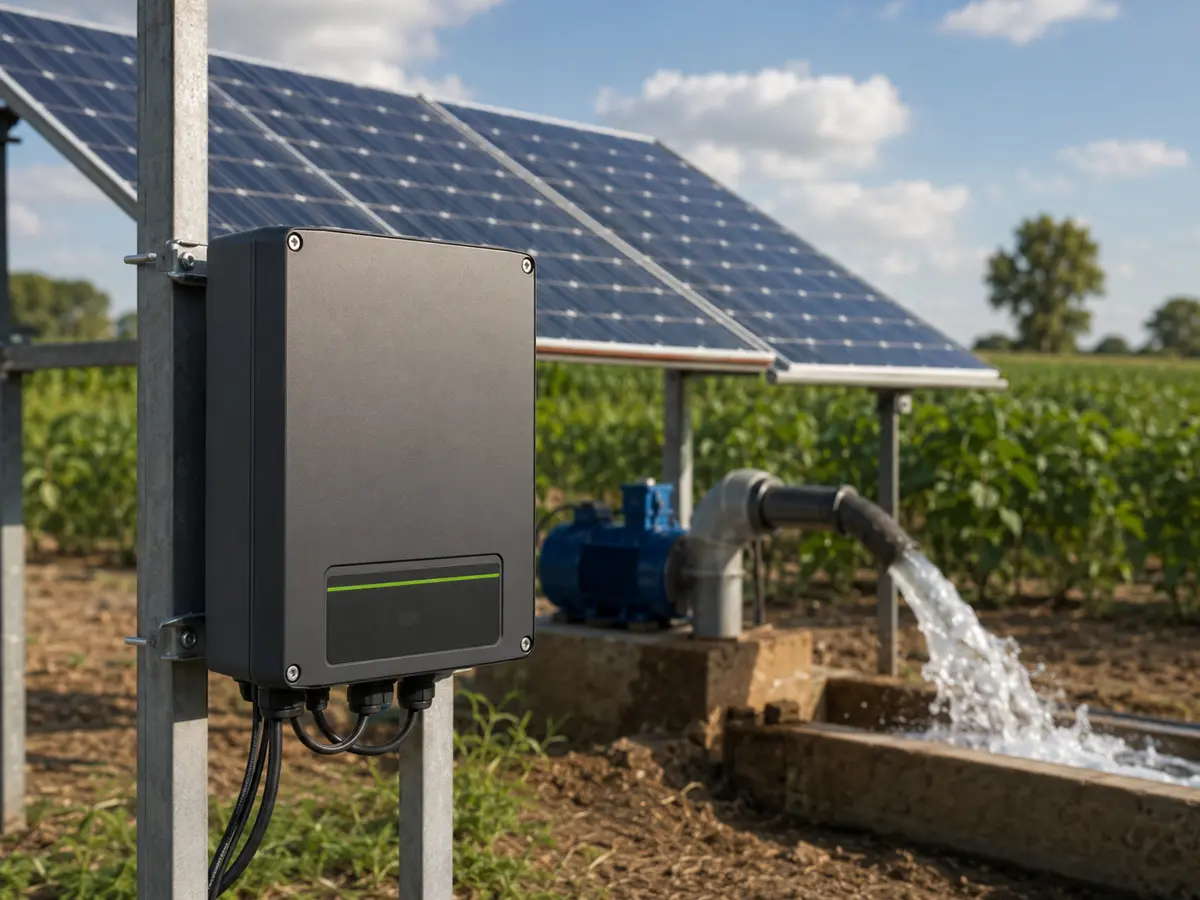
550 W modules
Do not use one fixed panel count. Read the module Voc and Vmp. Different 550 W panels can have different voltages and temperature coefficients.
300 W modules
Lower module power usually means more modules for the same array power. Voltage still depends on the exact module, not its watt rating.
Array power
Size against the pump duty and local solar resource. Extra panel power may help in weak light, but voltage and drive limits still apply.
Worked Selection Example
A 7.5 kW, 380 V, three-phase pump points toward the 380 V FU9000SI group. The engineer next compares the pump rated current with the drive output current. The PV string must stay below 800 V at the coldest site temperature. Its hot Vmp should remain within the useful operating range around the 550 V reference. Head, flow, cable length, ambient temperature, and protective devices still need review.
This example narrows the model family. It does not produce a final order code without the motor current and panel datasheet.
Derating, Cable and Protection Checks
- Derate for high ambient temperature, altitude, restricted ventilation, and settings that increase drive heat.
- Select motor and PV cables from current, length, voltage drop, installation method, and local rules.
- Coordinate PV isolators, fuses, surge protection, AC breakers, contactors, and grounding.
- Use the specified external switching circuit for automatic PV/mains selection.
- Review output reactors or filters when motor cable length requires them.
Solar Pump Inverter Selection FAQ
Can I select the inverter from motor kW alone?
No. Match the pump voltage, phase and rated current first. Then check head, flow, cable length and site conditions.
How do I choose between 220 V and 380 V?
Use the pump nameplate voltage and phase. The inverter output must match the motor, and the PV array must stay inside the DC range for that voltage class.
How many solar panels do I need?
Use the module Voc, Vmp, temperature coefficients and the lowest site temperature. Panel wattage alone cannot determine the series and parallel layout.
When does the inverter need derating?
Check derating at high ambient temperature, elevated sites and restricted ventilation. Long motor cables can also require an output reactor or filter.
Send These Details for a Model Review
Send the pump nameplate, rated current, voltage, phase, head, flow, well depth, pipe data, panel datasheet, panel count, site temperature, altitude, cable length and control requirements.