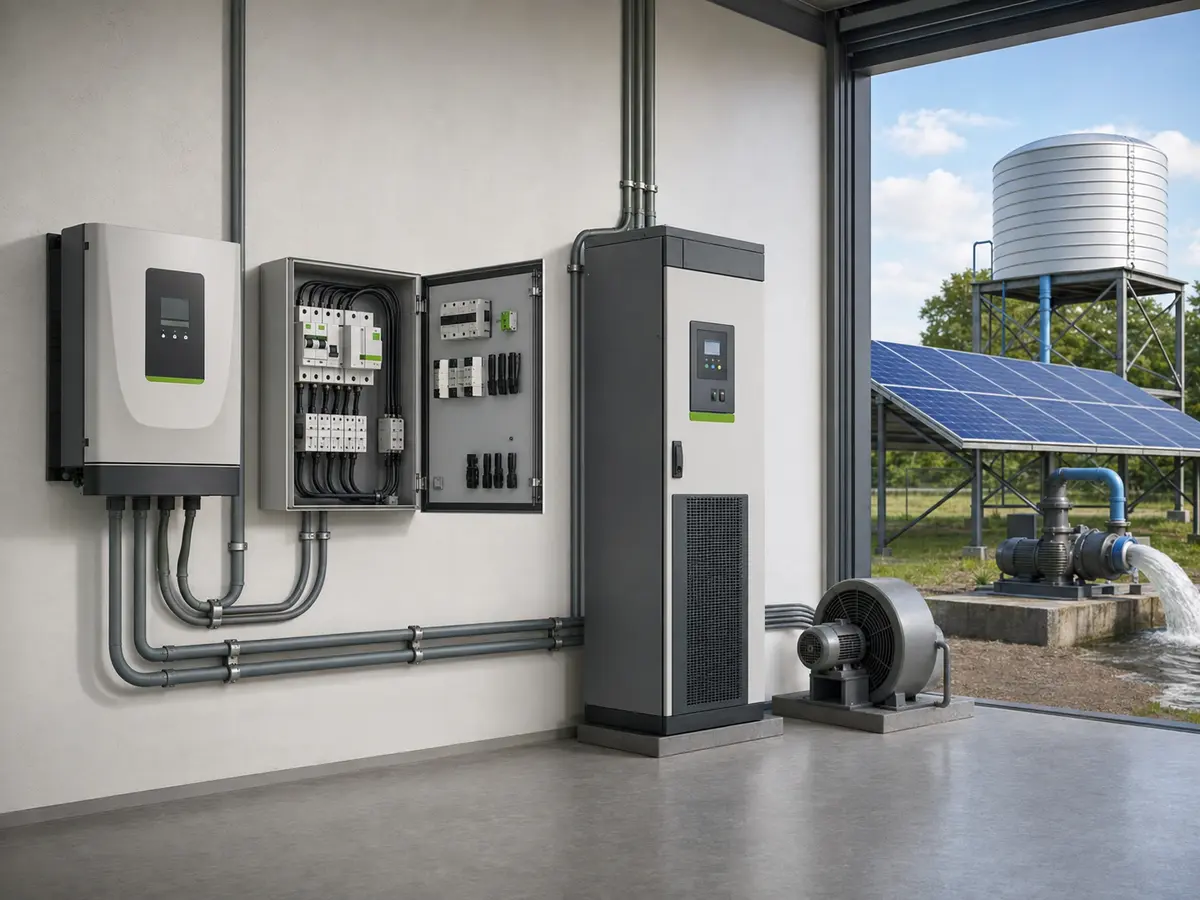
Solar Pumping, PV Protection and Motor Control Applications
Many electrical product inquiries begin with a working problem, not a fixed product list. A farm needs to move water from a deep well. A solar contractor needs DC protection before the inverter. A factory wants to control pump or fan speed. A distributor needs a stock range that local installers can reorder without confusion.
UFELE handles these discussions by starting from the application. Once the job is clear, the product group, rating, packing, documents, and order plan become much easier to confirm. From our electrical supply experience, these application conditions most often determine the correct product family before final model selection.
A few site details can prevent a wrong quotation. Pump data, PV string layout, motor load, and packing needs are often more useful than a short price request.
Solution Routes
Choose a Solution by the Project Goal
Each route begins with a site problem and a measurable operating target. It then organizes the application conditions, system configuration, technical limits, commissioning work, and relevant product categories. Product specifications remain on the linked category pages.
Solar Water Pumping
Move a required volume of water from a well, reservoir, or surface source when grid power is unavailable or unreliable. The solution covers water demand, total dynamic head, seasonal solar input, storage, backup power, controls, and commissioning.
Deliver water within a limited irrigation window while crop demand, source level, weather, and field pressure change. The solution connects the hydraulic duty with the energy source, operating schedule, control method, maintenance access, and spare-parts plan.
Protect and isolate the DC path from PV strings to the inverter. The solution maps voltage, current, parallel circuits, fault paths, surge exposure, earthing, switching points, enclosure conditions, and maintenance access before product categories are assigned.
Maintain pressure, flow, or airflow as demand changes. The solution defines the process target, feedback signal, operating range, PID response, sleep and restart logic, interlocks, bypass, alarms, and acceptance tests.
Coordinate motors, sensors, PLC commands, operator controls, interlocks, braking, and fault responses for conveyors, compressors, machines, and process equipment. The solution turns the operating sequence into a reviewable control and commissioning plan.
Build a repeatable range for local installers, panel builders, or resellers. The solution covers market demand, rating mix, model naming, private labels, documents, carton identification, sample approval, reorder control, and technical support boundaries.
Plan Water Delivery Across the Available Solar Window
A remote farm may need a fixed volume of water each day while sunlight and borehole level change through the season. The system review converts daily demand and useful pumping hours into a target flow. It then adds static lift, drawdown, discharge height, pipe loss, and outlet pressure to establish total dynamic head.
The proposed arrangement may include the pump, solar pump inverter, PV array, DC isolation, level switches, storage tank, and backup supply. The responsible engineer confirms the hydraulic calculation, PV string voltage, cables, grounding, and local protection requirements.
Operating target: daily water volume, irrigation schedule, flow, and delivery pressure.
Hydraulic inputs: water level, drawdown, discharge height, pipe length, and fittings.
Energy inputs: seasonal irradiation, array area, backup source, and operating hours.
Control sequence: tank level, dry-run response, restart logic, and remote signals.
Commissioning record: pump direction, current, frequency, flow, head, and alarms.
Scenario 02 · PV DC Distribution
Coordinate Protection from PV Strings to the Inverter
A commercial PV array needs a traceable DC path between each string and the inverter input. The system drawing records string count, maximum cold-weather open-circuit voltage, short-circuit current, cable route, inverter inputs, earthing, enclosure location, and maintenance access.
The protection plan assigns a role to each fuse, breaker, SPD, and isolator. It records the voltage platform, poles, interruption duty, surge protection arrangement, and enclosure. Local regulations and the project protection study govern the final design.
Design Stage
Required Project Input
Expected Output
Map the array
Module data, modules per string, parallel strings, inverter MPPT inputs
Maximum voltage and current assumptions
Define protection roles
Reverse-current risk, fault level, isolation points, SPD location and earthing
Protection concept and single-line diagram
Plan the enclosure
Outdoor exposure, ambient temperature, material, glands, terminals and monitoring
Combiner box layout and cable-entry plan
Commission the circuit
Polarity, torque, insulation, earthing, labels and measured string values
Signed inspection and test record
Prepare maintenance
Access, shutdown method, spare parts, inspection interval and fault reporting
Site maintenance checklist
Product pages provide component ratings after the project team defines each protection role.
Scenario 03 · Multi-Pump Pressure Control
Define the Control Sequence Before Commissioning
A multi-pump station may use one variable-speed pump with fixed-speed auxiliaries, or separate drives under PLC control. The operating brief states the pressure target, demand range, duty rotation, sensor signal, start sequence, sleep condition, and response after a pump or sensor fault.
The control design can include PID regulation, duty and standby rotation, dry-run protection, bypass, alarms, and safety interlocks. Commissioning records capture motor data, I/O mapping, ramp times, setpoints, parameter backups, and measured pressure response.
Process target: pressure range, response time, minimum flow, and operating schedule.
Control logic: lead and lag sequence, PID, sleep, restart, and manual operation.
Safety logic: interlocks, overload response, dry-run protection, and emergency stop.
Acceptance: test each operating mode and record settings, alarms, and results.
Solution Deliverables
Keep System Decisions Visible from Review to Startup
A useful solution record explains the operating target, known inputs, assumptions, equipment roles, open risks, commissioning sequence, and acceptance checks. It supports product matching without presenting a component quotation as approval of the complete site design.
Input Record
Record source, load, environment, schedule, measured values, drawings, and every assumption that still needs confirmation.
System Diagram
Show power flow, protection, isolation, controls, sensors, grounding, equipment boundaries, and responsibility for local design.
Commissioning Plan
List wiring checks, parameters, control modes, interlocks, alarms, measured results, and acceptance criteria.
Change Record
Update drawings and parameter backups after approved field changes so maintenance teams can recover the commissioned condition.
These questions come up often when buyers contact us with an application instead of a fixed product list.
What project information should I provide?
Provide the operating goal, site location, power source, load or pump data, environmental conditions, control sequence, available drawings and the values that still need confirmation.
Can UFELE review a system drawing?
Yes. UFELE can review a single-line diagram, pumping layout or control drawing for product compatibility and missing application inputs. The responsible engineer retains approval of the complete site design.
What information is needed for a solar pumping review?
Send daily water demand, required flow, static and dynamic head, pipe details, pump nameplate, seasonal solar conditions, storage plan, control signals and any backup supply.
Can UFELE review an existing control system?
Yes. Provide the current electrical drawing, motor and load data, controller model, parameter backup, I/O list, alarm history and a clear description of the required change.
What happens after the initial application review?
UFELE lists missing inputs, defines equipment roles, identifies relevant product categories and records open technical risks. Product models and quotations follow after the required conditions are confirmed.
Send the Application, Even If the Product List Is Not Final
Share the job site, pump data, PV layout, motor load, or control sequence. UFELE reviews the application inputs before matching equipment, documents, and quotation details.