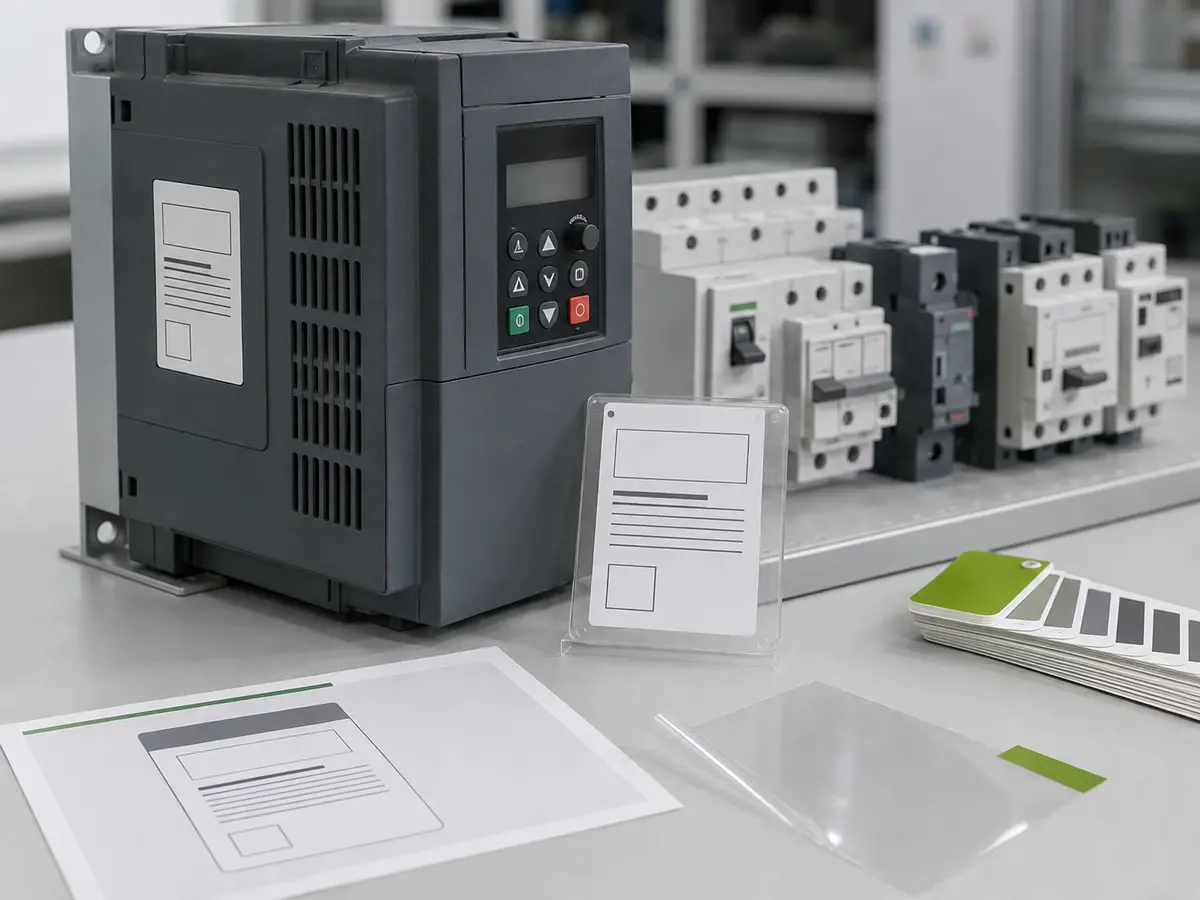
Product Labeling
Labels may include the approved brand, model code, electrical rating, barcode, and market language. Mandatory rating, warning, certification, and traceability information must remain accurate and visible.
UFELE Electric — Solar Pumping, Industrial Drives and PV Protection
Email: sale@ufele.com | B2B Supply and OEM Orders
OEM electrical product supply involves more than placing a logo on a housing. The product model, rating label, mandatory marks, carton, manual, barcode, artwork version, and approval record must describe the same item. If a team leaves these details until the end of production, a small file error can lead to reprinting, repacking, or a delayed shipment.
UFELE works with electrical distributors, solar product sellers, control cabinet builders, and private label buyers. We review the product selection, customization method, minimum order basis, sample plan, artwork, packaging, and documents before production. This gives the buyer one approved order file for the product, package, and repeat order.
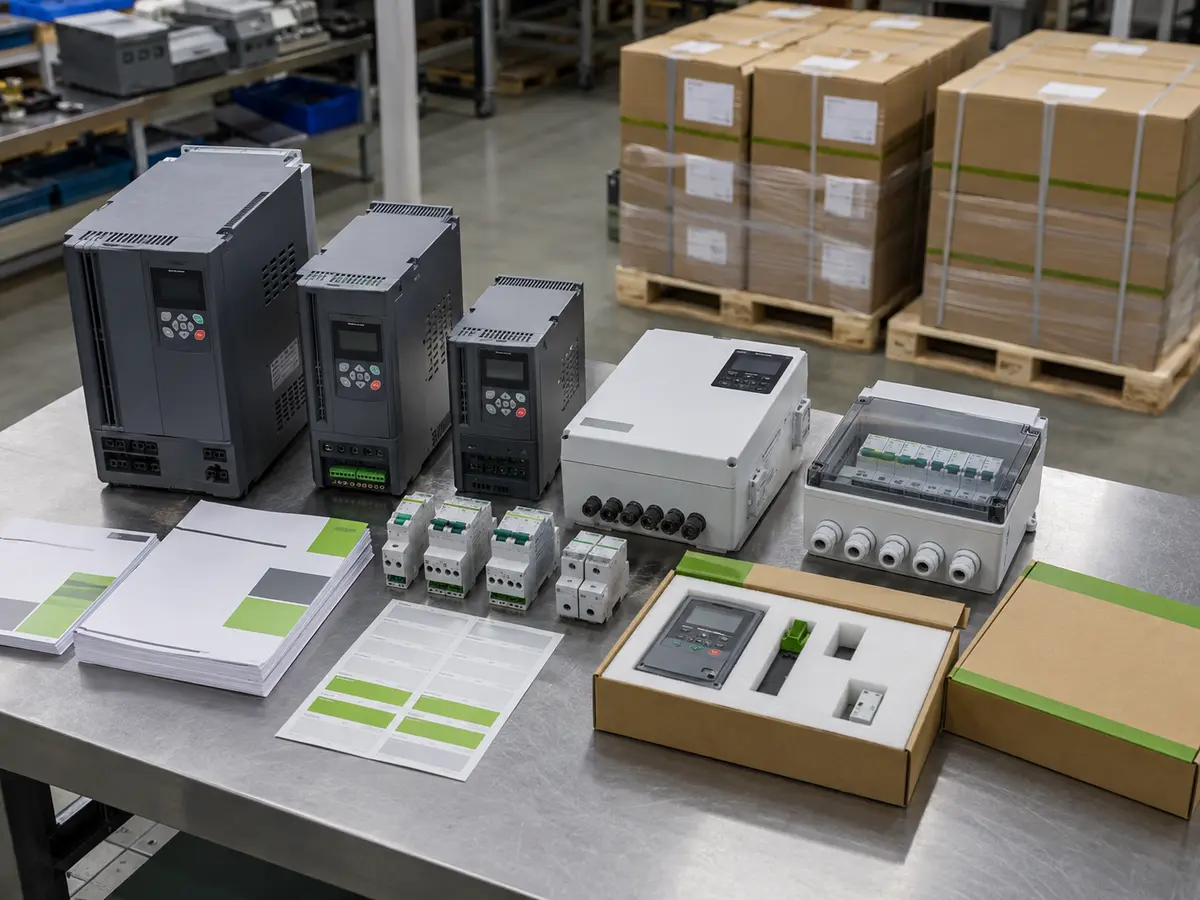
Product labels, carton marks, manuals, and packing files should be checked before the goods reach the packing line.
UFELE can review private label requirements for selected solar pump inverters, variable frequency drives, PV combiner boxes, solar DC protection products, and low-voltage electrical products. The available method depends on the exact model, enclosure, label area, order quantity, destination market, and compliance file. We confirm feasibility before accepting artwork or printed material.
Labels may include the approved brand, model code, electrical rating, barcode, and market language. Mandatory rating, warning, certification, and traceability information must remain accurate and visible.
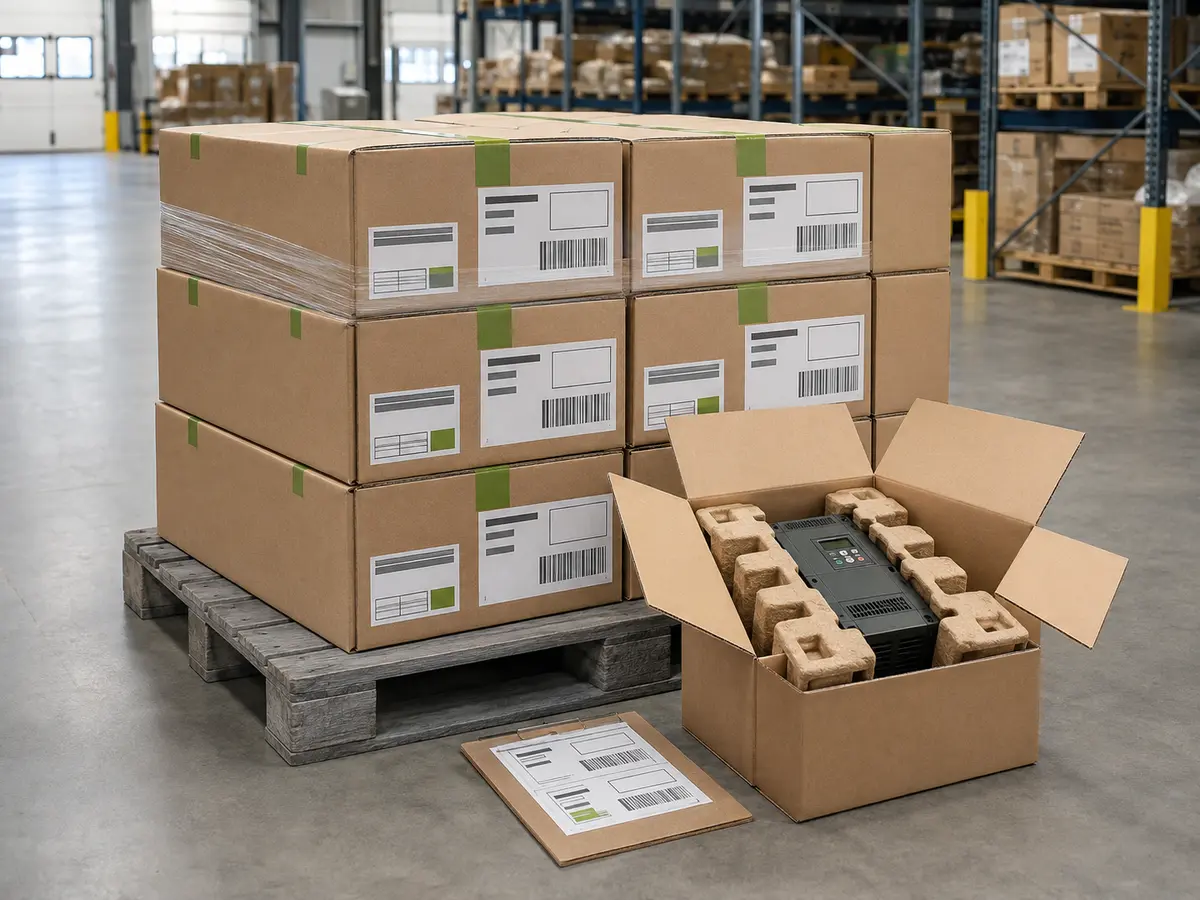
Carton marks help warehouse receiving and local resale. Buyers may need brand name, item code, quantity, gross weight, carton number, destination mark, or barcode label. These details should be confirmed before packing.
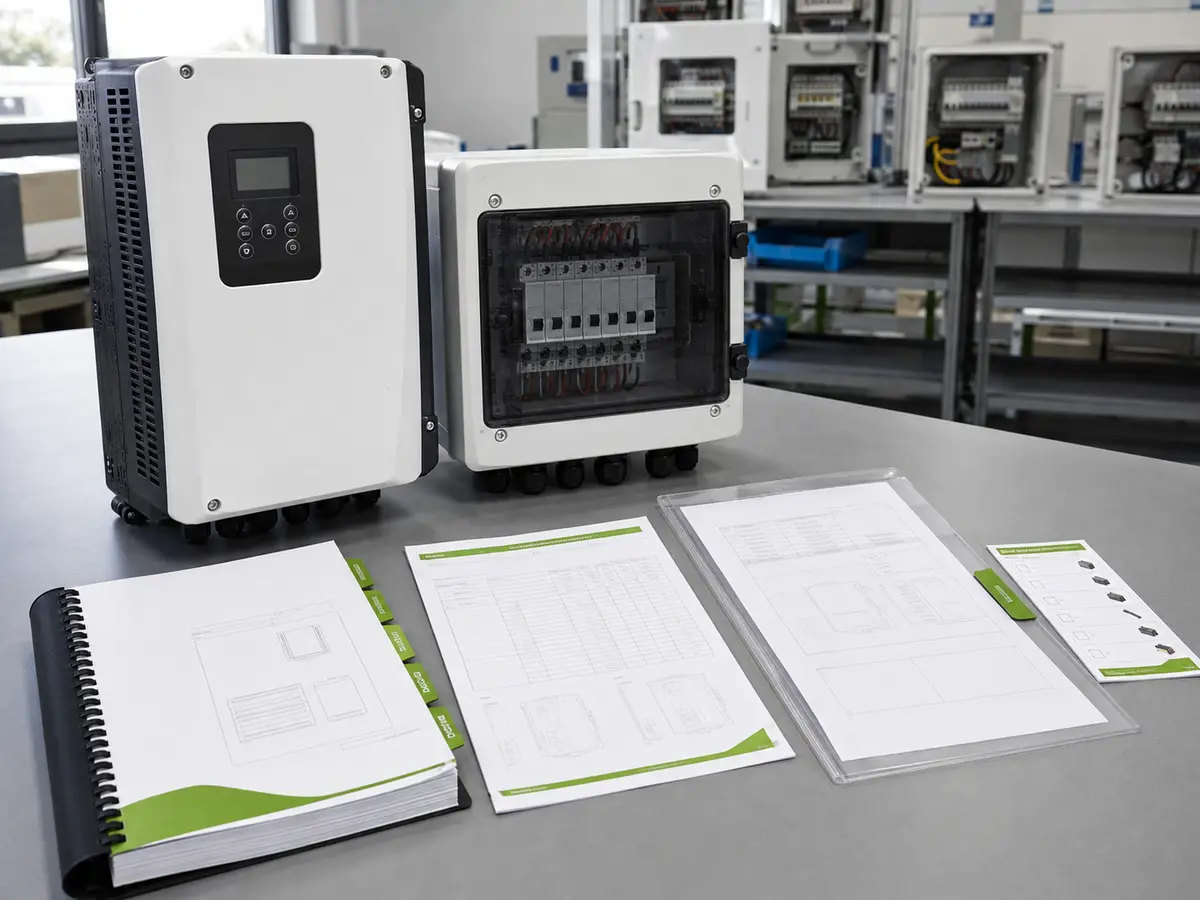
Manuals and datasheets should match the product version being shipped. For private label orders, buyers often need PDF files that local sales teams can use without rewriting basic product information.
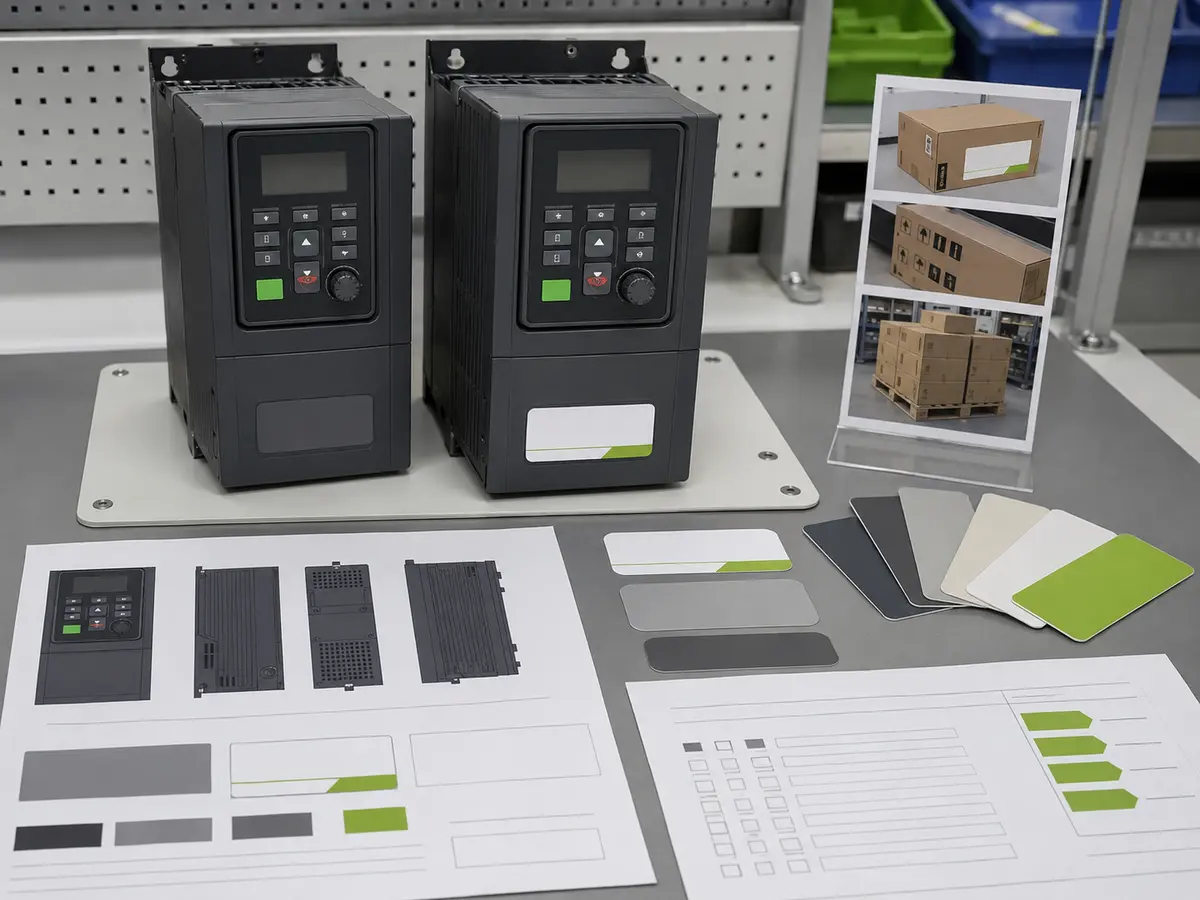
The approval method may use a standard sample, artwork proof, labeled sample, or detailed photos. The buyer should confirm the agreed record in writing before bulk production starts.
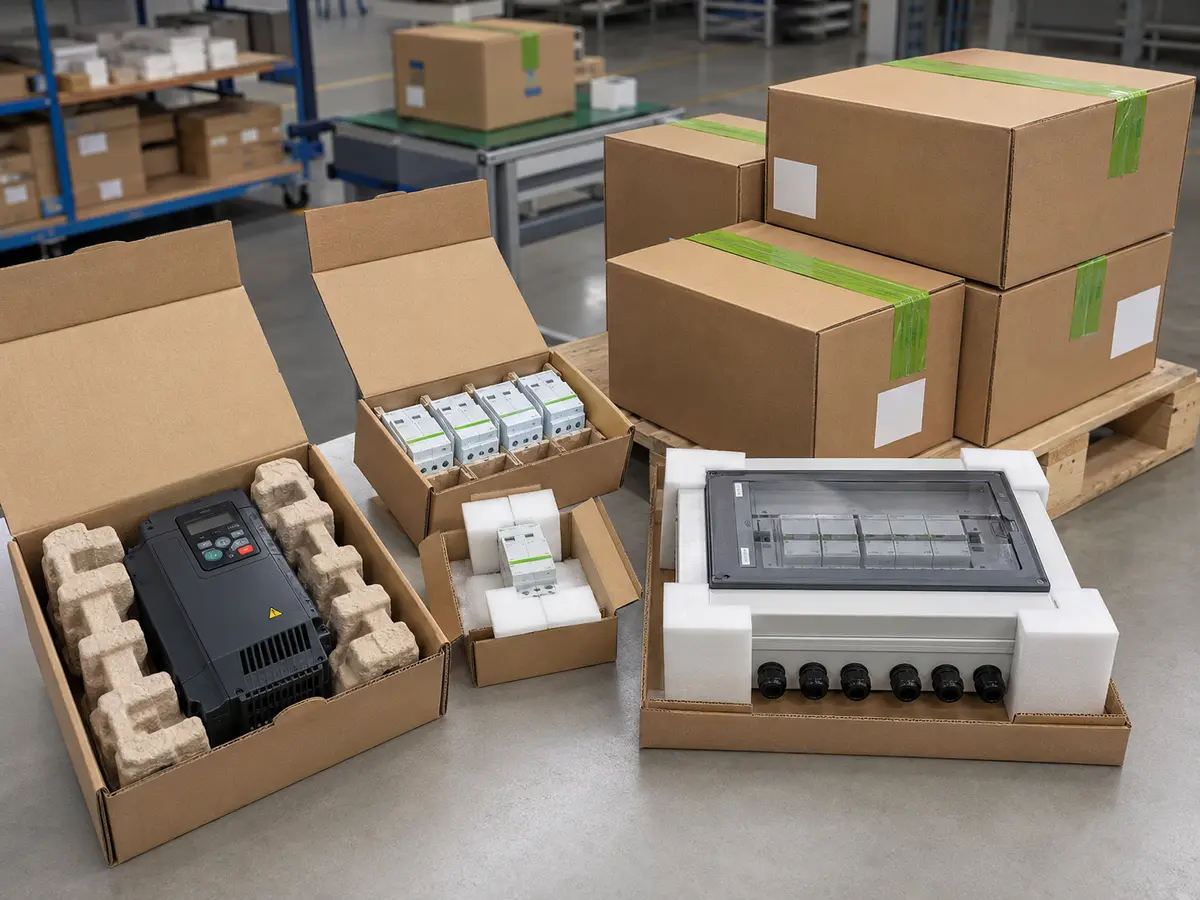
Packing may be plain factory packing, private label packing, neutral carton, distributor carton, or project batch packing. The right method depends on product size, order quantity, shipping method, and sales channel.
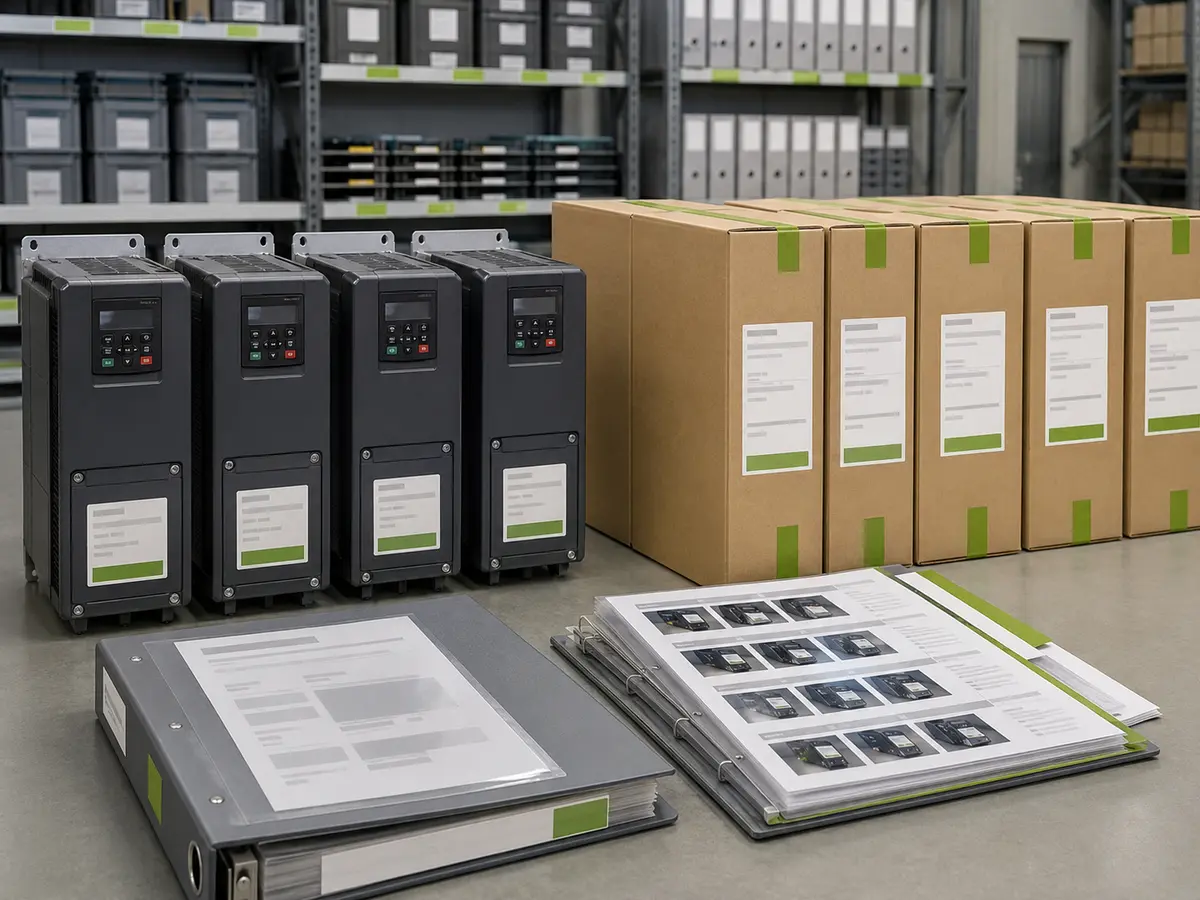
Repeat orders become easier when the first order files are kept clean. Confirmed label artwork, carton mark, manual version, packing photos, and item list should be saved for later replenishment.
UFELE does not use one published MOQ for every OEM electrical product. A VFD housing label, a printed PV combiner box enclosure, a small DC protection device, and a private label carton require different materials and setup. We therefore confirm the minimum quantity after reviewing each model, rating, customization method, printed material, and standard packing quantity.
A mixed order does not automatically combine every item into one MOQ. Each SKU keeps its own production and packaging limits. For example, a buyer may meet the total order value while one rating remains below the practical print or production quantity. We show that point in the quotation or order review instead of treating the shipment as one undivided quantity.
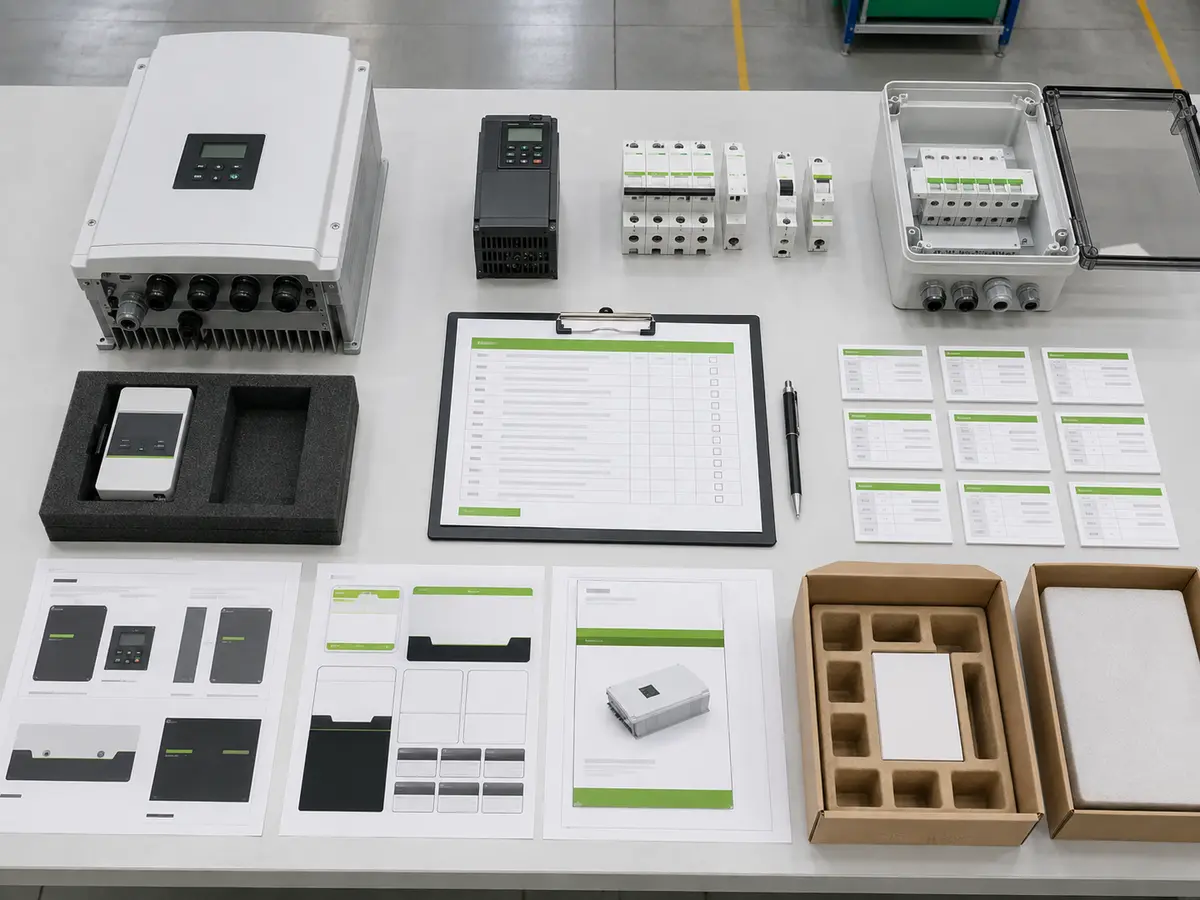
A private label order should not depend on memory or scattered chat messages. UFELE uses a staged review so the technical product, commercial quantity, artwork, compliance files, and packing instructions stay connected. The buyer can see which points are confirmed and which points still need a decision.
| Step | What Is Checked | Why It Matters |
|---|---|---|
| Product Selection | Product group, model, rating, application, quantity, destination market | The base product must suit the application before branding work begins. |
| Feasibility Review | Label area, housing material, print method, mandatory marks, existing approvals | This review defines what can change and what must remain standard. |
| MOQ and Sample Plan | Quantity by SKU, standard pack, printed material, sample or proof method | The buyer receives the applicable minimum and approval route before committing to artwork costs. |
| Artwork Approval | Logo file, model name, rating text, barcode, colors, label position, revision number | Written approval establishes one production version and prevents an old file from returning later. |
| Packaging Plan | Inner box, carton mark, carton size, mixed packing, warehouse label | Correct packing helps shipping, receiving, storage, and local distribution. |
| Document and Compliance Review | Datasheet, manual, certificate, test report, warning text, destination requirement | Documents must match the named model, rating, manufacturer, standard, and supplied configuration. |
| Pre-Production Confirmation | Approved proof or sample, packing detail, purchase order, final SKU list | Production starts only after open artwork and order-file points are closed. |
| Final and Repeat-File Check | Label photos, carton photos, quantity, packing list, approved file archive | The shipment and later replenishment can be checked against the same controlled record. |

A distributor, a solar product brand, a project contractor, and a control cabinet supplier do not look at OEM work in the same way. One buyer may care most about carton labels and item codes. Another may care about manual design and catalog files. Another may only need neutral packing but strict product consistency.
Before confirming an OEM order, we ask how the goods will move after arrival. Distributor stock, online resale, project installation, and panel assembly create different label and packing needs. We also ask whether the buyer expects repeat orders, because stable model names and controlled artwork matter more for a long-term range.
Not every buyer has a full design file at the beginning. That is fine. A simple set of information is enough to start the discussion. If the order moves forward, the final files can be cleaned up before production.
Vector artwork is best when available. If not, send the highest quality logo file you have and mention the preferred color.
Send model or product names, ratings, quantities, applications, and destination market. A spreadsheet is best for mixed orders.
Include the proposed model name, brand, barcode, rating text, language, and market warning request. We will identify mandatory content that cannot be removed.
Tell us what should appear on the carton: item code, quantity, destination mark, warehouse label, or neutral packing.
Mention whether the standard manual is acceptable or whether a private label cover, language change, or PDF file is needed.
Distributor warehouse, online resale, project installation, and local retail may need different packing and label details.
If certificates, test reports, declarations, or datasheets are needed, state the exact model, rating, market, standard, and listing purpose before order confirmation.
If the order is intended as a long-term product line, we suggest saving a confirmed file set for later replenishment.
Private branding cannot replace accurate technical and compliance information. Electrical ratings, warnings, terminal identification, manufacturer traceability, and required conformity marks must remain correct for the supplied product and destination. If a requested change could alter how the product is identified, installed, or approved, UFELE stops the artwork review and checks the technical effect first.
A logo cannot cover required ratings, warnings, certification marks, model identity, or traceability information. The final label must fit the available area without making essential content unreadable.
A certificate or test report applies to its named manufacturer, model, rating, standard, and tested configuration. A buyer brand does not automatically become covered. We check the exact file before making any document statement.
A different enclosure, terminal, component, firmware function, or rating is not only an artwork change. It may require a new engineering review, sample, quotation, test, or document check.
These are common questions from buyers preparing private label or distributor electrical product orders.
UFELE can review OEM requirements for selected solar pump inverters, variable frequency drives, PV combiner boxes, solar DC protection products and low-voltage electrical products. The available label, housing, manual and packaging options depend on the exact model, order quantity and required approvals.
There is no single MOQ for every product. UFELE checks the minimum by model, rating, standard packing quantity, artwork method, printed material quantity and whether several SKUs are mixed. Buyers receive the applicable MOQ after the product list and customization scope are reviewed.
Sample and approval options can be discussed after UFELE confirms the product and customization method. Depending on the order, approval may use a standard product sample, an artwork proof, a labeled sample or detailed photos. Bulk production should not start until the agreed approval record is confirmed.
Not always. Some products have limited label space, fixed molds or mandatory safety and traceability information. In these cases, private branding may be more practical on the carton, manual or outer packaging. UFELE checks feasibility before accepting the artwork.
No. A certificate or test report is tied to its named manufacturer, model, rating, standard and tested configuration. UFELE checks the exact document and destination requirement before stating whether a buyer-branded document, declaration or separate test is possible.
Send the product list, ratings, quantities, destination market, logo artwork, preferred label content, carton mark, barcode request, manual language and any certificate or test-report requirement. A draft is enough for the first feasibility review.
Mixed orders can be reviewed, but each SKU keeps its own MOQ, label space, standard pack quantity and approval requirement. The order file should separate model, rating, quantity, artwork version and packing method so production and carton checks remain clear.
Labels, printed cartons, manuals and barcodes affect material preparation, production, packing and lead time. Written approval before production reduces reprinting, repacking and repeat-order errors.
Send your product list, ratings, quantities, destination market, logo file, label idea, carton mark, sample request, packing requirement, and document list. We will identify a feasible customization method, confirm the MOQ basis, and mark any safety information that must stay standard.