
Solar Pump Inverter
Converts PV input into controlled AC output for a compatible pump motor. Selection checks motor power, voltage, phase, rated current, PV input range, control signals and the required operating schedule.
UFELE Electric — Solar Pumping, Industrial Drives and PV Protection
Email: sale@ufele.com | B2B Supply and OEM Orders

A solar water pumping system must deliver the required water against the actual head at the site. The equipment list comes after that job is clear. Buyers need to check the pump motor, PV input, cable distance, DC protection, control method and water storage as one project.
UFELE supports importers, distributors, pump companies and project contractors with solar pump inverters, PV combiner boxes and selected DC protection products. We can review an existing AC pump or a new system plan. Send the pump nameplate, total dynamic head, target flow, daily water demand, site country and proposed PV modules to begin.
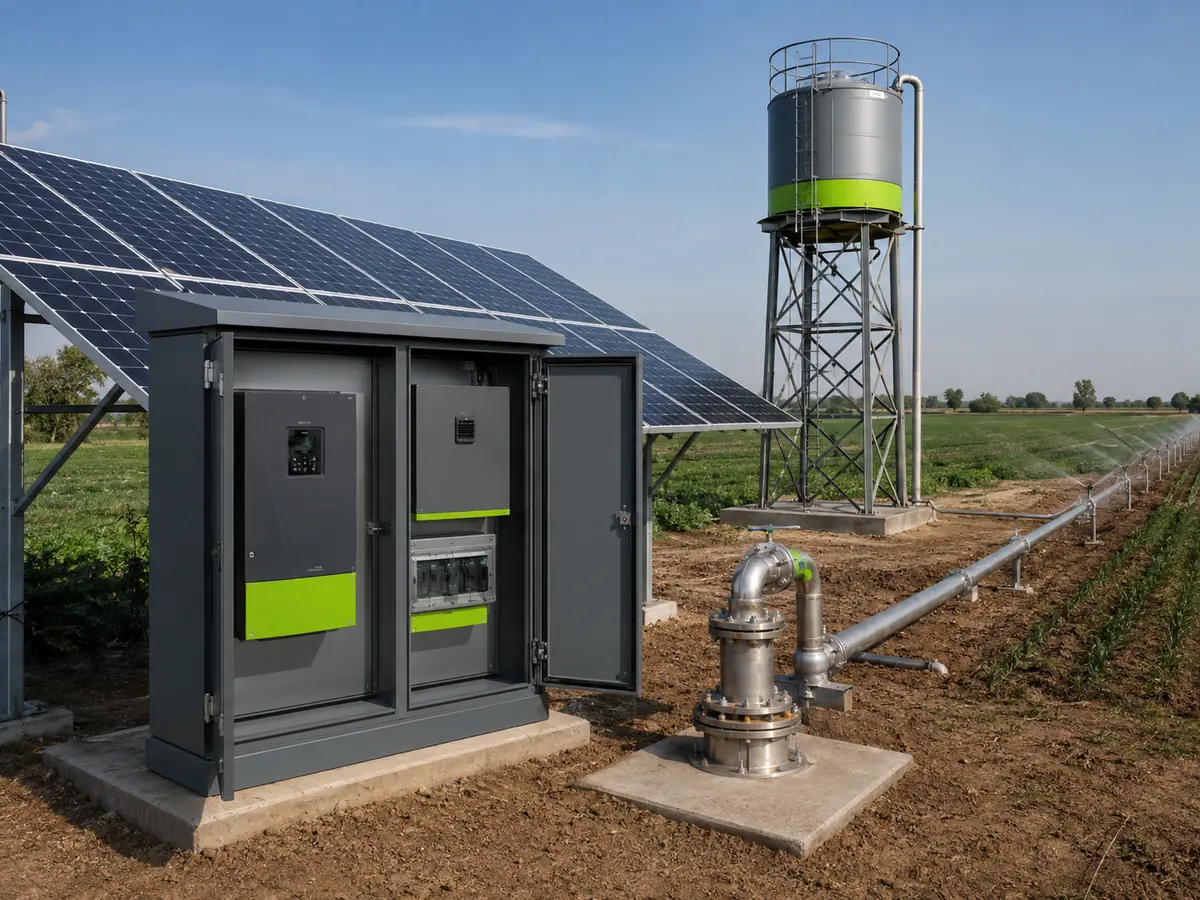
Total dynamic head, daily water demand and the pump curve determine the required duty. PV and inverter selection follow those values.
A solar powered water pumping system connects the water source, pump, electrical controls and storage plan. Each component has a separate job. Confirm the complete project scope before treating a component list as an order list.
Converts PV input into controlled AC output for a compatible pump motor. Selection checks motor power, voltage, phase, rated current, PV input range, control signals and the required operating schedule.

Module power, quantity, string voltage, site temperature and available installation area affect the inverter input. Existing PV modules must be checked before the inverter and protection list is fixed.

The pump can be new or already installed. Its curve must meet the target flow at the calculated head. A clear nameplate also confirms motor power, voltage, phase and rated current.

Used when multiple PV strings need to be organized before reaching the pump inverter. String quantity, voltage, current and cable entry should be reviewed.

DC breakers, fuses, surge protective devices, isolators and PV connectors protect or disconnect different parts of the DC circuit. Ratings must follow the array and wiring design.

A tank stores water pumped during daylight. A tank-full switch and a dry-well sensor can provide control signals when the selected inverter supports the required inputs.
In a direct daytime system, the PV array feeds the solar pump inverter. The inverter tracks the available solar input and controls the AC pump motor. Stronger solar input allows the pump to operate closer to its planned duty. When input falls below the operating range, the inverter reduces output or stops according to its control logic.
Many projects store water instead of electrical energy. The pump fills a tank during useful sunlight hours, and the site draws water later. Some projects also require grid or generator backup. Confirm that requirement early because it changes the inverter configuration, changeover method, protection layout and operating procedure.
For independent technical background on water demand, design flow and storage, see the World Bank guide Solar Pumping: The Basics. Final sizing still requires project-specific pump curves, hydraulic data and local engineering review.
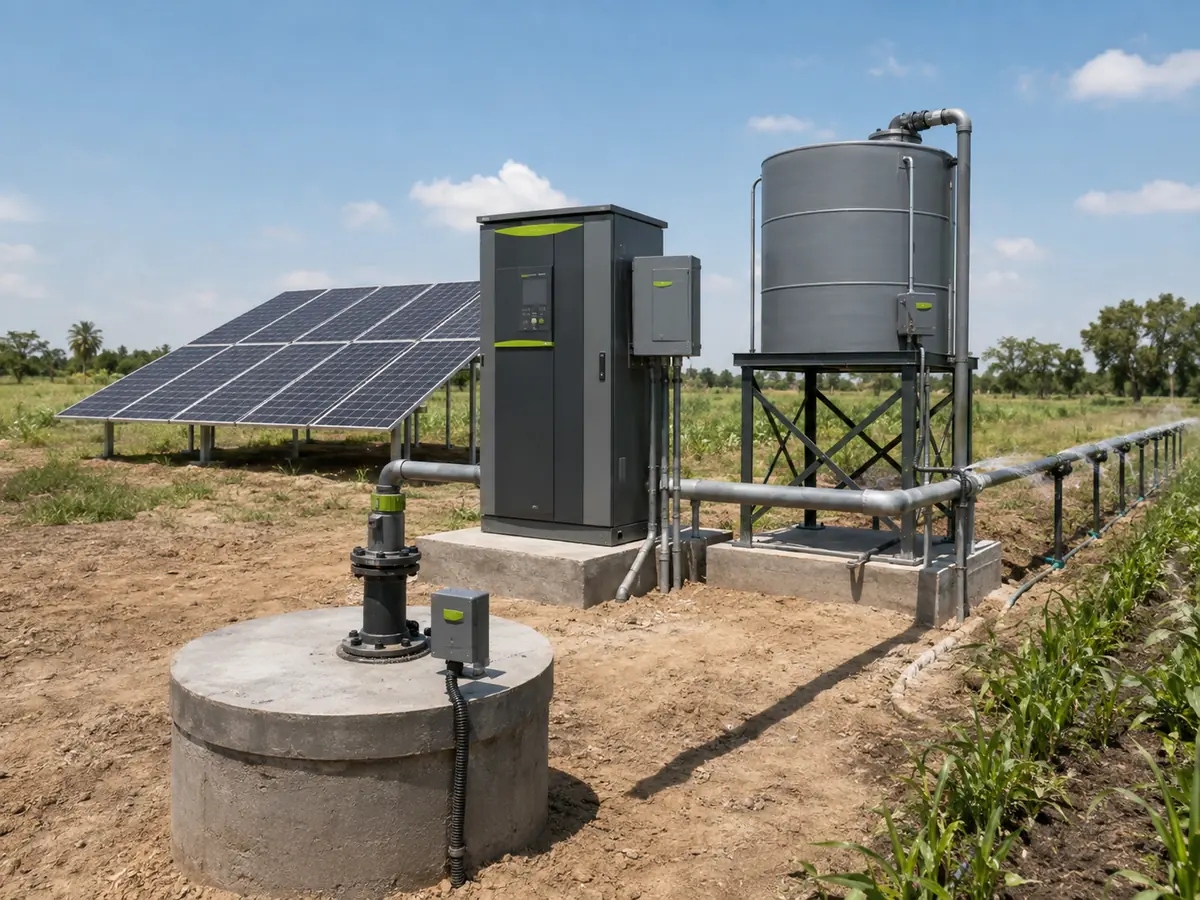
A solar well pump system and a solar water pump irrigation system may use similar electrical components, but they solve different water duties. The source, head, flow pattern, storage and seasonal operating window all change the selection.

State the crop area, irrigation method, daily water target, field elevation, pipe route and dry-season schedule. These values define the duty better than motor power alone.

Record the static water level, expected drawdown, pump setting depth, tank elevation and pipe losses. The total well depth by itself is not the operating head.

Livestock sites often use daytime pumping and tank storage. Send the animal count, daily demand, source yield, trough or tank volume and the longest low-sun period to be considered.

Community projects need a clear demand basis, storage plan, backup decision, maintenance access and operating responsibility. Local water quality and installation rules also remain part of the project review.
Semrush search demand groups many buyers around wells and irrigation. Both need hydraulic data before an electrical bill of materials can be prepared. Use the checklist that matches the water job.
Begin at the water level, not at ground level. A well can be deep while the normal pumping level is much higher. However, drawdown during operation may increase the lift. Add the elevation from the well outlet to the tank, the required outlet pressure and the estimated pipe friction to define the total dynamic head.
If an AC borehole pump already works on grid power, UFELE can review whether a solar pump inverter fits the motor. The nameplate, rated current, existing control cabinet and cable length are essential.
Irrigation demand changes with the crop, season and delivery method. Drip lines, sprinklers and open-channel transfer do not require the same pressure. State the irrigation area and daily water target, then separate the pump duty from the field distribution design.
A larger PV array does not correct an undersized pump, an unrealistic source yield or excessive pipe losses. Confirm the hydraulic duty first. Then match the motor, inverter input, PV strings and protection parts.
Use this table before requesting a quotation. It separates hydraulic duty, motor data, PV input and the supply scope. Clear input helps UFELE avoid quoting an inverter or protection list against an incomplete assumption.
| Information | What to Send | Why It Changes the Discussion |
|---|---|---|
| Pump data | Nameplate photo, pump curve, motor power, voltage, phase, rated current and pump type | Confirms the required inverter output and whether the motor data fits an available series |
| Water source | Static level, pumping level or drawdown, pump setting depth and source yield | Shows the available water and the lift from the operating water level |
| Total dynamic head | Water-level lift, tank elevation, outlet pressure, pipe length, diameter and fittings | Defines the head at the target flow and prevents selection from well depth alone |
| Water duty | Target m³/h, daily water volume, irrigation area and available pumping hours | Connects the pump duty to the water needed during the design period |
| PV panel plan | Module power, Voc, Vmp, quantity, string plan, temperature range and installation space | Checks that the operating and open-circuit voltage remain within the selected inverter input limits |
| Protection layout | String count, combiner box, DC breaker, fuse, SPD, isolator, cable and earthing plan | Defines the required DC devices, enclosure arrangement and service isolation points |
| Site condition | Country, ambient temperature, dust, moisture, altitude, indoor or outdoor location | Changes the enclosure, derating, cooling, wiring and document review |
| Order purpose | One project, distributor package, replacement, OEM or tender | Changes the packing, documents, labels, quantity breaks and repeat-order records |
Well depth, total head, daily water demand and pump data come before panel quantity. These values show whether the proposed pump, inverter and PV array can work as one system.
System Design Guide
Some buyers need one solar pump inverter. Others need a matched electrical package with a PV combiner box, DC protection, connectors and controlled order files. UFELE confirms the quoted scope before production so buyers can see which items come from us and which remain with the pump, PV or installation contractor.
Review the required inverter output, PV input window, string count, combiner box need and DC protection before turning the inquiry into a purchase list.
Prepare the available model-specific datasheets, manuals, product photos, packing photos and order records for buyer approval and distributor use.
Confirm labels, carton marks, manual language, packing method, item codes and repeat-order records for private-label or reseller programs.
UsFull Electric Co., Ltd. operates the UFELE Electric brand from Wenzhou, Zhejiang, China. The company was established in 2005. Its electrical products have been supplied to buyers in more than 90 countries and regions through distributor, project, OEM and industrial channels.
Our technical product team reviews the electrical side of a solar pumping inquiry. We check the pump motor data, inverter output, PV input, control functions and quoted protection products. The project pump supplier or hydraulic engineer should confirm the pump curve, source yield, total dynamic head, pipe design and local installation requirements.
These questions cover solar well pump systems, irrigation projects, batteries, existing AC pumps and UFELE’s supply scope.
Send the pump nameplate, pump power, voltage, phase and current. Also include the required daily water volume, target flow, total dynamic head, water source details, solar panel plan, site country and installation environment.
Start with daily water demand, target flow, total dynamic head and the water source yield. Then check the pump motor data, available solar resource, PV string plan, pipe distance and required operating hours. Motor power alone cannot define the complete system.
It may be possible when the motor voltage, phase, current and operating requirements match a suitable solar pump inverter. Send the pump nameplate and existing control cabinet details so UFELE can review the inverter output and PV input before quotation.
Many solar pumping systems run directly from solar panels during the day and store water in a tank for later use. Battery or AC backup depends on the site demand, required operating schedule and agreed system design.
A typical system may include PV panels, a solar pump inverter, a water pump, PV combiner box, DC protection, cables, sensors, switches, a water tank and installation accessories. The final scope depends on the project layout and quotation.
UFELE’s standard supply scope centers on the solar pump inverter, PV combiner box and selected DC protection products. Pumps, PV panels, cables, sensors and other accessories are included only when they are listed and confirmed in the quotation.
No. A solar pumping system is designed around moving a required volume of water against a defined head. The review starts with water demand, pump data and solar input rather than household or building electrical loads.
Share the pump nameplate, total dynamic head, target flow, daily water demand, PV module data, site country, quantity and available photos. UFELE will review the electrical configuration and quoted supply scope before preparing product and quotation details.