
UFELE Electric — Solar Pumping, Industrial Drives and PV Protection

Email: sale@ufele.com | B2B Supply and OEM Orders

Home / Products / Low Voltage Products / AC Circuit Breaker
Alternating-Current Circuit Protection

AC Circuit Breaker Manufacturer for Distribution Panels and OEM Supply

UFELE supplies AC miniature circuit breakers for building distribution boxes, commercial panels, machine control cabinets and electrical wholesale orders. The available range covers 1A to 125A across different series, with 1P, 1P+N, 2P, 3P and 4P options.

A model name alone is not enough for a safe quotation. Send the rated current, system voltage, frequency, pole arrangement, trip curve, breaking capacity and destination market. We will compare those details with the current product file before confirming the model.

Technical review: UFELE Product Engineering
Last reviewed: July 31, 2026

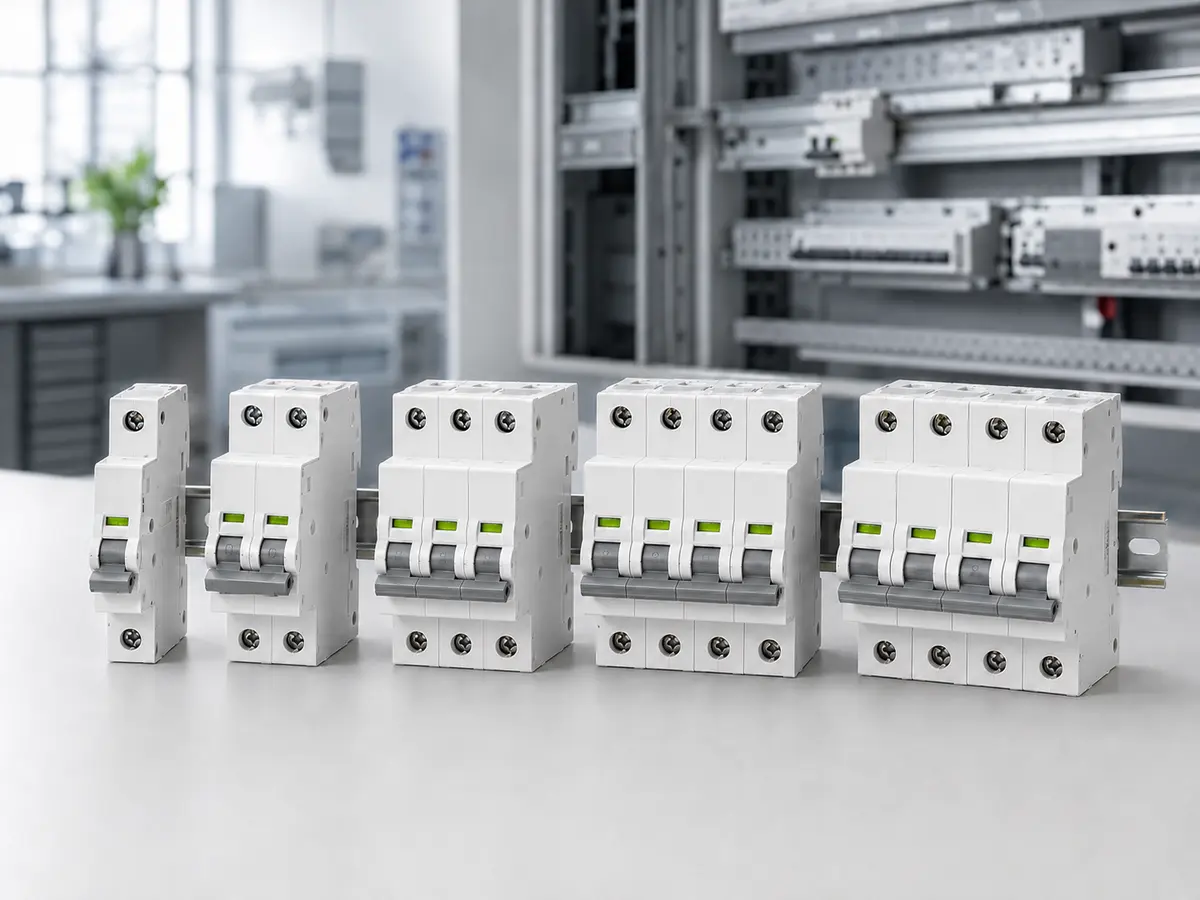
UFELE AC circuit breaker range with 1P 1P plus N 2P 3P and 4P MCB options

Match the breaker to the circuit

Current, pole count, curve and short-circuit rating must agree with the electrical design. Similar-looking breakers are not automatically interchangeable.

1A–125A
Range Across Listed Series
1P–4P
Pole Options by Model
B / C / D
Trip Curves by Series
50 / 60Hz
AC Frequency Options

Search intent note: AC means alternating current on this page. It does not mean air conditioner service. If the breaker will protect an air-conditioning unit, a qualified electrical designer should still confirm the load, cable, starting current, fault level and local installation rules.

AC MCB Series

Choose a Breaker Family Before Fixing the Exact Rating

UFELE AC breaker series serve different current levels, module widths and short-circuit requirements. Start with the circuit data. Then compare the model family. This order reduces the risk of selecting a familiar housing with the wrong internal rating.

FMB1-63 and DZ47-63 AC circuit breaker range for distribution panels

FMB1-63 / DZ47-63

A classic modular MCB family for overload and short-circuit protection in lighting and power distribution circuits. The series covers common distributor ratings and several pole arrangements.

  • Rated current: 1A to 63A
  • Available arrangements include 1P, 2P, 3P and 4P
  • B, C and D curve options
  • 3kA or 4.5kA breaking capacity by version
FMB1-125 and DZ47-125 high current AC miniature circuit breaker

FMB1-125 / DZ47-125

This frame extends the classic AC MCB range to higher current levels. It suits buyers who need 80A, 100A or 125A items within a broader breaker order.

  • Verified current options: 80A, 100A and 125A
  • Useful for higher-current distribution positions
  • Confirm voltage, pole, curve and breaking capacity by exact model
  • Request the current product file before approval
FMB8 6kA high breaking capacity AC circuit breaker in 1P to 4P formats

FMB8 High Breaking Capacity MCB

The FMB8 series adds a documented 6kA short-circuit rating in a compact 18 mm module. It is available for several single-phase and three-phase panel arrangements.

  • Rated current: 1A to 63A
  • 1P, 2P, 3P and 4P options
  • B, C and D trip curves
  • 50/60Hz and 6kA breaking capacity
DPN compact 1P plus N AC circuit breaker for single phase distribution

DPN 1P+N Compact MCB

The DPN, also called DZ30, places a protected phase and switched neutral in one standard modular width. It is designed for compact single-phase distribution layouts.

  • Rated current: 6A to 32A
  • 1P+N arrangement at AC 240V
  • B and C curve options
  • 3kA breaking capacity
DZ47-63K AC MCB with B C and D trip curve options

DZ47-63K MCB

DZ47-63K is an updated DZ47 design for residential, commercial and light industrial distribution. Its product file lists a flame-retardant enclosure and common modular pole formats.

  • Rated current: 6A to 63A
  • 1P, 2P, 3P and 4P options
  • B, C and D trip curves
  • 3kA or 4.5kA breaking capacity by version
Mixed AC circuit breaker distributor order organized by current pole curve and carton label

Distributor and OEM Range

A stock order may combine several breaker families, currents and poles. UFELE can review the item matrix, label artwork, barcode plan, inner box and carton marks before production.

  • Mixed model and current lists
  • Private-label review by order scope
  • Carton and barcode coordination
  • Datasheet and available document support
Ratings apply only to the listed series and may not be available in every current, pole and curve combination. Confirm the current datasheet, product marking and applicable certificate for the exact item before order approval.

Model Comparison

AC Circuit Breaker Range at a Glance

This comparison helps narrow the first model choice. It does not replace the electrical design or the approved datasheet. Use the exact product file when the breaker will enter a tender, panel schedule or local approval process.

Series Rated Current Pole Options AC Voltage / Frequency Curve Breaking Capacity
FMB1-63 / DZ47-63 1A–63A 1P, 2P, 3P, 4P 230/400V or 240/415V by pole; 50/60Hz B, C, D 3kA / 4.5kA by version
FMB1-125 / DZ47-125 80A, 100A, 125A Confirm by model Confirm by current datasheet Confirm by model Confirm by model
FMB8 1A–63A 1P, 2P, 3P, 4P 240/400V or 400V by pole; 50/60Hz B, C, D 6kA
DPN / DZ30 6A–32A 1P+N AC 240V; 50/60Hz B, C 3kA
DZ47-63K 6A–63A 1P, 2P, 3P, 4P 220/380V, 230/400V or 240/415V by pole; 50/60Hz B, C, D 3kA / 4.5kA by version
Source control: figures were reviewed against the available UFELE/USFULL product records on July 31, 2026. Product files can change. The final purchase order should name the approved model, revision, rating and packing file.

Selection Workflow

Seven Checks Before an AC Breaker Model Is Approved

A breaker protects the cable and circuit under defined conditions. It should not be selected from appliance power alone. The design also needs the installation method, ambient conditions, prospective fault current and required disconnection time.

  1. System: confirm AC voltage, frequency, phase arrangement and earthing system.
  2. Load and cable: calculate design current and verify the cable current-carrying capacity.
  3. Rated current: choose a breaker rating that coordinates with the cable and load.
  4. Pole arrangement: state which conductors require protection and simultaneous disconnection.
  5. Trip curve: check normal inrush, minimum fault current and required trip time.
  6. Breaking capacity: compare the device rating with the prospective short-circuit current.
  7. Documents: confirm the applicable standard, model marking, certificate scope and destination requirement.

When the panel builder sends these values in one table, our product team can review the series faster and avoid repeated questions.

AC circuit breaker selection review with current pole trip curve and breaking capacity

Pole Arrangement

1P, 1P+N, 2P, 3P and 4P Are Not Packaging Choices

Pole selection follows the circuit and the required isolation method. The neutral arrangement also depends on the electrical system and local rules. Mark the protected and switched conductors on the panel schedule before placing the order.

1P

A single-pole MCB protects and switches one phase conductor. It is common in permitted single-phase branch circuit arrangements.

1P+N

The phase pole carries the overcurrent protection while the neutral is switched with it, subject to the exact device design. The DPN format saves panel width.

2P

Two linked poles disconnect together. Confirm whether both poles contain protective elements and how the device is marked for the intended system.

3P / 4P

Three-pole breakers serve three-phase circuits. A four-pole device adds neutral switching, while the neutral protection arrangement remains model-specific.

Comparison of 1P 1P plus N 2P 3P and 4P AC circuit breaker formats
Do not replace a 2P device with 1P+N only because the housings have a similar width. The protected poles and neutral function must match the approved circuit design.

AC circuit breaker B C and D trip curve selection for different inrush conditions
Trip Curve

B, C and D Curves Respond to Different Current Multiples

The thermal element handles sustained overloads. The magnetic element responds much faster to high fault current. A curve marking describes the instantaneous trip band as a multiple of rated current, written as In.

  • B curve: lower instantaneous range, often reviewed for circuits with limited inrush.
  • C curve: higher inrush allowance, commonly considered for mixed commercial and light inductive loads.
  • D curve: higher instantaneous range, sometimes used where motors or transformers create a larger starting current.

Do not choose a curve from the load name alone. The minimum short-circuit current must still operate the breaker within the required time. FMB8 lists B at 3–5In, C at 5–10In and D at 10–20In. Some DZ47 records list a different D range, so the exact datasheet controls the final choice.

Short-Circuit Rating and Standards

A Higher Number Does Not Replace a System Calculation

The breaker must interrupt the fault current available at its installation point. It must also follow the standard and coordination method used by the project. These checks belong in the electrical design, not only in the purchasing comparison.

Breaking Capacity

The listed UFELE AC MCB families include 3kA, 4.5kA and 6kA versions. The required rating depends on the prospective short-circuit current and the applicable coordination rules.

IEC 60898-1 Scope

The listed MCB product files reference IEC or IEC/EN 60898-1. The official IEC description covers circuit breakers for overcurrent protection in household and similar installations for AC operation.

Document Match

A certificate or test report must match the exact series, current, pole, standard and destination requirement. A document for another housing or rating should not be treated as automatic coverage.

IEC 60898-1 and IEC 60947-2 serve different product scopes and use conditions. Do not substitute one standard reference for the other without checking the device classification and project specification.

Applications

Where UFELE AC Breakers Enter the Product List

The application changes the selection details. A branch circuit, machine panel and wholesaler stock order may use similar current ratings, but they do not share the same curve, fault level, pole or document requirements.

AC circuit breakers installed in a building distribution panel

Building Distribution

Branch circuits for lighting, outlets and fixed equipment require coordination between the breaker, cable, load and local wiring rules.

AC miniature circuit breakers used in a commercial electrical panel

Commercial Panels

Offices, retail spaces and service panels often need several current ratings and clear circuit identification within one enclosure.

AC circuit breaker used in a machine control cabinet with contactors and terminals

Machine Control Cabinets

Motors, transformers and control power circuits require extra attention to inrush, trip curve and coordination with downstream equipment.

AC circuit breaker position in an HVAC equipment power distribution circuit

HVAC Power Circuits

An AC breaker may protect an air-conditioning power circuit, but the equipment data, conductor size, starting current and installation rules decide the rating.

Order Control

Write the Breaker Order as a Technical Matrix

A mixed MCB order can contain dozens of similar lines. One missing character may change the pole, curve or current. A clean table gives production, label review and warehouse receiving the same reference.

Order Field What to Write Why It Matters
Series and current Example: FMB8, 16A Separates the housing family from the electrical rating.
Pole arrangement 1P, 1P+N, 2P, 3P or 4P Defines the protected and disconnected conductors.
Voltage and frequency System voltage plus 50Hz or 60Hz Checks that the product marking matches the circuit.
Curve and breaking capacity B, C or D; required kA rating Links inrush response and fault interruption to the design.
Quantity and packing Pieces, inner box, carton quantity and carton mark Prevents mixed-SKU packing and receiving errors.
Label and documents Brand artwork, barcode, manual, datasheet and certificate request Fixes the approved file set before production and shipment.

Model and Label Review

Product marking should show the approved series, current, curve, pole and electrical ratings. Private-label artwork must fit the available print area.

Carton Separation

Similar currents and poles should have clear SKU labels. Mixed cartons need an agreed packing list and visible identification.

Repeat-Order File

Keep the quotation, approved label, barcode, carton mark, datasheet revision and packing photos together for the next order.

AC, DC and Residual-Current Devices Do Different Jobs

Use an AC MCB for the stated AC rating. Use a dedicated DC breaker where the circuit and product file require DC interruption. Add RCCB or RCBO protection when residual-current protection is required by the design.

Compare Low Voltage Products

FAQ

AC Circuit Breaker Questions from Buyers

These answers focus on purchasing and model confirmation. Installation and system design should be handled by qualified electrical personnel.

What does AC mean on this circuit breaker page?

AC means alternating current. The page covers miniature circuit breakers for AC electrical distribution. It is not an air-conditioner repair page, although a correctly selected AC breaker may be used in an HVAC power circuit.

What information is needed for an AC circuit breaker quotation?

Send the system voltage and frequency, rated current, pole arrangement, required trip curve, breaking capacity, quantity, destination market, label request, packing request and any document requirement. If one value is not known, include the application and panel details for review.

What is the difference between 1P, 1P+N and 2P breakers?

A 1P breaker protects and switches one phase conductor. A 1P+N device protects the phase and switches the neutral with it, subject to the exact product design. A 2P breaker uses two linked poles. Confirm which conductors need protection and disconnection before selecting the device.

How should I choose a B, C or D trip curve?

Choose the curve from the load inrush current, minimum fault current, cable protection requirement and required disconnection time. B, C and D markings indicate different instantaneous trip ranges, but the exact values must be checked on the model datasheet.

Is a 6kA AC breaker always better than a 3kA breaker?

Not by itself. The breaker short-circuit rating must meet or exceed the prospective short-circuit current at the installation point and comply with the applicable design rules. The rating should be selected from the system calculation, not from price or a higher number alone.

Can an AC circuit breaker be used in a DC circuit?

Do not use an AC-only breaker on a DC circuit unless the manufacturer documentation specifically gives the required DC rating and connection method. DC fault interruption has different arc behavior. Use a dedicated DC circuit breaker for photovoltaic, battery and other DC circuits.

What is the difference between an MCB, RCCB and RCBO?

An MCB provides overload and short-circuit protection. An RCCB responds to residual or leakage current but does not provide overcurrent protection by itself. An RCBO combines residual-current and overcurrent protection in one device.

Can UFELE supply private-label AC breakers?

OEM label and packing support can be reviewed according to the breaker series, quantity, destination market and artwork. Confirm product marking, barcode, inner box, carton mark, manual and document scope before production.

Send the AC Breaker Schedule, Not Only a Product Photo

Share the series if known, current, pole, voltage, frequency, curve, breaking capacity, quantity, destination market and OEM requirements. UFELE will review the list against the current model file before quotation.

Request AC Breaker Quote