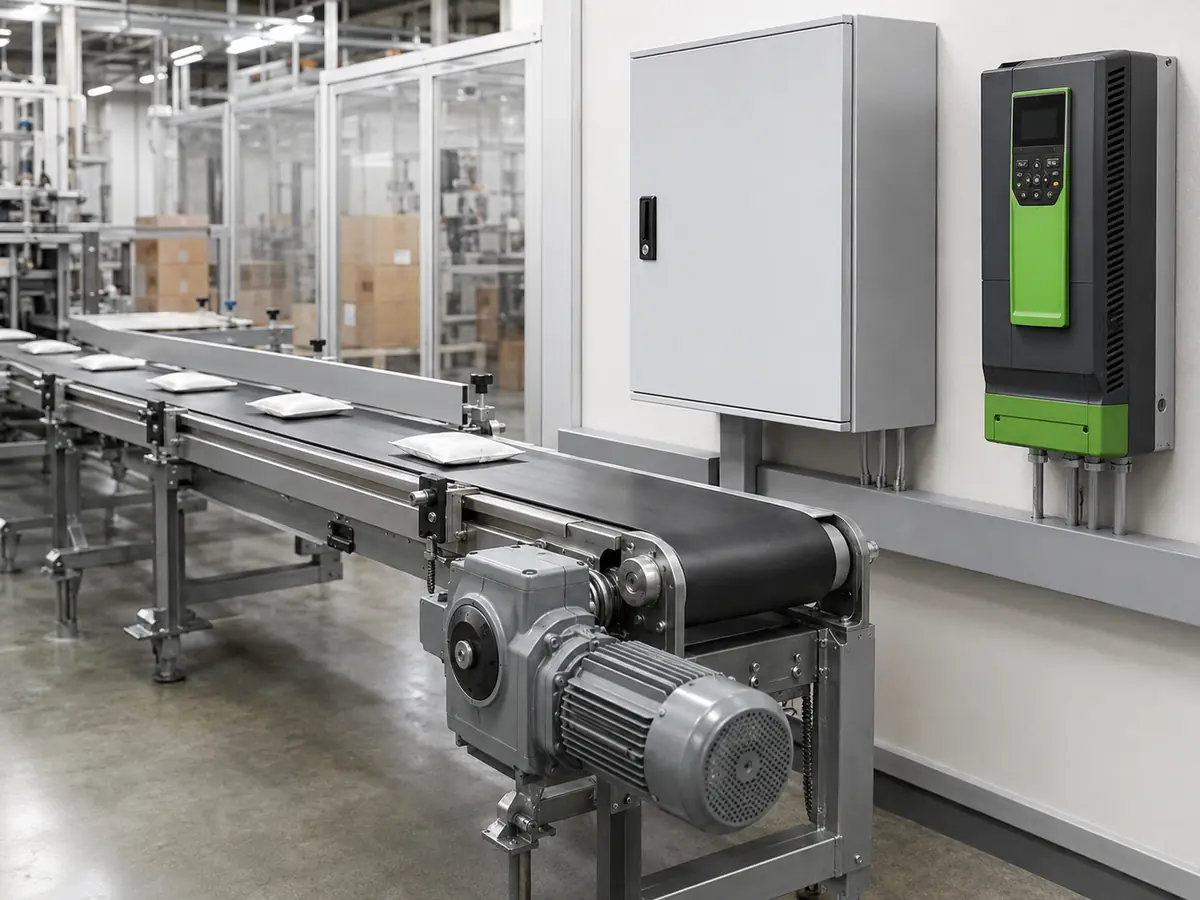
Smoother Motor Starting
A VFD helps reduce the shock of direct-on-line starting. This matters for conveyors, pumps, fans, and equipment where sudden startup causes mechanical stress or repeated fault trips.
UFELE Electric — Solar Pumping, Industrial Drives and PV Protection
Email: sale@ufele.com | B2B Supply and OEM Orders

Most VFD inquiries start from a motor problem on site. Maybe the pump is running harder than needed. Maybe a fan needs airflow control. Maybe a conveyor starts too sharply, or an old drive in a cabinet needs to be replaced. UFELE arranges the VFD range around these working situations instead of treating every motor as the same job.
Motor power is only the first number we look at. Three motors can all show 7.5 kW on the plate, but a fan, a loaded conveyor, and a lifting hoist do not behave the same way. When you send the motor nameplate, load type, voltage, control method, cabinet photo, and old drive photo if there is one, the first reply is much closer to the real job.
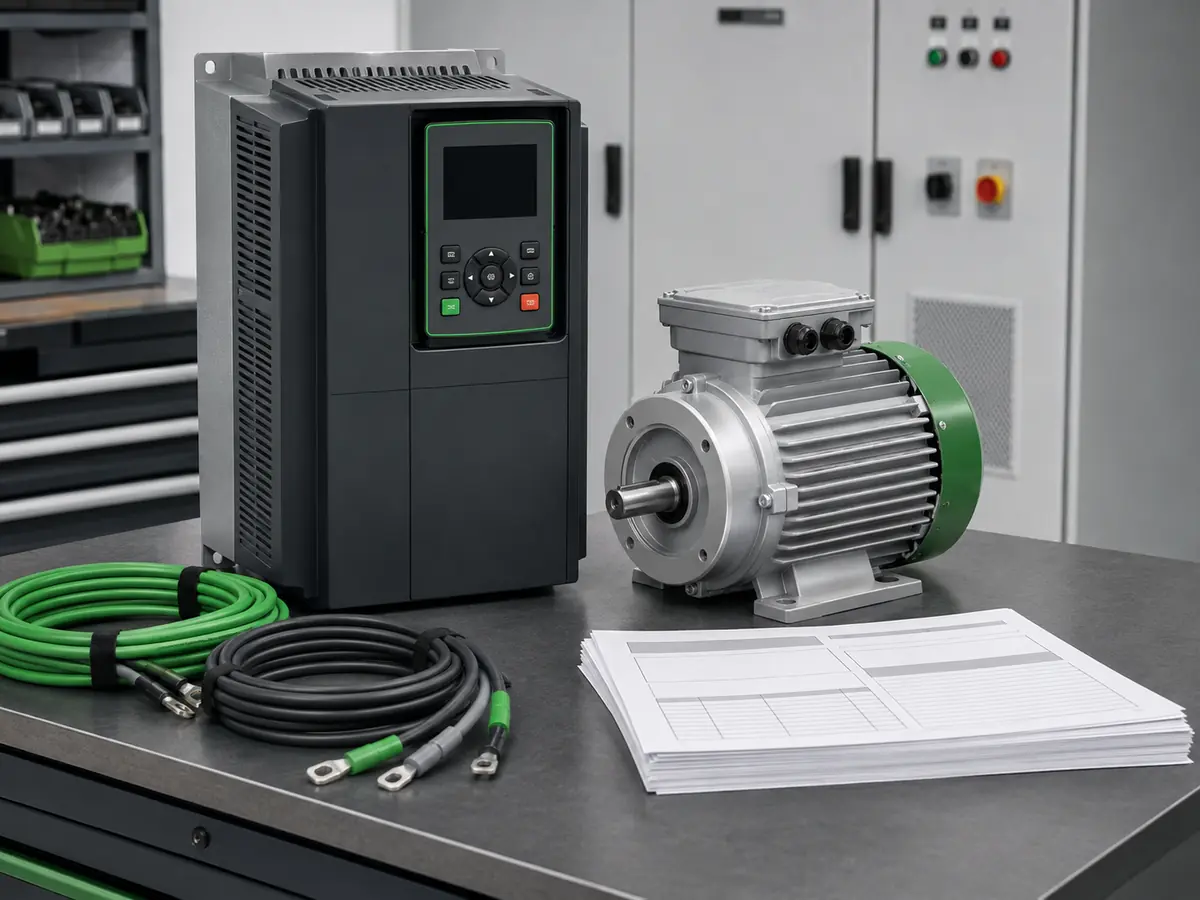
General drive, compact drive, hoist drive, pump and fan drive, and compressor drive series are reviewed by application rather than power only.
A variable frequency drive (VFD) is a motor controller that adjusts the frequency and voltage supplied to an AC motor, which in turn changes the motor’s speed and torque output. Rather than running a motor at one fixed speed, a VFD lets that speed follow the actual demand from a pump, fan, conveyor, or hoist — which is why the load type, not just the motor’s kW rating, drives which series is the right fit. For the full breakdown of how this frequency and voltage control works inside the drive, see how a VFD works.
A typical low-voltage VFD handles power in three stages. First, the rectifier converts incoming AC power to DC. Next, the DC bus smooths and stores the converted power. Finally, the inverter section switches that DC power into variable-frequency AC for the motor. The control method then manages voltage, current, and torque response for the connected load. A VFD is also called an AC drive. The term variable speed drive (VSD) is broader and can include other speed-control technologies.
Most VFD inquiries come from a real motor problem. The motor starts too hard. A pump runs at full speed when demand is low. A fan needs airflow adjustment. A conveyor needs smoother acceleration. A hoist needs better low-speed torque and braking discussion. A compressor needs pressure control instead of simple on-off running.
That is why we ask about the load. The same motor kW can behave very differently depending on what the motor is driving. A clearer load description gives a better first reply and helps avoid choosing a drive that looks correct on power but is weak in the actual application. If you are new to this equipment, our guide on what a variable frequency drive is and how a VFD works covers the basics before you send motor data.
A VFD helps reduce the shock of direct-on-line starting. This matters for conveyors, pumps, fans, and equipment where sudden startup causes mechanical stress or repeated fault trips.
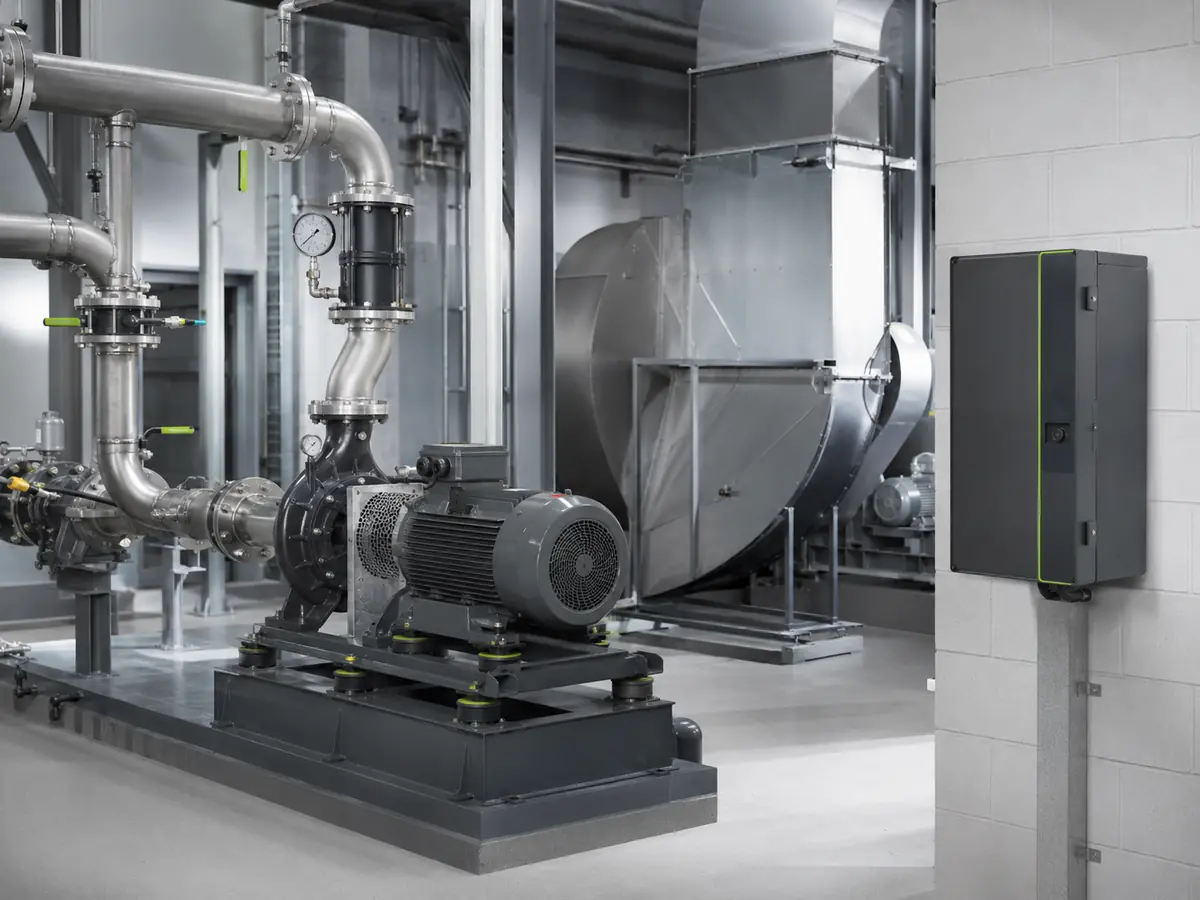
Pump and fan systems often do not need full speed all day. Speed regulation lets the motor follow pressure, flow, airflow, or process demand more closely.
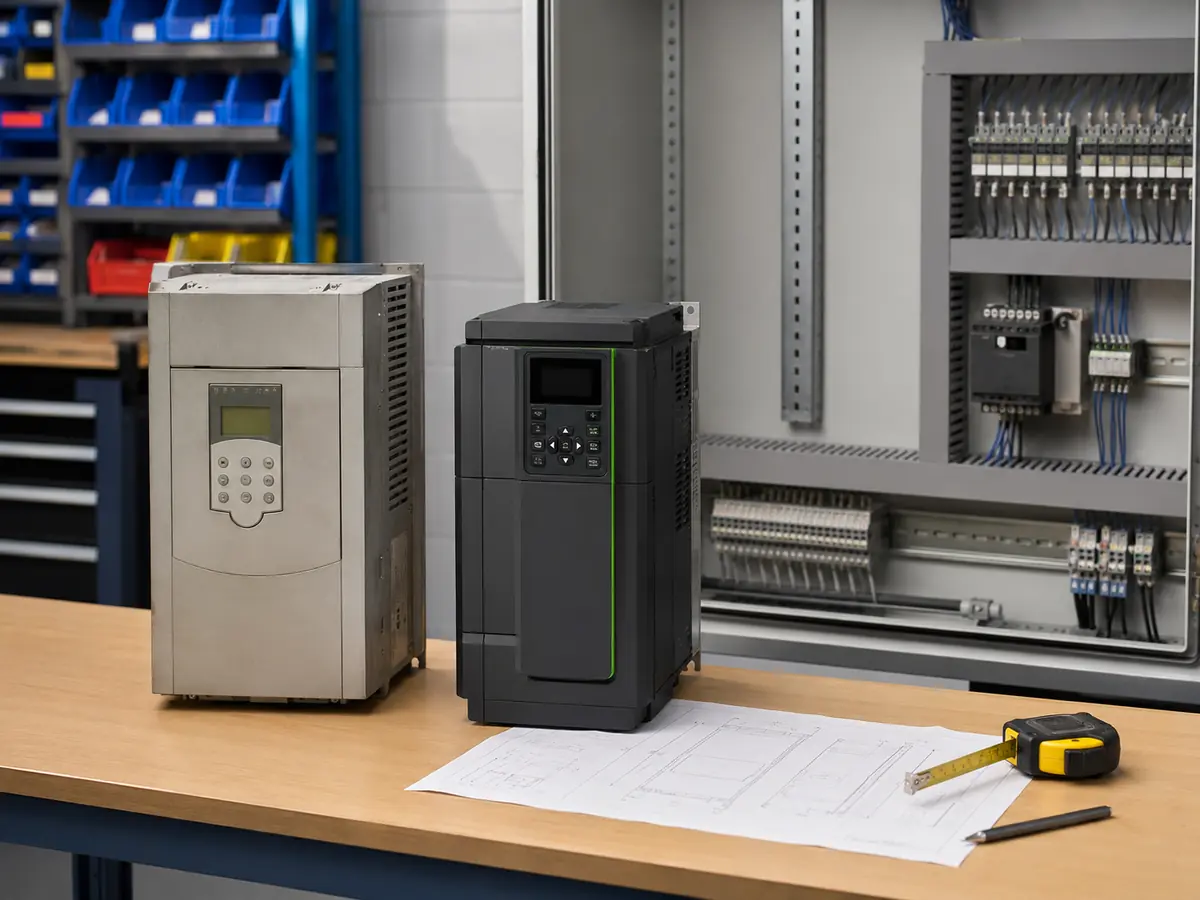
Replacement projects should start with the old drive photo, motor nameplate, wiring note, and control cabinet space. The new drive should fit the job, not only match the old kW number. If the old drive is faulting rather than simply outdated, see our notes on common VFD faults and whether to repair or replace.
These series are arranged by load type and installation purpose. Use them as a first filter, then confirm the motor data, input voltage, control method, and site condition before placing an order.
Application images illustrate typical operating environments. Product appearance, terminals, dimensions, and option modules vary by model. Approve the current datasheet and dimensional drawing before ordering.
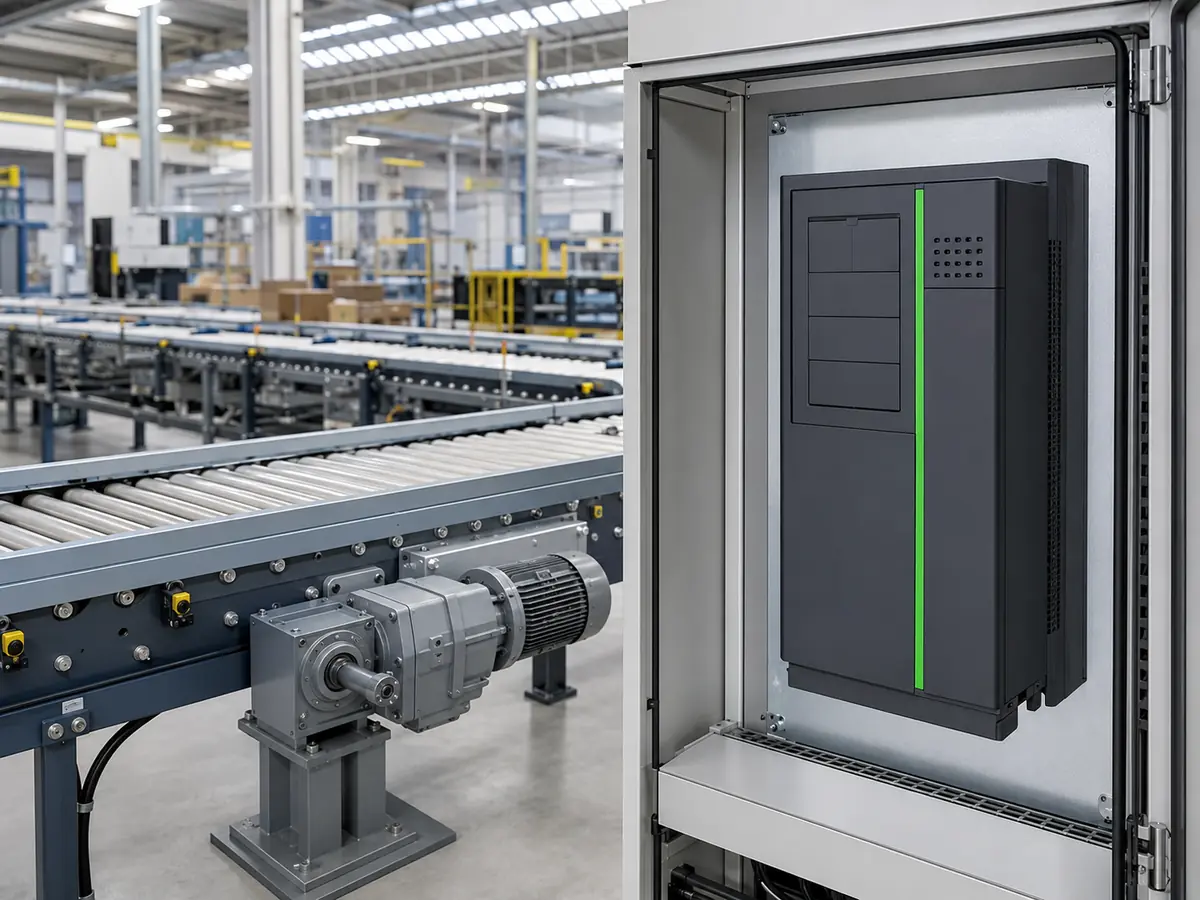
A general high-performance drive series widely used for conveyors and other material handling equipment. Motor parameters can be auto-tuned during installation, which helps reduce setup time on site and helps support stable operation.

Designed for small motors where cabinet space is limited. Supports basic function configuration and can be connected to control systems when communication is required.

Developed for lifting equipment that operates frequently throughout the day. Its hoist-oriented functions help manage acceleration, braking, and torque during repeated operation.

Pump and fan systems usually operate under changing demand. Motor speed can follow pressure, flow, or other feedback signals to maintain the required process condition.

Designed for compressor operation, this drive allows motor speed to match actual air demand and supports systems that run with multiple motors.

Send the motor nameplate, load type, old drive model, control signals, and cabinet condition. We can help sort which series should be reviewed first.
This table is for early comparison. The final model should be checked against the motor nameplate, load condition, input voltage, control requirement, and working environment.
Voltage classes and functions vary by order code and power band. Treat the entries below as a shortlisting aid. The current datasheet and approved quotation control the final configuration.
| Series | Common Use | Power Range | Input Voltage | Control / Communication Notes |
|---|---|---|---|---|
| FU9000D | General machinery | 0.75–630 kW (1–850 HP) | 220 / 240 / 380 / 480 V classes; confirm by model | Motor auto-tuning and programmable I/O; control and network options vary by model |
| FU9000MD | Small motor / compact cabinet | 0.75–2.2 kW (1–3 HP) | 220 / 380 V classes; confirm by model | User-programmable functions; confirm communication availability by model |
| FU9000H | Crane and hoist | 0.75–630 kW (1–850 HP) | 380 / 480 V classes; confirm by model | Hoist-oriented parameter functions; control and network options vary by model |
| FU9000B | Pump and fan / HVAC | 1.5–500 kW (2–670 HP) | 220 / 380 / 480 V classes; confirm by model | Pump and fan functions, process feedback control, and pipe rupture monitoring |
| FU9000C | Air compressor | 0.75–630 kW (1–850 HP) | 380 / 480 V classes; confirm by model | Modbus RTU; PROFIBUS-DP and PROFINET through optional modules on selected configurations |
Not every site has three-phase power available. For smaller motors, UFELE also offers single-phase input VFD options that take a 220V single-phase supply and output three-phase power to run a standard three-phase motor. This single-phase to three-phase conversion is common for small pumps, fans, and workshop equipment where only single-phase power is on site.
Before choosing a single-phase input drive as a phase converter, send the motor nameplate, actual load type, and starting condition. A drive sized only by output kW without checking the single-phase input current and derating can be undersized for the real load.
When we talk with buyers, the first questions are usually very direct. Can this drive start the loaded motor? Will it run steadily at low speed? Is there enough cabinet space? Does the site use PLC control, pressure feedback, or only keypad operation? These answers decide which functions deserve attention. A pump project may bring PID into the discussion. A hoist may need more focus on torque and braking. A simple fan may only need clean speed control and easy setup.
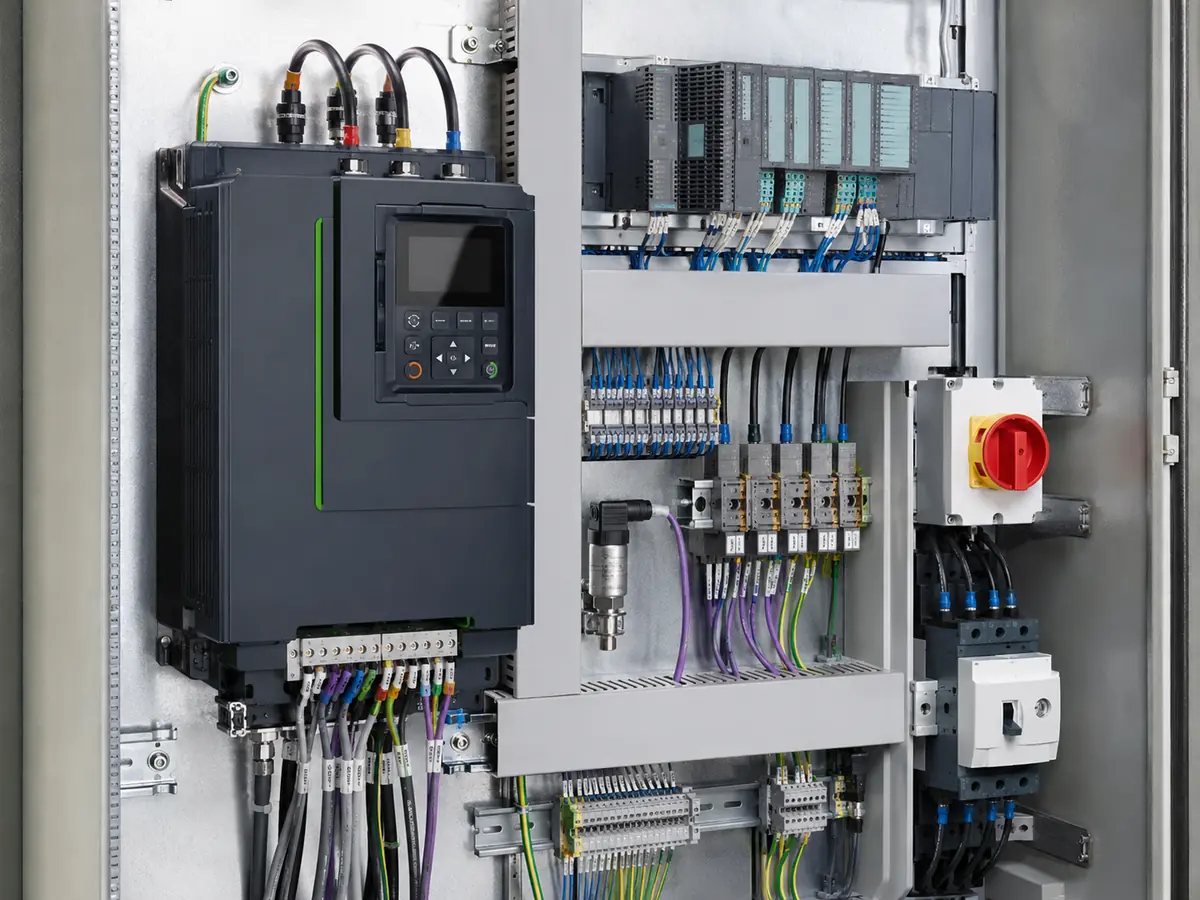
VFD selection changes with the load. These examples show why the application should be included in the first inquiry instead of sending only motor kW.

Conveyor systems often need smooth acceleration to reduce belt slippage and mechanical impact. Loaded starts may need extra torque margin.

Lifting work needs controlled acceleration, stable low-speed torque, and braking discussion. It should not be treated like a light fan load.

Pumps often run under changing demand. Speed control can help regulate pressure or flow and reduce the shock of sudden changes in the pipeline.

Compressor systems may need speed adjustment according to air demand. Pressure feedback and motor type should be checked early.

Fan systems often need airflow adjustment rather than constant full-speed running. Skip-frequency and vibration concerns may also be reviewed.

Retrofit projects should check drive size, terminal layout, control wiring, cooling space, and whether existing equipment needs parameter matching.

Machinery applications should be reviewed by speed range, torque response, start-stop pattern, and how the drive is controlled by the machine.

Distributor orders often focus on popular power ratings, packing, labels, manuals, and stable repeat supply rather than one project only.
Motor power is only the starting point. Rated current, supply voltage, load type, starting torque, and control method determine whether a standard or heavy-duty VFD is appropriate. Replacing another manufacturer’s drive? Compare the old unit’s current, voltage, control terminals, communication, braking arrangement, dimensions, and load duty before choosing a substitute.
VFD buyers may need datasheets for model comparison, manuals for wiring and setup, packing photos for distributor orders, or label files for private label programs. These details should be confirmed before production, not after the goods are ready.
Ask for the current datasheet after the series direction is clear. Manual files should match the product version and control functions being discussed.
Mixed VFD orders should have clear item labels, carton marks, and packing photos so warehouse receiving and repeat orders are easier.
OEM VFD support can be reviewed by label position, logo file, manual request, carton mark, barcode, order quantity, and target market.
These questions are common before buyers send a VFD inquiry or replacement request.
Send motor power, input voltage, motor type, load type, starting condition, control method, communication requirement, cabinet space, working environment, and whether the drive is for a new installation or replacement.
No. Motor power is only the starting point. Pumps, fans, conveyors, hoists, compressors, and machinery can have different torque, overload, braking, and control requirements.
FU9000B is positioned for pump and HVAC applications, while general VFD series may also be discussed depending on motor data, control needs, and site requirements.
In pump and fan systems, speed control can reduce unnecessary full-speed running when demand changes. Actual saving depends on load pattern, running time, and system condition.
Yes. For smaller motors, single-phase input VFD options are available that take a 220V single-phase supply and output three-phase power. Send the motor nameplate and load type so the correct model and derating can be checked.
OEM VFD support can be discussed according to series, quantity, label position, manual request, carton mark, barcode need, and target market.
Attach the motor nameplate, load type, input voltage, old drive photo if replacing, control method, cabinet condition, quantity, and destination market. UFELE will review the series direction before quotation.