
Centrifugal Pump
A centrifugal pump usually presents a variable-torque load. The review focuses on pressure or flow control, minimum speed, dry-run or level signals, acceleration, motor cooling and any automatic restart logic.
UFELE Electric — Solar Pumping, Industrial Drives and PV Protection
Email: sale@ufele.com | B2B Supply and OEM Orders

Motor kW or horsepower gives you a useful starting point. It does not identify the final drive. A sound VFD selection also checks the motor nameplate current, supply voltage, load torque, overload demand, speed range, control method and installation environment.
Use the tables below to prepare a shortlist and a complete inquiry. UFELE then checks the actual application against the current series datasheet before confirming a model code. This extra step prevents a power-band match from becoming a poor field selection.
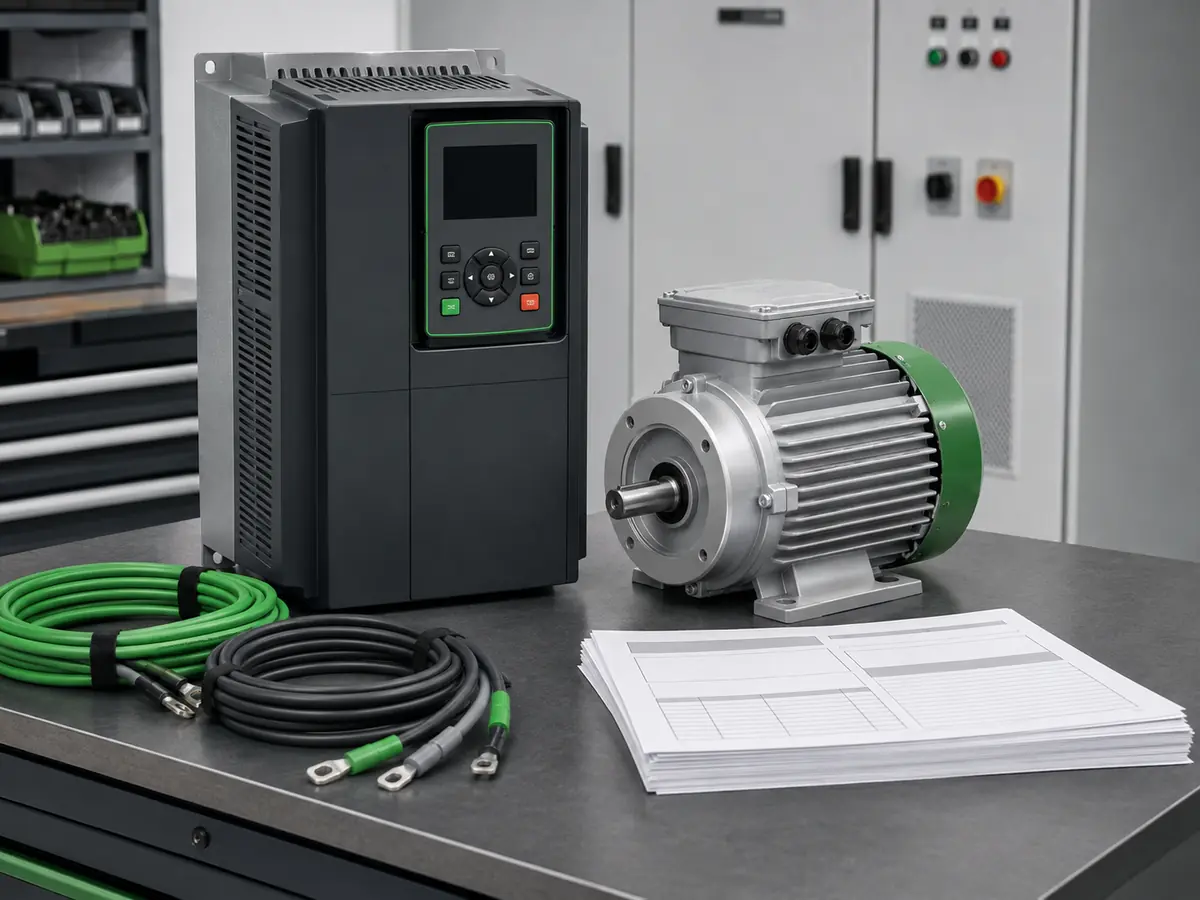
Rated current, load behaviour and site conditions finish it.
Start with fixed electrical facts. Then review how the machine works. This order makes missing information easy to see and reduces back-and-forth during quotation.
| Check | Information to collect | How it affects selection | Stop and clarify when |
|---|---|---|---|
| 1. Supply | Input voltage, frequency and phase | Defines the compatible input class and available drive range | The site supply and motor voltage do not match |
| 2. Motor plate | Rated voltage, current, frequency, speed, power and connection | Provides the electrical values used for the current check and setup | The nameplate is missing, damaged or incomplete |
| 3. Output current | Motor rated current and required duty | The drive must cover continuous motor current after applicable derating | Only kW or hp is available |
| 4. Load | Pump, fan, conveyor, mixer, compressor, hoist or other machine | Indicates torque behaviour, starting demand and suitable drive series | The machine starts under load or has high breakaway torque |
| 5. Operation | Speed range, acceleration time, reversals, stops per hour and duty cycle | Changes overload, braking, cooling and control requirements | Rapid cycling or fast stopping is required |
| 6. Environment | Ambient temperature, altitude, dust, moisture and enclosure | May require derating, a different IP rating or added cooling | Conditions exceed the current datasheet limits |
| 7. System | Cable length, control signals, communication, reactor, filter and bypass needs | Defines accessories, EMC measures and cabinet layout | The motor cable is long or the site has sensitive equipment |
| 8. Final match | Current UFELE datasheet and complete application record | Confirms model code, frame, duty rating and accessories | Any input remains assumed rather than verified |
Core rule: the selected VFD must provide enough continuous output current for the motor after every applicable derating factor. Do not apply one fixed percentage to every application. Use the duty rating and current tables for the exact series under review.
Two motors can carry the same kW value but show different rated currents. Efficiency, power factor, voltage, design and manufacturer data all affect the nameplate. For this reason, UFELE uses kW to identify a starting band and uses rated current to check the drive’s continuous output capability.
Send a clear photo of the complete motor nameplate. The image should show voltage, current, frequency, speed, power and the motor connection. If one value is hidden or unreadable, type it in the inquiry instead of asking the reviewer to guess.
Also state whether one VFD will run one motor or several motors. Multi-motor arrangements need a separate review because individual motor protection, total current and operating sequence can change the design.

This table does not assign a UFELE model. It shows the typical level of project information needed as motor power increases. Always use the current series datasheet for rated output current, overload classification, frame size and derating.
| Motor power band | Common load examples | Priority checks | Useful inquiry files |
|---|---|---|---|
| 0.75–2.2 kW | Small pumps, fans and compact machinery | Input phase, rated current and low-speed cooling | Nameplate photo, supply details and control method |
| 3–7.5 kW | Pumps, fans and light conveyors | Load duty, acceleration and cabinet ventilation | Load description, current, signals and enclosure |
| 11–30 kW | Process pumps, blowers, conveyors and mixers | Starting torque, overload, braking and cable length | Duty cycle, starting condition and cabinet drawing |
| 37–90 kW | Large pumps, fans, compressors and production lines | Input capacity, heat, reactor or filter needs and bypass | One-line diagram, motor data and site conditions |
| 110–250 kW | Industrial process and high-flow systems | Protection coordination, harmonics and motor cable effects | Transformer data, protection scheme and load profile |
| 280–630 kW | Project-engineered high-power loads | Derating, cooling, harmonics, commissioning and system study | Full electrical specification and application record |
The range above reflects the published UFELE product scope used for preliminary inquiries. Series availability, current ratings and frame sizes can change. Request the current controlled datasheet before purchase approval.
A matching power value does not make two loads electrically identical. The comparison below shows why UFELE asks for the driven machine and starting condition before confirming a drive.
A centrifugal pump usually presents a variable-torque load. The review focuses on pressure or flow control, minimum speed, dry-run or level signals, acceleration, motor cooling and any automatic restart logic.

A conveyor can need higher breakaway torque, especially when it starts with material on the belt. The review must cover constant-torque duty, acceleration time, starts per hour, braking and the risk of a jam.
Read the rated current from each motor nameplate. Then compare the actual load duty with the relevant UFELE current and overload table. The pump and conveyor may use different duty ratings, series or frame sizes even though both motors show 7.5 kW.
No model code belongs in this example because the motor current, site voltage and current datasheet have not been supplied.

A drive releases heat into the cabinet. High ambient temperature, restricted airflow or dense cabinet layouts can reduce available output or require added cooling. High altitude can also affect cooling and insulation requirements. Use the limits and derating curves in the current datasheet.
Carrier frequency matters as well. A higher setting can reduce audible motor noise, but it can increase drive heating and may require derating. Long motor cables can introduce additional electrical stress. Ask the application team whether a reactor, filter or other output measure is appropriate for the cable length and motor insulation.
State the required enclosure rather than assuming an open drive suits the site. Dust, moisture, washdown exposure and outdoor installation can change the IP requirement and cabinet design. For replacement work, include clear photos of the old drive, terminals, control wiring and available mounting space.
If the project includes a bypass, emergency stop circuit, safety function or coordinated protection, send the one-line diagram before order approval. UFELE can review the drive selection, but the system designer remains responsible for the complete installation and local code compliance.
A complete inquiry lets the application team compare the correct series and duty table on the first pass. It also creates a useful record for quotation, order confirmation and later technical support.
Document control: request the current datasheet for the exact proposed series. Check its revision, voltage class, duty rating, rated output current and environmental limits against the quotation before approving the order.
No. Motor power gives you a starting band, but the drive must also match the motor nameplate current, supply voltage, load duty, overload demand and installation conditions. Confirm the final model against the current series datasheet.
The selected drive must provide enough continuous output current for the motor after all applicable derating. The required margin depends on the load, duty rating and site conditions, so use the current datasheet instead of applying one universal percentage.
A centrifugal pump usually presents a variable-torque load, while a loaded conveyor can require stronger breakaway torque and short-term overload capacity. The same motor power does not guarantee the same drive duty or frame.
Send a clear motor nameplate photo, supply voltage and phase, load type, starting condition, speed range, control method, enclosure requirement, ambient temperature, altitude, motor cable length and any old drive or cabinet information.
No. It helps you prepare a reliable shortlist and inquiry. UFELE confirms the final series, model code, duty rating and accessories against the current datasheet and the actual application data.
Send the motor plate, load description and site conditions. UFELE will identify missing data and compare the application with the current series information before issuing a model-level quotation.