Solar-Powered Pumping
The inverter converts the PV energy source into controlled AC output for the irrigation pump.
UFELE Electric — Solar Pumping, Industrial Drives and PV Protection
Email: sale@ufele.com | B2B Supply and OEM Orders

Project Case · Sri Lanka
A solar-powered irrigation project in Sri Lanka uses a FU9000SI-2.2KW-SS2 solar pump inverter to operate the pumping system from solar energy. The installation can deliver up to 100,000 liters of water per day for agricultural irrigation.
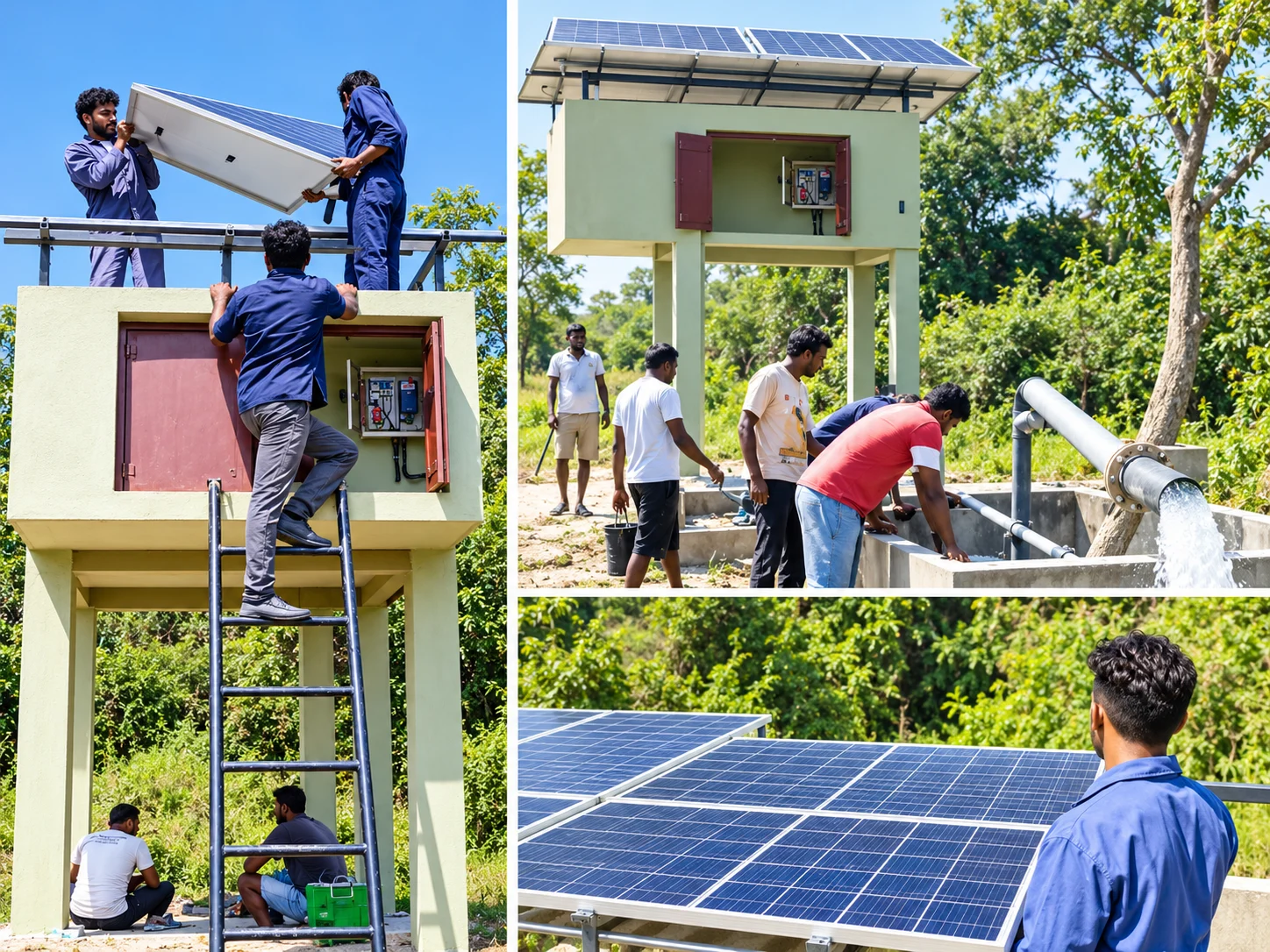
The system uses a 2.2 kW FU9000SI solar pump inverter for PV-powered agricultural irrigation,
with a daily water delivery of up to 100,000 liters.
| Project Item | Project Information |
|---|---|
| Country | Sri Lanka |
| Application | Agricultural irrigation |
| Solar pump inverter | FU9000SI-2.2KW-SS2 |
| Inverter rating | 2.2 kW |
| Primary energy source | Solar PV |
| Water delivery | Up to 100,000 liters per day |
| Operation | Automatic start and stop |
The project applied solar pump inverter technology to an agricultural irrigation system. The practical objective
was to use available solar energy to operate the pump and provide a substantial daily water supply without relying
entirely on conventional grid or fuel-based pumping.
The inverter converts the PV energy source into controlled AC output for the irrigation pump.
The irrigation system can deliver up to 100,000 liters of water per day.
Automatic start and stop operation is identified as one of the functions used to simplify day-to-day system operation.
The system uses the FU9000SI-2.2KW-SS2 between the PV array and the irrigation pump.
The inverter converts solar DC input into controlled AC output and adjusts pump operation as available solar power changes.
Irrigation pumping is a variable-energy application when solar PV is the power source. Solar irradiance changes
through the day, while the pump still requires controlled motor voltage and frequency.
The solar pump inverter manages that interface and allows the pumping system to operate from the available solar input.
The field installation shows the solar-powered irrigation system operating in Sri Lanka.
The project demonstrates how a compact 2.2 kW solar pump drive can be applied where daily water demand
is matched to the local pump and solar conditions.
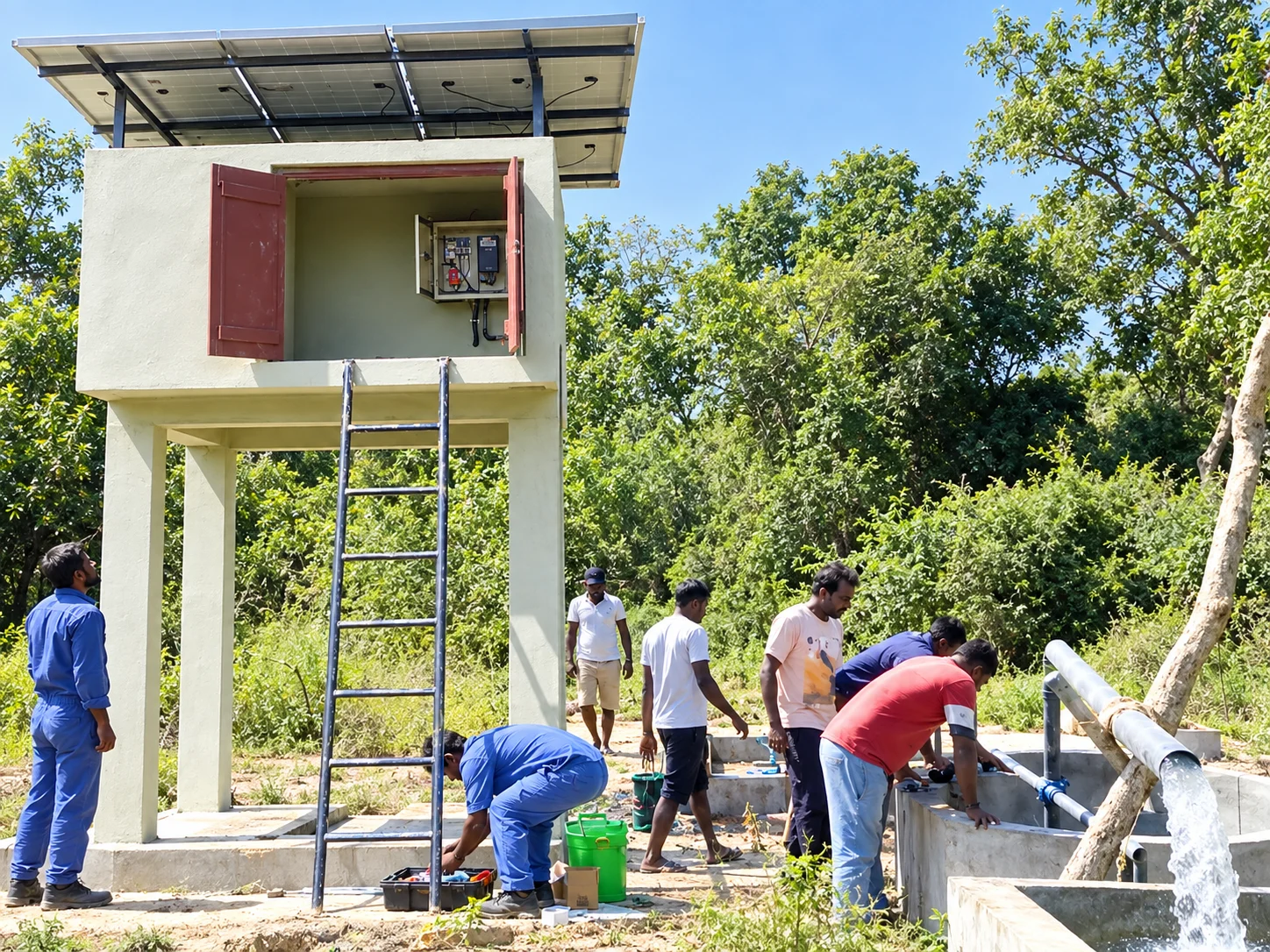
The irrigation system can deliver up to 100,000 liters of water per day under the project operating conditions.
Daily output will vary with hydraulic head, pump characteristics, available solar energy and operating time.
The 2.2 kW Sri Lanka project is useful as an application reference, but a new system should not be selected from
inverter kW alone.
| Required Input | Why It Matters |
|---|---|
| Pump rated power | Initial inverter size check |
| Pump voltage and phase | Determine compatible inverter output class |
| Pump rated current | Confirm drive output-current capacity |
| Required daily water volume | Define the irrigation target |
| Required flow rate | Establish pump duty |
| Static/dynamic water level | Calculate hydraulic head where applicable |
| Pipe length and diameter | Estimate friction losses |
| PV module Voc and Vmp | Check DC maximum and MPPT operating range |
| PV module wattage | Size array capacity |
| Site temperature | Check cold-condition Voc and equipment derating |