
VFD, Solar Pump and PV Protection FAQs
Find practical answers for VFD sizing, solar pump inverter inquiries, PV DC protection, combiner boxes, low-voltage breakers and OEM orders. These answers help you prepare a clear request. Final selection must follow the actual circuit, load, installation conditions and current product data.
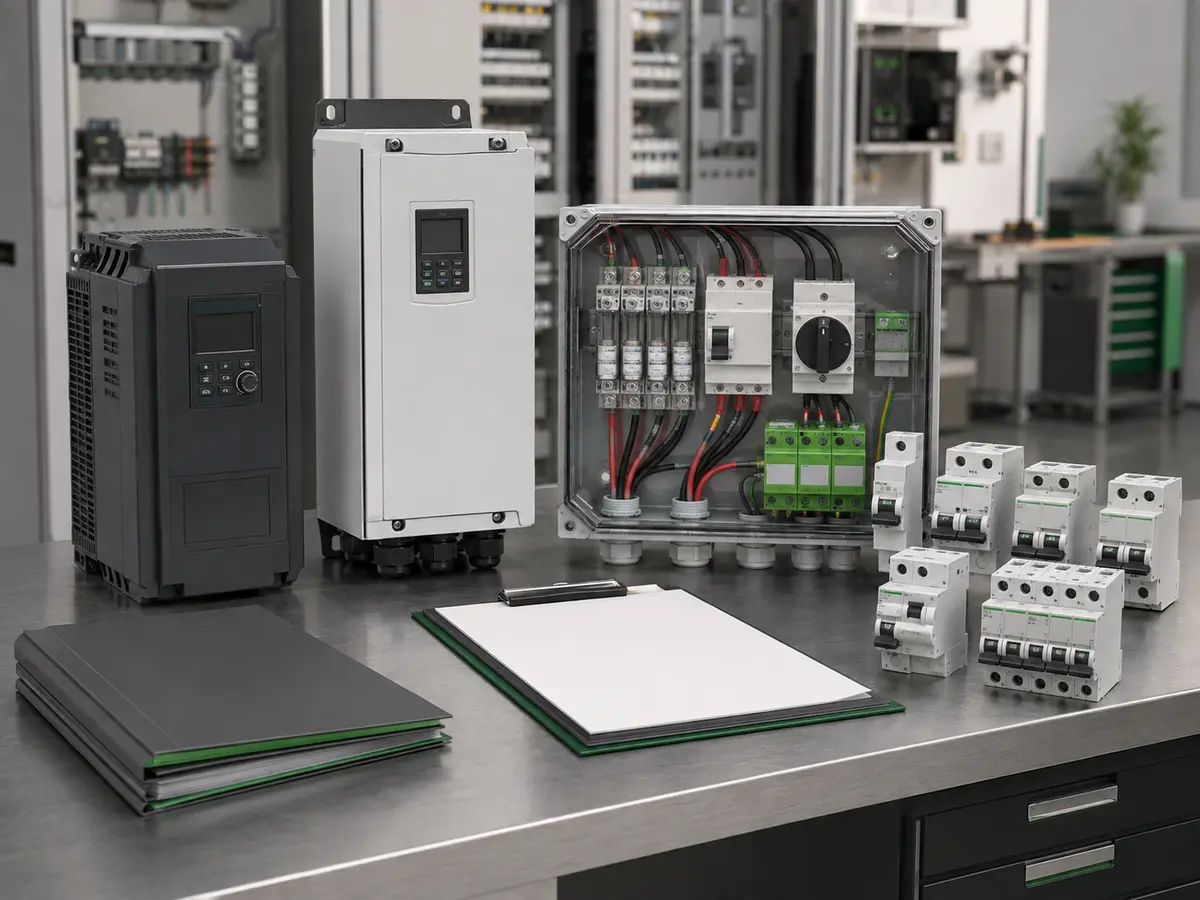
Match the product rating to the actual motor, pump, PV string, circuit and order file.
Choose the Product Group
Each question has a permanent anchor, so you can share a direct link with a buyer, engineer or purchasing colleague.
Solar Pump Inverters
Pump data, PV array checks, AC backup and protection functions.
PV DC Protection
DC breakers, isolators, gPV fuses, SPDs and string data.
PV Combiner Boxes
String layout, protection parts, enclosure and drawing checks.
OEM and Order Files
Datasheets, certificates, private labels and revision control.
VFD Selection FAQs
Start with the UFELE VFD range, then use the motor and load data below to narrow the duty.
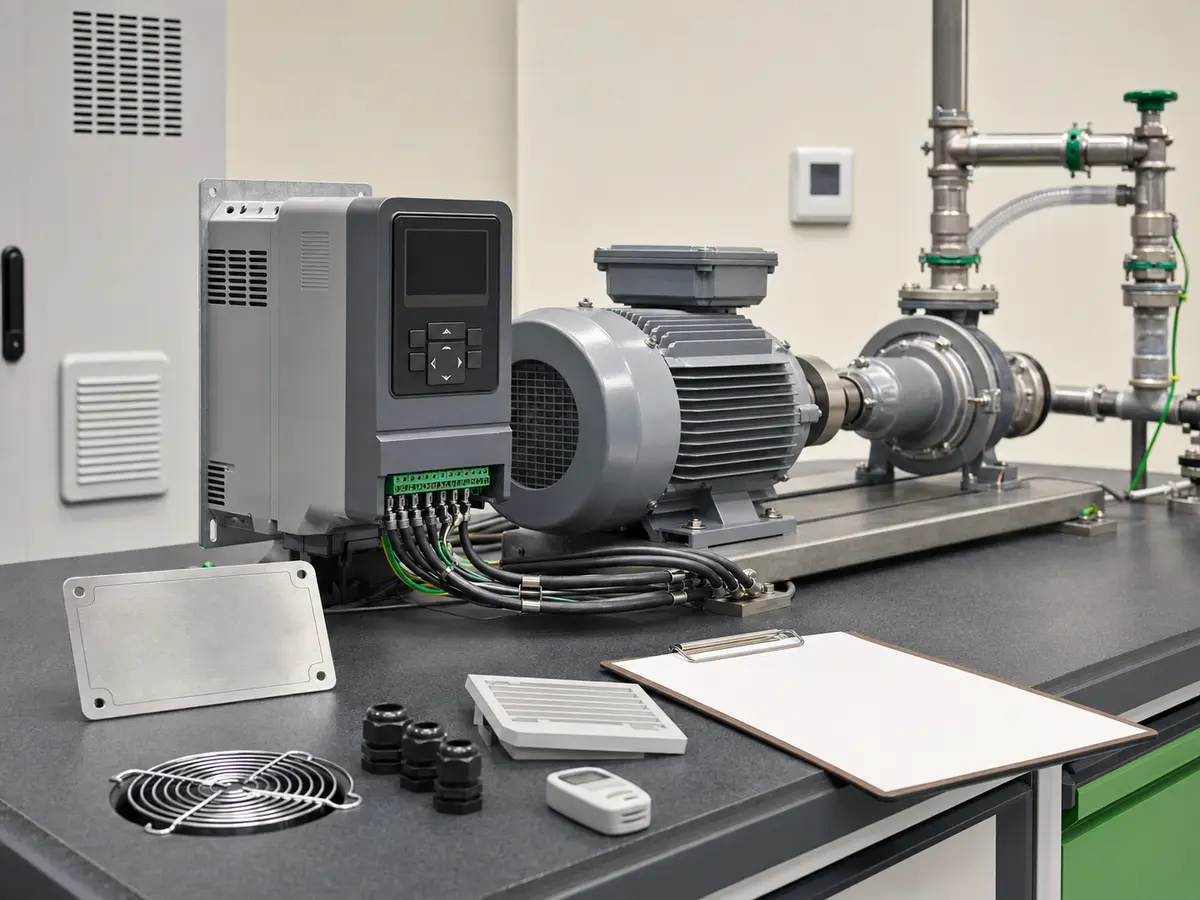
Can a VFD be selected by motor kW alone?
No. Motor kW is only the first check. Compare the input supply, motor rated voltage and current, load type, starting torque, overload duty, control method, ambient temperature and enclosure conditions. Use the motor current and application duty to review the VFD rating.
Why does the load type change VFD selection?
A centrifugal pump, fan, loaded conveyor, mixer, compressor and hoist can have different torque, acceleration, braking and overload needs at the same motor power. State the driven machine and operating cycle before the drive duty is confirmed.
What should I send for a new or replacement VFD quotation?
Send the motor nameplate, input supply, load type, control method, operating cycle, cabinet conditions and quantity. For a replacement, also send clear photos of the old drive label, power and control terminals, wiring diagram and available mounting space.
Can a standard VFD run a pump?
Yes, many AC-powered pumps can use a standard VFD when the supply, motor data, load duty and control requirements match. A solar pumping application needs a separate review because PV input, daylight operation, water-level control and pump protection functions may be required.
When should I consider a heavy-duty or larger VFD rating?
Review a heavy-duty rating when the load needs high starting torque, frequent acceleration, long low-speed operation, fast braking or repeated overload. Do not increase the drive size by a fixed rule without checking the manufacturer’s normal-duty and heavy-duty current ratings.
What installation conditions can require VFD derating?
High ambient temperature, high altitude, restricted cabinet airflow, closely mounted drives and a switching frequency above the rated condition can reduce usable output. Confirm the installation data against the current VFD manual instead of relying on the power label alone.
Related reading: VFD selection starts with the load, choosing VFDs for pumps and fans, and repairing or replacing an existing VFD.
Solar Pump Inverter FAQs
Use the solar pump inverter range and the solar pumping system guide as the starting points.
Is a solar pump inverter the same as a standard VFD?
No. Both control motor speed, but a solar pump inverter is selected around PV input, pump operation and solar pumping functions. A standard VFD usually starts with an AC input supply, motor load and industrial control method.
What information is needed for a solar pump inverter quotation?
Provide the pump and motor nameplate, required head and flow, site country, daily operating goal, cable distance, PV module Voc, Vmp, Isc and power, proposed series-parallel layout, AC backup requirement and order quantity.
How is the PV array checked for a solar pump inverter?
Check the array operating voltage against the inverter MPPT range and the maximum cold-weather open-circuit voltage against the inverter’s DC input limit. Also review array power, string current, module temperature coefficients and the permitted series-parallel layout.
Can a solar pump inverter use AC backup power?
Some models support AC backup or hybrid input, while others do not. State the AC voltage, phase, source type and desired changeover method. Never connect PV DC and AC backup to terminals that are not designed for both sources.
Which pump protection functions should be confirmed?
Common checks include dry-run protection, tank-full control, well and tank sensor inputs, overcurrent, overvoltage, undervoltage, phase loss and automatic restart. Confirm how each function works on the selected model and which external sensors are required.
Before contacting us, review the solar pump inverter inquiry checklist and pump nameplate details.
PV DC Protection FAQs
Compare the available solar DC protection products, but confirm every rating from the actual PV string design.
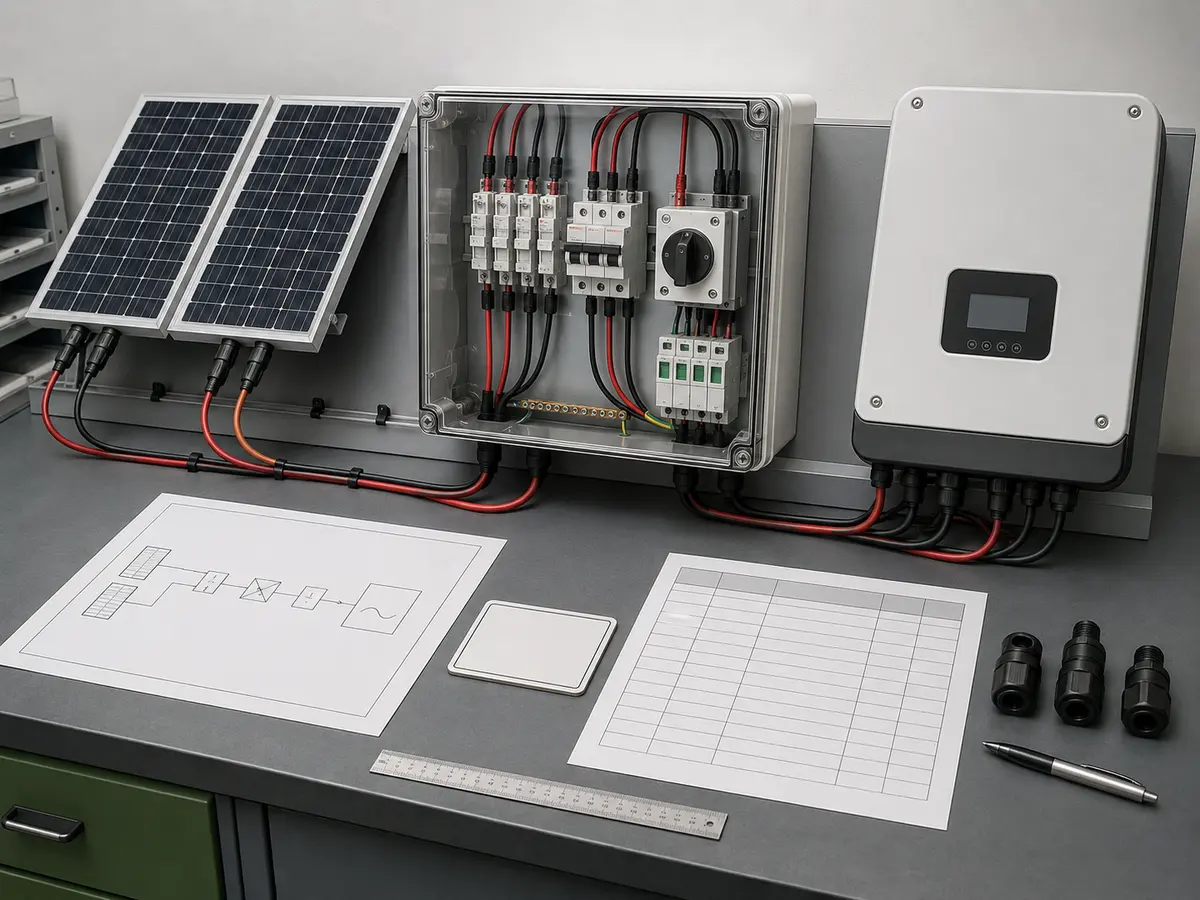
Can an AC breaker or AC SPD be used in a PV DC circuit?
Do not assume it can. A PV-side device must be explicitly rated for the DC system voltage, pole arrangement and the required interruption, isolation or surge duty. Check the product label and datasheet for the exact DC application before ordering.
What is the difference between a DC breaker and a DC isolator?
A circuit-breaker provides specified overcurrent protection and switching performance. An isolator provides a means of isolation under its rated use conditions but does not automatically replace overcurrent protection. Select each device by its circuit position, rating and intended function.
Is PV string Isc the correct fuse rating?
Not directly. Fuse selection must consider the applicable design factors, module maximum series-fuse rating, conductor ampacity, possible reverse current, system voltage, gPV fuse-link rating and the matched fuse holder. Use the project design rules for the destination market.
What details are needed for a PV DC SPD quotation?
Send the maximum PV system voltage, proposed SPD continuous operating voltage, protection type, discharge-current requirement, protection mode, pole configuration, installation position, backup protection arrangement, quantity and destination market.
Should AC and DC SPDs be listed separately in an order?
Yes. Separate them by circuit side, voltage, SPD type, protection mode, pole configuration, discharge-current rating and quantity. This prevents AC and PV DC devices from being mixed in approvals, labels or packing lists.
What should PV module labels and string drawings show?
Provide module Voc, Vmp, Isc, Imp, maximum power, temperature coefficients and maximum series-fuse rating. The drawing should show modules per string, parallel string count, cable polarity, combining points and the planned protection positions.
Use the DC breaker, fuse and SPD checklist to prepare one consistent order table.
PV Combiner Box FAQs
See the PV combiner box options, including DC, AC and hybrid configurations.
What information is needed for a PV combiner box quotation?
Send the number of input strings and outputs, maximum DC voltage, string current, output current, protection layout, enclosure material, IP rating, cable sizes, entry direction, monitoring need, installation environment, quantity and destination market.
Is string quantity enough to select a PV combiner box?
No. String quantity only defines part of the layout. Voltage, current, output arrangement, fuse or breaker selection, isolation, SPD coordination, cable entry, enclosure and installation conditions must also be reviewed.
Do all combiner boxes need fuses, a breaker, an isolator and an SPD?
No single parts list fits every project. Fuse-links, circuit-breakers, isolators and SPDs perform different functions. Confirm the array design, inverter inputs, fault-current paths, local rules and maintenance method before the box layout is approved.
How should the combiner box enclosure and IP rating be chosen?
State whether the box is indoors or outdoors, the mounting position, sunlight exposure, rain, dust, temperature, corrosion risk and cable-entry direction. The specified IP rating applies to the completed enclosure and depends on correct glands, seals and installation.
What must a combiner box layout drawing show?
Show every input and output, polarity, fuse or breaker positions, SPD, isolator, busbars, terminals, cable sizes, gland positions, earthing point and enclosure dimensions. Add component ratings and drawing revision numbers before production approval.
For a full inquiry sequence, use the PV combiner box buying guide.
MCB, MCCB, RCCB and RCBO FAQs
Review the low-voltage electrical product range and separate each device type in the quotation table.
What is the difference between an MCB and an MCCB?
Both are circuit-breakers, but they cover different product formats and application ranges. Compare rated current, voltage, breaking capacity, trip characteristics, adjustability, poles, mounting and the applicable product standard instead of choosing by the abbreviations alone.
What is the difference between an RCCB and an RCBO?
An RCCB provides residual-current protection without integral overcurrent protection. An RCBO combines residual-current and overcurrent protection. The circuit design must still confirm the rated current, residual operating current, RCD type, poles, breaking capacity and coordination.
What details should be listed for MCB, RCCB and RCBO orders?
Separate each product type and list poles, rated voltage, rated current, frequency, trip curve where applicable, breaking capacity, rated residual operating current and RCD type where applicable, standard, quantity, label and packing requirements.
Why do residual operating current and RCD type matter?
The rated residual operating current, often marked IΔn, defines the device’s residual-current operating level. The RCD type describes the residual-current waveforms it can detect. Choose both from the circuit, connected equipment and applicable installation rules.
Why must breaking capacity be confirmed?
A circuit-breaker must safely interrupt the prospective short-circuit current at its installation point under the applicable rating and standard. Rated current alone does not show this capability. Confirm the system fault level and the marked breaking-capacity values.
Need ordering fields in one place? Use the low-voltage product order checklist and the electrical glossary.
OEM, Documents and Order File FAQs
UFELE’s custom service starts with a controlled model, rating and artwork map.
Why should a datasheet be checked before order approval?
A datasheet confirms ratings, dimensions, functions, terminals and environmental limits that a product photo or short quotation may not show. Approve the datasheet revision together with the model and quotation before production.
What files are needed for a private-label electrical product order?
Prepare vector logos, rating-label content, model mapping, packaging artwork, barcode rules, color references, manual requirements and destination-market marks. Give every file a revision number and identify which SKU uses it.
How should certificate documents be checked?
Match the applicant or manufacturer, product family, exact model, rating, standard, issue date and validity information to the item being ordered. A certificate for a related model or different rating should not be treated as proof for the requested product without confirmation.
How should label and packaging artwork be approved?
Review the model, ratings, warnings, barcode, logo, colors, dimensions and destination-market information on a proof. Record the approved revision and do not replace files through informal messages after approval.
What should the final electrical product order file contain?
Use one controlled table that maps SKU, model, rating, quantity, label revision, packaging revision, accessories, document requirements and carton marks. Resolve empty cells and conflicting files before the order is released to production.
Also review UFELE’s certificate document scope and quality-control process before order approval.
How These Answers Are Reviewed
The UFELE Applications Team uses current product data, order-review experience and IEC terminology to define the selection checks on this page. Relevant reference areas include IEC 61800-5-1 for adjustable-speed power drive systems, IEC 61643-31 for PV SPDs, IEC 60269-6 for PV fuse-links, IEC 60947-2 for circuit-breakers, IEC 61008-1 for RCCBs and IEC 61009-1 for RCBOs.
These references define technical scope; they do not state that every UFELE model holds every standard or certificate. Verify the exact model, rating, test document and destination-market requirement before order approval.
Need a Model-Level Answer?
Send the actual motor, pump, PV string, circuit or order file. We will check the information that affects selection before recommending a model or quotation structure.