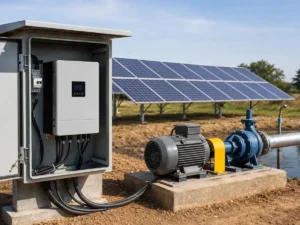
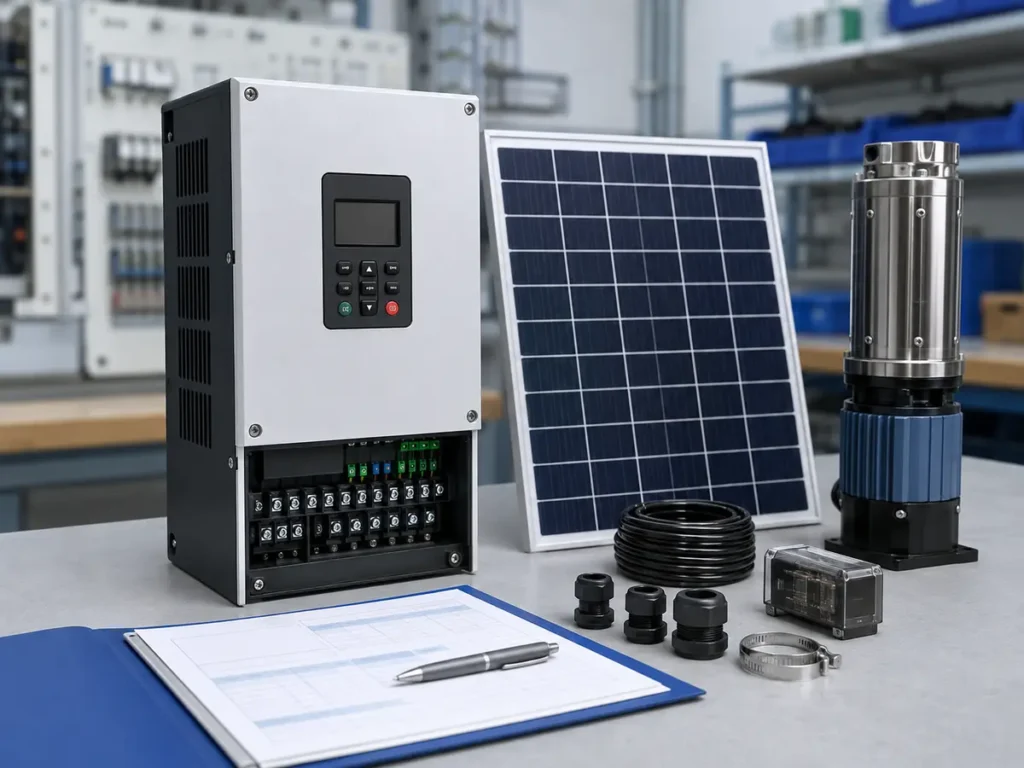
A low solar pump inverter price can feel like progress. Then the second quotation arrives with a different current rating, enclosure, MPPT range, or accessory list, and the comparison falls apart. This guide helps buyers put both offers back on the same technical and commercial basis.
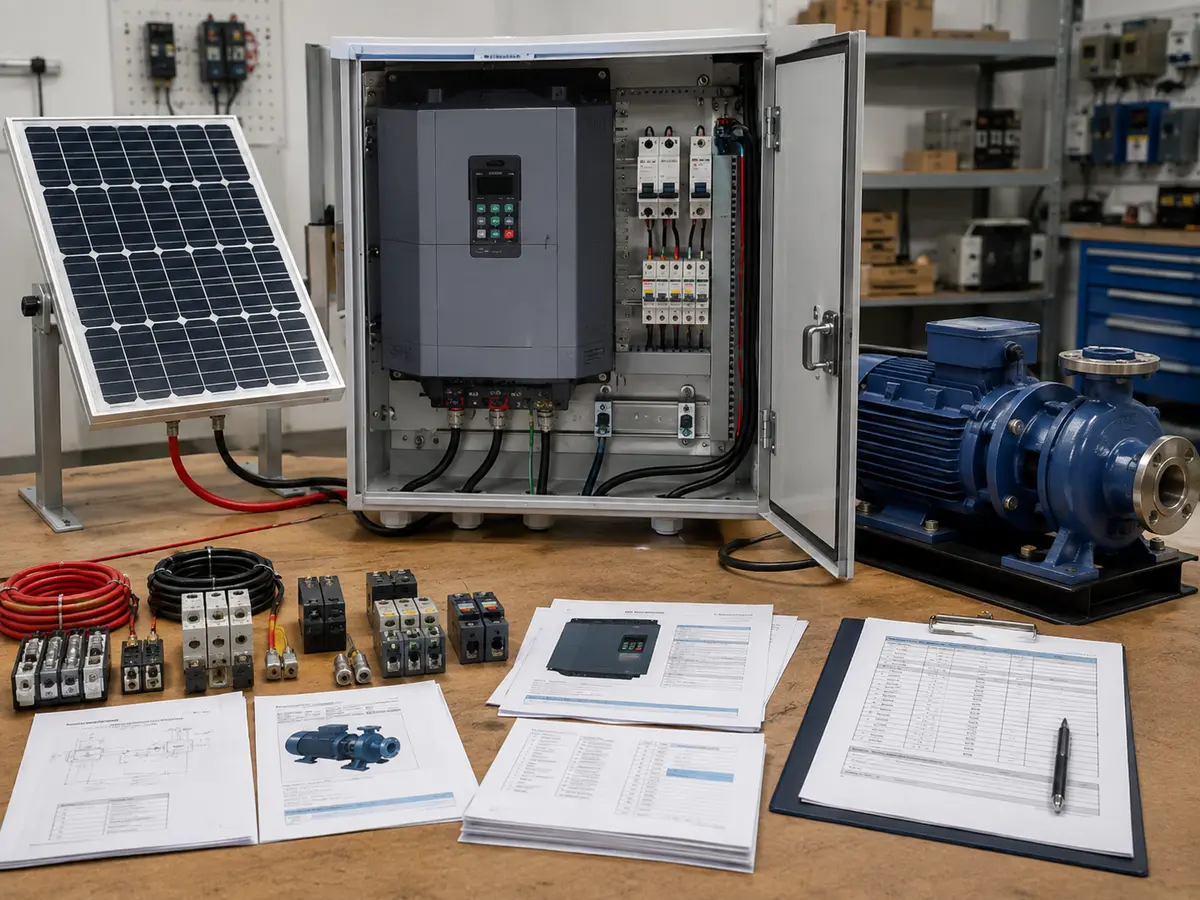
What affects the price of a solar pump inverter?
Quite a lot, honestly — voltage class, continuous output current, power range, MPPT and maximum DC-input limits, enclosure and cooling, pump-control functions, grid or generator backup, communication hardware, certification scope, production testing, branding, manuals, accessories, order quantity, warranty, packing, and the agreed trade term all play a part. Start by asking for a complete model code and a line-by-line scope. Two quotations are not truly cheaper or more expensive until these conditions match.
I understand why buyers ask for a price before sending every technical detail. Budgets are real, and nobody wants to spend a week preparing files only to discover that the product is outside the target. An indicative figure can help. The trouble starts when that early figure is treated as a final, comparable offer.
“7.5 kW solar pump inverter, 50 pieces.” Looks specific. It isn’t, really. Nobody’s said whether the motor is 220 V or 380 V. Nobody’s mentioned the current on the plate, or whether this thing lives inside a cabinet or bolts to a wall out by the well. PV only, or does it need to fall back to grid or a generator? Standard labels, or is a distributor going to want their own branding and manuals in another language?
Every unanswered question gives the supplier room to assume. Sometimes the assumption is reasonable. Sometimes it produces a price that looks wonderfully low because the quotation covers a simpler unit than the buyer had in mind. That disappointment is avoidable. First settle the technical scope, then decide whether the number is good.
If the pump and array data are still incomplete, begin with our solar pump inverter sizing guide. When you also need to assess the supplier behind the offer, use the solar pump inverter manufacturer guide. This article stays focused on price and quotation scope.
Why there is no responsible universal price table
A public table with a neat price beside each kW can attract attention, but it hides too much. Two 7.5 kW units, same voltage class — doesn’t mean much on its own. The current rating could differ. So could the enclosure, the DC-input range, whether backup is built in, the communication hardware, even which certificate applies. Sometimes it’s just the suffix on the model number that changes what’s sitting inside the box.
Market conditions also move. Power semiconductors, capacitors, sheet metal, plastic parts, printing, freight, exchange rates, and order timing can affect a quotation. I would rather date a real offer and state its validity than publish a number that looks precise long after its assumptions have disappeared.
This does not mean the buyer has to accept vague pricing. Quite the opposite. Ask the supplier to break out the base inverter, required options, OEM work, documents, spare parts, packing, and delivery term. A transparent quotation makes changes easier to understand. If an IP65 enclosure or communication module is added later, the buyer can see why the total moved instead of wondering whether the supplier simply changed its mind.
1. Motor power starts the search; output current often decides the model
Motor kW is the fastest way to find the neighborhood in a catalogue. It is not always the final sizing value. The pump’s rated current, voltage, phase, duty, and operating conditions can move the selection to another row or frame. If a supplier prices the nearest kW without checking the motor plate, the first number may be attractive and still be wrong.
Continuous output current isn’t a trivial spec — it drives the power stage, thermal design, conductors, terminals, cooling, and enclosure size, and all of that costs money. Overload capability matters too. A pump application may not demand the same overload as a loaded conveyor, yet the inverter must still start and run the actual pump under its site conditions. Sand, high head, dense water, blocked piping, worn bearings, or operation away from the intended pump curve can raise the demand.
Temperature and altitude can reduce the current available from a given model. I become uneasy when a quotation proudly lists a current rating but never states the surrounding temperature or derating rule. An inverter chosen with no margin at catalogue conditions may require a larger frame once the cabinet reaches a hotter value. That is not the supplier “upselling” if the calculation is documented. It is the cost of keeping the original promise under a harder condition.
2. Voltage class and PV input design can change more than the label
A 220 V pump and a 380 V pump — that’s not a parameter you flip on the same inverter. The power circuit changes. Current ratings change. So do the terminals, the components, and how you’d string the PV array. Make the motor’s actual voltage and winding connection visible before comparing price.
On the PV side, look at the recommended MPPT range and the absolute maximum DC input voltage. The array must provide enough operating voltage when modules are hot, yet remain below the inverter limit when the modules are cold and Voc rises. A wider or higher input range may require a different design. It can also reduce the temptation to use a string arrangement that sits uncomfortably close to a limit.
Do not pay extra for a broad DC range merely because the number looks impressive. Use the range your array and temperature conditions need. At the same time, do not choose a cheaper model whose safe window can be met only on a mild day. The UFELE solar pump inverter range provides a starting point; the final model still follows the pump and PV data.
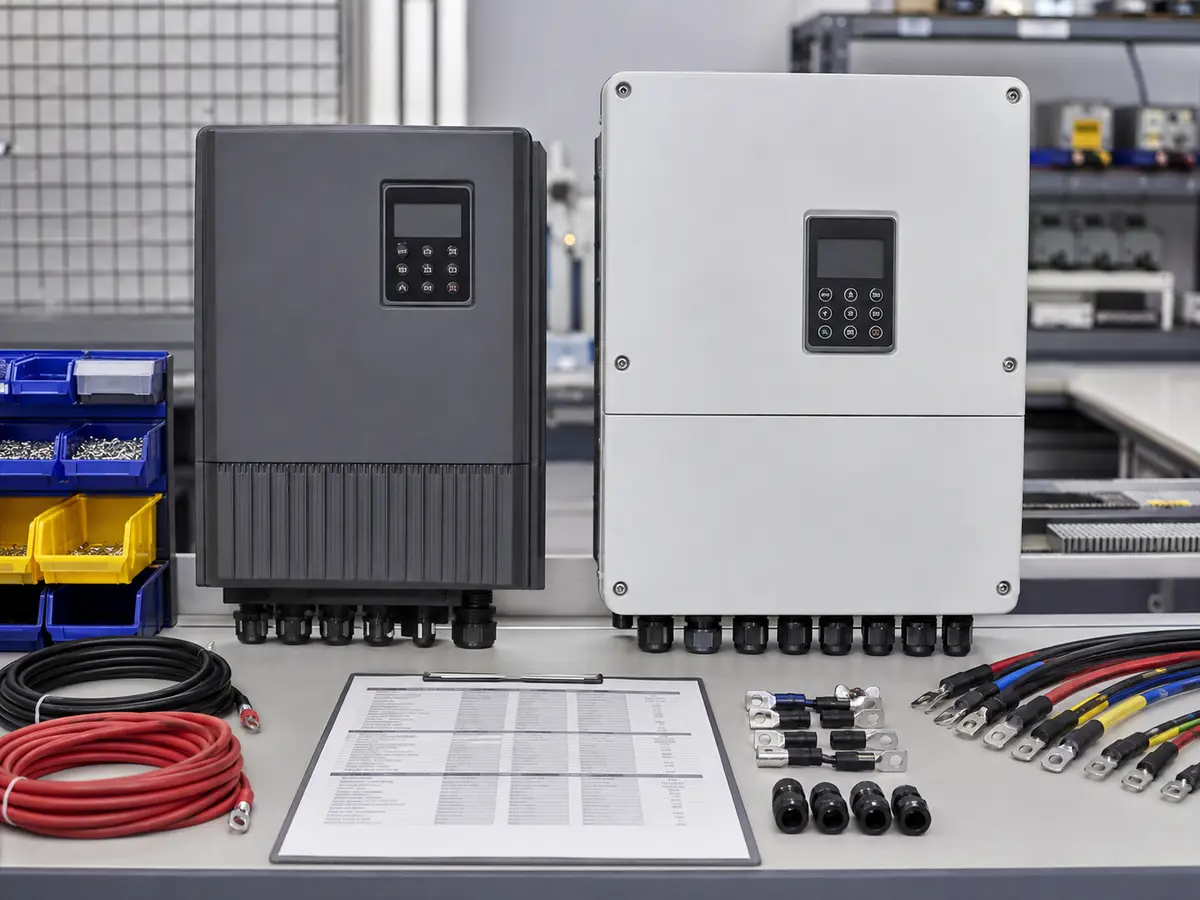
3. IP20 and IP65 prices should not be compared as the same product
An IP20 inverter usually lives inside a suitable cabinet or a protected electrical space — and it can be a genuinely sensible, economical choice, as long as the cabinet, ventilation, filtration, and maintenance plan are already part of the project. An outdoor or dusty installation changes the conversation.
An IP65 version needs an enclosure, sealing arrangement, cable entries, thermal path, and production controls suited to that claim. The enclosure adds material and assembly cost. Cooling can become more difficult as sealing improves. The final price may also include wall-mounting hardware, glands, external controls, or a different keypad arrangement.
I like the reassurance of seeing IP65 on an outdoor quotation, but I do not let the letters solve every problem. Direct sun can raise temperature. Condensation can form. A poorly selected gland can weaken the enclosure. Corrosive gas, insects, flooding risk, and maintenance access remain outside the two digits. Pay for the enclosure the site needs, then protect it as the manual requires.
4. Pump functions, AC backup, and communication add different kinds of cost
Most solar pump inverters list a similar set of core functions — MPPT, dry-run protection, tank-full control, sleep and wake logic, automatic restart. But the function name on a spec sheet doesn’t tell you how it actually works. Dry-run detection may use power, current, a sensor, or a combination. Tank control may require a float switch or probe. Ask whether the required hardware is included and which terminals or parameters are used.
Grid or generator backup can affect hardware, firmware, wiring, switching logic, and protective devices. A brochure may say “AC/DC input” while the project still needs an approved sequence for changing sources. If an external changeover arrangement, contactor, reactor, or protection box is required, place it in the quotation rather than assuming it arrives inside the inverter.
Communication creates similar surprises. RS485 may be standard while Wi-Fi, 4G, Ethernet, or a remote platform needs an option. The hardware price is only one part. Ask about the protocol, data map, antenna, SIM or service requirements, app access, account ownership, and whether future platform fees exist. A cheap module that cannot exchange the data your customer expects is not a saving.
| Price factor | Why the quotation may change | What to request |
|---|---|---|
| Output current and power frame | Power stage, terminals, heat, and enclosure size change | Exact model row and current after derating |
| Voltage and PV input | Different circuit and string requirements may apply | Input class, MPPT range, and maximum DC voltage |
| IP20 or IP65 | Enclosure, sealing, cooling, glands, and mounting differ | Complete enclosure scope and environmental limits |
| AC backup | Extra hardware, control logic, and protection may be needed | Approved architecture and included switching items |
| Communication | Cards, antennas, gateways, or service access may be optional | Option code, protocol, data map, and ongoing terms |
| OEM work | Artwork, printing, firmware, documents, and setup add work | Customization list, MOQ, setup fee, and approval process |
| Certificates and tests | Market-specific evidence or added inspection may affect scope | Exact documents, models covered, and test plan |
| Warranty and spares | Longer coverage and local stock carry cost and responsibility | Warranty route and separate spare-parts list |
5. Certificates and documentation can change the order scope
Some buyers need a standard export file. Others need evidence tied to a tender, local registration, distributor approval, or customer audit. The supplier may already have a suitable declaration, certificate, or report for the exact standard model. A different suffix, private label, voltage, enclosure, or destination can require another review.
Never treat a certificate logo as a paid option by itself. Ask what document you’ll actually get. Whose name is on it, which models does it cover, what standard does it reference, is it even valid where you’re shipping to. If the supplier wants to run extra testing or draft new paperwork, don’t let that get folded into a vague total — get the lab, the route, the timeline, and the fee written down on their own line. Languages, layout, branding, wiring diagrams, warnings, a local contact number in the manual — none of that is free either, if you’re the one asking for it.
I have no objection to paying for real document work. What frustrates buyers is paying an “OEM fee” without knowing whether it covers a logo change or a controlled manual that can actually be approved. The UFELE certificate page and downloads provide starting files; ask for the exact model documents with the quotation.
6. OEM scope and MOQ should be priced together
A standard UFELE model in standard packing can usually follow a simpler order path than a private-label unit. Customization may touch the nameplate, keypad overlay, carton, barcode, manual, warranty card, color, password, firmware defaults, accessories, and spare parts. Each item creates a file, approval, or production step.
MOQ is not only a sales rule. Printing setup, purchased components, packaging quantities, color preparation, label batches, engineering time, and testing can create a practical minimum. A distributor may receive a lower unit price at a larger quantity because those setup costs are spread across more units. That does not mean the largest order is automatically the wisest first order.
For a new model or market, a standard sample or small trial order can reveal more than a long email chain. Agree on what the sample proves. A generic unit may approve electrical function but not the final private label or carton. Keep exceptions visible, then move to bulk production with fewer surprises.
Ask for the standard-product price, OEM setup cost, customized unit price, MOQ, sample terms, artwork timeline, and approval process as separate lines. The UFELE OEM service page explains the file-control side of private labels and packaging.
7. Testing, warranty, and technical support are part of the price
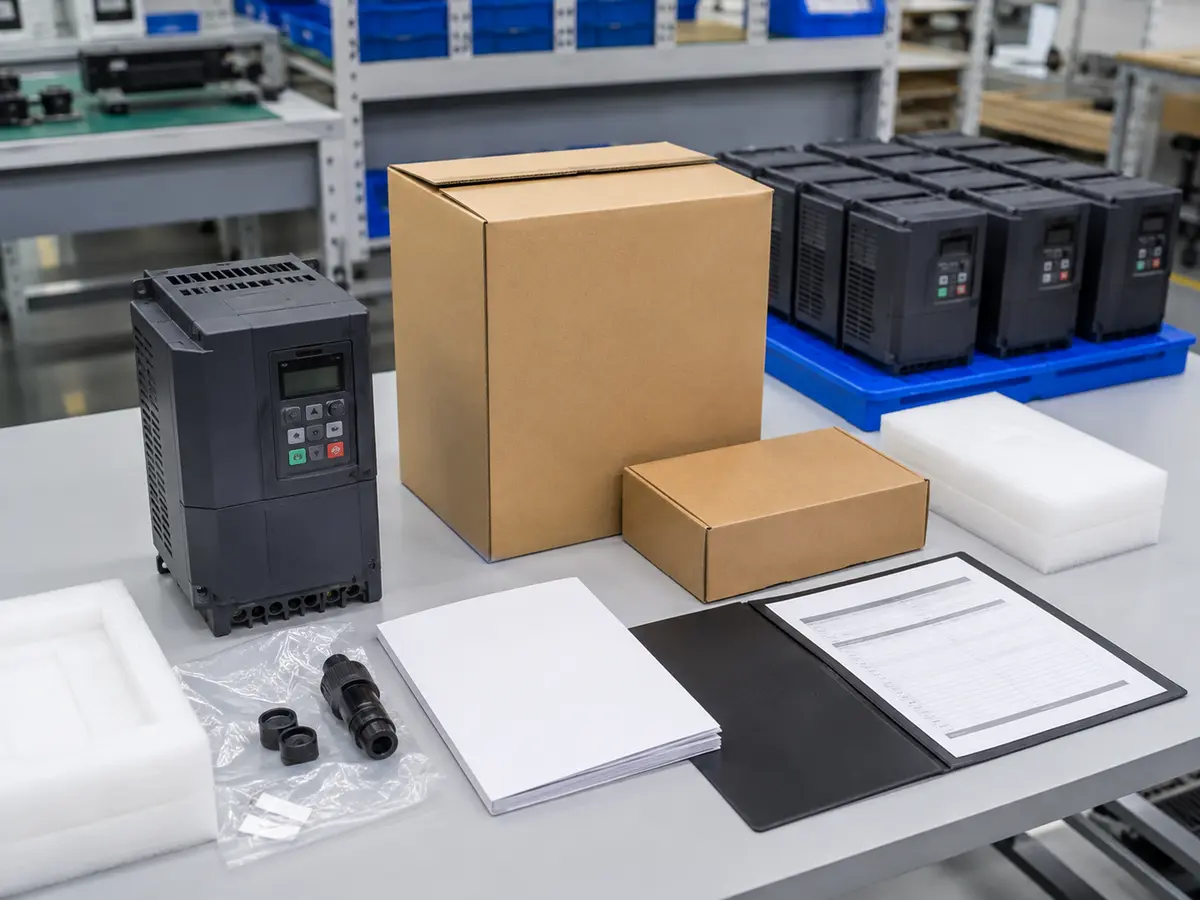
“100% tested” is difficult to value until the supplier explains what is checked. Production testing may cover power-on, display, keypad, fan, I/O, communication, output, protection, and loaded operation. And design validation, routine production checks, and an optional customer inspection are three different things — not interchangeable labels for “we tested it.”
Need a report per batch? Serial-number traceability, photos, video, someone watching the test happen, third-party inspection, a special sequence — put it in the RFQ, all of it. Takes time to arrange, sure. Saves you an argument down the road. Our quality-control page shows the areas buyers can discuss before approval.
Warranty language can hide a large commercial difference. Does coverage begin at shipment, arrival, installation, or commissioning? What evidence is needed for a claim? Does the buyer return the unit, receive parts, or replace it locally? Who pays freight? A three-year warranty sounds better than a one-year one, until the claim process turns out to take six months and you’re the one paying to ship the unit back.
Technical support costs money too, even when nobody writes it on the invoice. Somebody on the other end has to actually read your pump data, help set parameters, chase down a fault, look at the photos you sent, and figure out whether it’s the inverter, the motor, the array, the wiring, or the water system — could be any of them. I would rather see a realistic support boundary than a warm promise that disappears after shipment.
8. Unit price, order price, and landed cost are three different numbers
The unit price covers the inverter according to its stated scope. The order price adds options, OEM work, documents, accessories, spare parts, packing, and perhaps inland transport. Landed cost goes further, adding international freight, insurance where applicable, destination charges, duties, taxes, customs work, and local delivery. Buyers should keep these levels separate.
A simple comparison formula
Comparable order cost = base inverter value + required options + OEM/document work + accessories and spares + agreed packing + seller-side charges under the selected trade term.
Estimated landed cost = comparable order cost + freight and insurance not already included + destination charges + duties and taxes + customs and local delivery costs.
The formula is a review framework, not a tax or customs calculation. Confirm destination costs with qualified logistics and customs providers.
The Incoterm and named place belong beside every price. EXW at a factory, FOB at a named port, and DAP at a destination hand off cost, risk, and work at completely different points. The International Chamber of Commerce built Incoterms 2020 specifically to spell out that cost, risk, and obligation split between buyer and seller. Use the correct rule and named place instead of writing “shipping included.”
Payment terms can influence cash flow and risk as much as a small unit-price difference. Record the deposit, balance trigger, payment method, bank charges, quotation currency, price-validity period, and documents required before balance payment. This is commercial information, not legal or banking advice; use appropriate professional review for the transaction.
Illustrative review: two 7.5 kW quotations
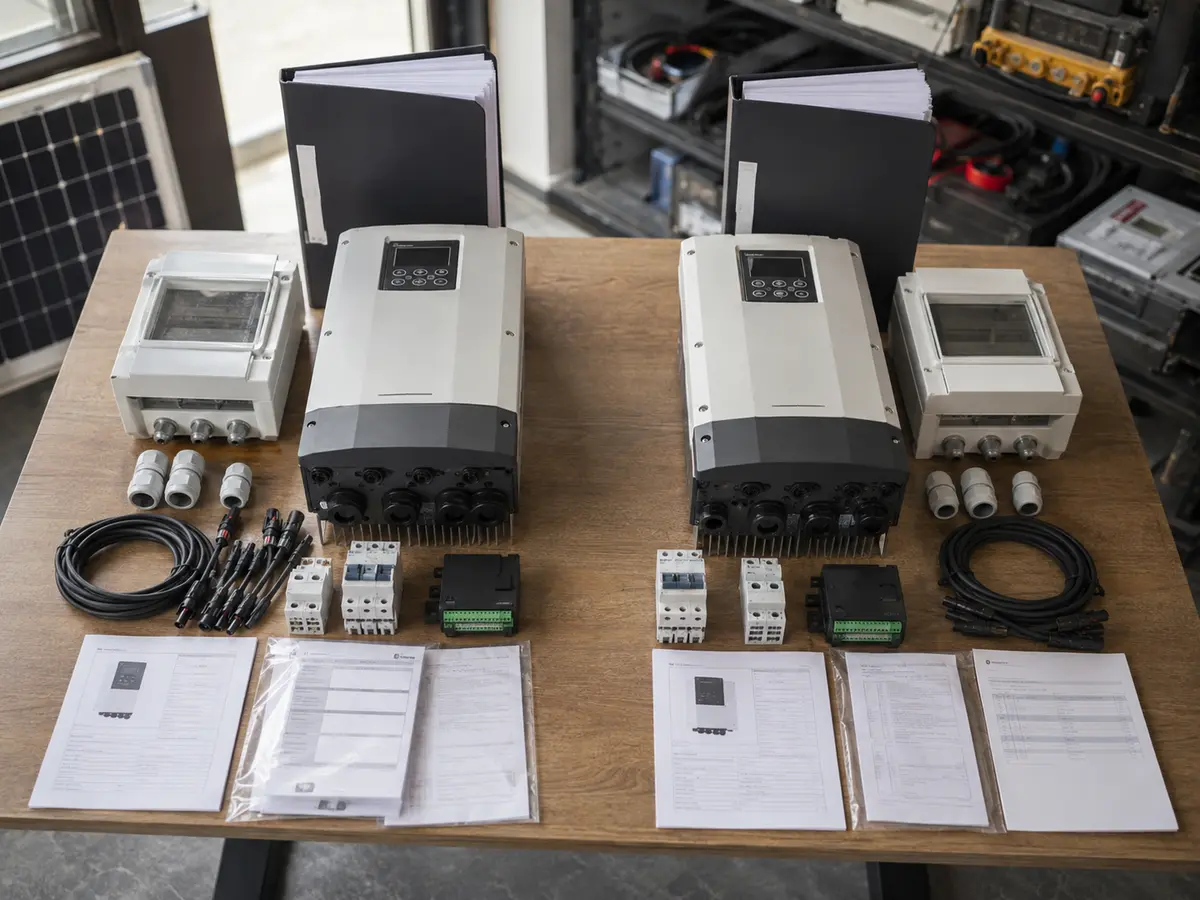
Imagine that both suppliers quote a “7.5 kW solar pump inverter.” Supplier A shows a lower unit price. Its offer names a 380 V IP20 unit, standard packing, PV-only operation, and no communication option. Supplier B offers a 380 V IP65 version with an AC-backup arrangement, remote communication module, branded nameplate, local-language manual, spare keypad, and export packing.
It would be unfair to call Supplier B expensive before stripping those differences out. It would be equally unfair to call Supplier A cheap if the outdoor project needs everything missing from its scope. Normalize the model and inclusions first. Then ask each supplier for the same configuration.
| Comparison line | Quotation A | Quotation B | Action before comparing price |
|---|---|---|---|
| Motor rating | 7.5 kW stated | 7.5 kW stated | Confirm pump voltage, rated current, and derating basis |
| Enclosure | IP20 | IP65 | Choose the enclosure required by the actual installation |
| Power sources | PV only | PV plus AC backup | Define the required architecture and switching scope |
| Communication | Not included | Remote module included | Confirm protocol, hardware, platform, and service terms |
| Branding and manual | Standard | Customized | Price the same artwork and document scope |
| Spares and packing | Standard packing | Spare keypad and export packing | Add the same spare and packing list to both offers |
| Trade term | EXW factory | FOB named port | Recalculate seller-side and logistics costs to one basis |
This example deliberately uses no dollar values. The lesson is the scope, not a fabricated market rate. Once both offers describe the same model conditions, options, documents, packing, and trade term, the remaining price difference becomes worth discussing.
What to send for an order-ready price
Start with the pump and motor plate. Include voltage, phase, rated current, power, frequency, speed, head, flow, operating hours, and any pump curve. Add the water source, well depth, tank or delivery height, pipe distance, and known operating problems. The inverter price cannot be separated from the model it must safely run.
For the solar array, send the module datasheet and the proposed string arrangement. Include Voc, Vmp, Isc, Imp, temperature coefficient, module quantity, and the lowest expected temperature. State whether the system uses solar only or also needs grid or generator backup.
Then describe the site: ambient temperature, altitude, rain, dust, humidity, direct sun, cabinet or wall mounting, motor-cable length, and available maintenance access. List float switches, probes, pressure or flow signals, remote monitoring, communication, and external controls.
Finally, define the order itself. Quantity, destination, required documents, branding, label and manual languages, accessories, spare parts, inspection, warranty expectation, packing, target date, Incoterm, named place, and payment terms should all appear in the same RFQ.
Solar pump inverter price inquiry checklist
- Pump and motor nameplate photographs plus full model
- Voltage, phase, rated current, power, head, flow, and pump curve
- PV module datasheet, string plan, and lowest site temperature
- Required MPPT range and maximum DC-voltage check
- Ambient temperature, altitude, enclosure, sun, dust, rain, and cable length
- PV-only or AC-backup architecture and switching requirements
- Dry-run, tank-level, pressure, flow, communication, and monitoring functions
- Exact quantity, standard or OEM branding, manual language, and packing
- Certificates, reports, batch records, inspection, warranty, and spare parts
- Destination, Incoterm, named place, currency, payment terms, and delivery target
UFELE Electric can review this file and return an exact model and quotation scope. Send the details through the contact page. If something important is missing, we would rather mark it openly than hide the assumption inside a price that will not survive technical approval.
Frequently asked questions
How much does a solar pump inverter cost?
The price depends on voltage class, output current, power frame, PV-input limits, IP rating, functions, options, documents, OEM scope, quantity, warranty, packing, and trade term. Request an exact-model quotation rather than relying on a universal kW price.
Why are two solar pump inverter prices different for the same kW?
The units may have different continuous current, voltage, MPPT range, enclosure, backup functions, communication hardware, testing, certificates, accessories, branding, packing, or delivery terms.
Is an IP65 solar pump inverter always worth the higher price?
It is worthwhile when the site needs that enclosure protection and the complete installation meets the manufacturer’s mounting and cooling rules. An IP20 unit inside a suitable cabinet may be the better choice for another project.
Does a larger order always receive a lower unit price?
Larger quantities can spread printing, setup, purchasing, and document costs across more units, but the result depends on model mix, customization, materials, production timing, and commercial terms.
Are certificates included in the inverter price?
Existing standard-model documents may be included, while new market-specific testing, private-label review, translations, or special reports may add cost. Confirm the exact deliverables in writing.
What information gives the most accurate price?
Send the pump plate and duty, PV module and string data, site conditions, enclosure, controls, backup requirement, quantity, destination, document and OEM needs, packing, Incoterm, and delivery target.