Solar Pumping Guides
A solar pumping project begins with water demand, not with an inverter model. The required daily volume, total dynamic head, borehole condition, pump curve, seasonal sunlight, and available installation space all affect the final system.
This collection explains how those factors work together. The guides cover pump selection, inverter sizing, PV array configuration, voltage limits, cable planning, dry-run protection, tank-level control, and system commissioning. We also discuss the practical questions that appear after installation: weak flow in the morning, unstable operation under passing clouds, excessive starting current, sensor faults, and poor output during part of the year.
These articles are intended for solar contractors, water project planners, pump distributors, agricultural users, and buyers preparing a complete request for quotation. The aim is to help you describe the job accurately and identify problems before equipment reaches the site.
Review our solar pump inverter options when you are ready to compare drive ratings and functions. The solar pumping system guide explains how the pump, PV array, inverter, protection devices, sensors, and water storage work as one system. You can also explore related solar energy equipment for protection and installation needs.

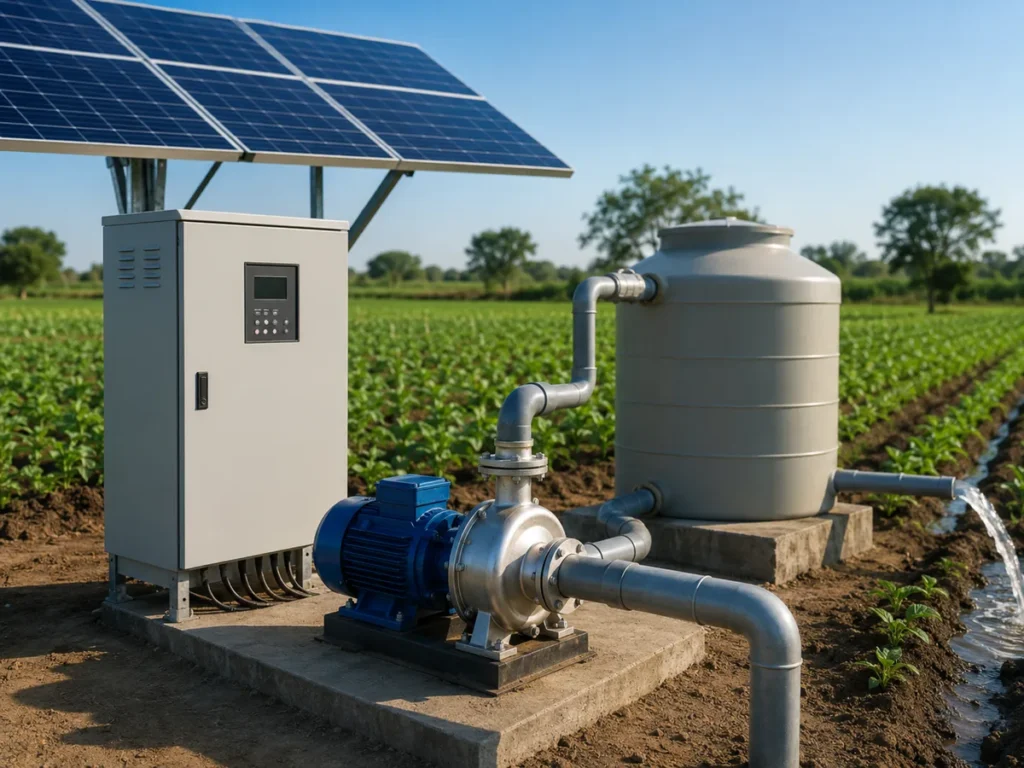
Solar Water Pump for Irrigation: How to Plan the Complete System
A field rarely gives us tidy catalogue inputs. It gives us a crop that cannot wait, a water level that…How to Evaluate Solar Pump Inverter Manufacturers
A low quotation looks convincing right up until someone asks the supplier to match it against real numbers — pump…Solar Panel Sizing for Water Pumps: Voltage, Power, and String Design
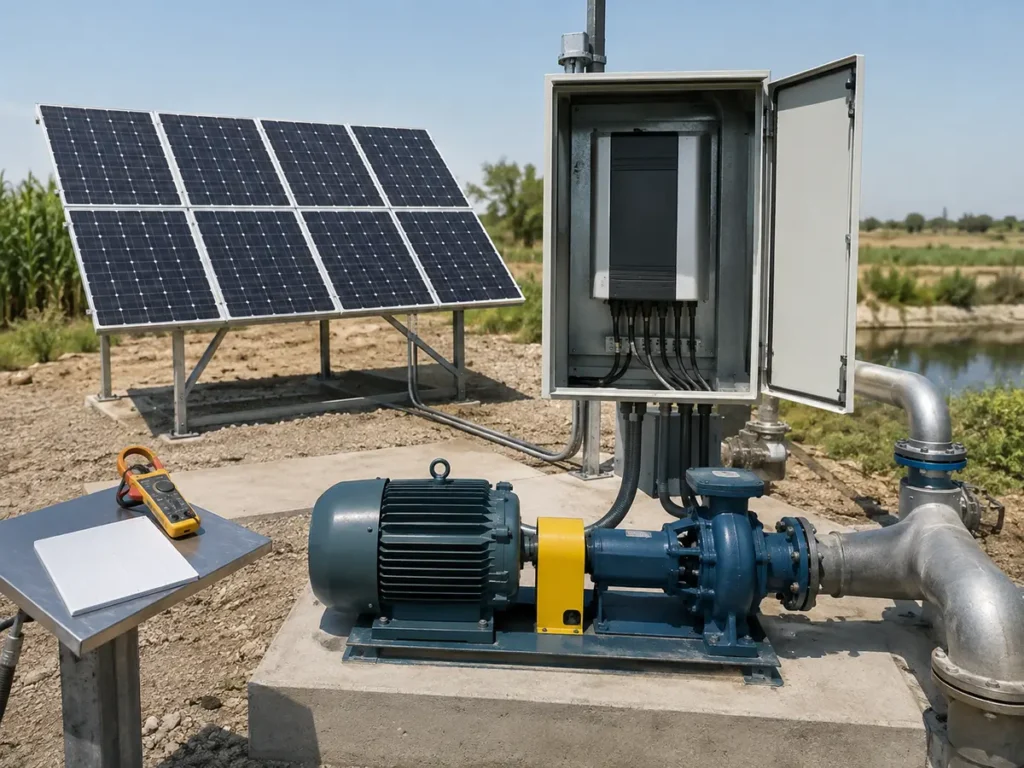
A panel count can look convincing in a quotation and still be wrong at the first cold start or hot…Solar Pumping System Components: A Complete System Guide
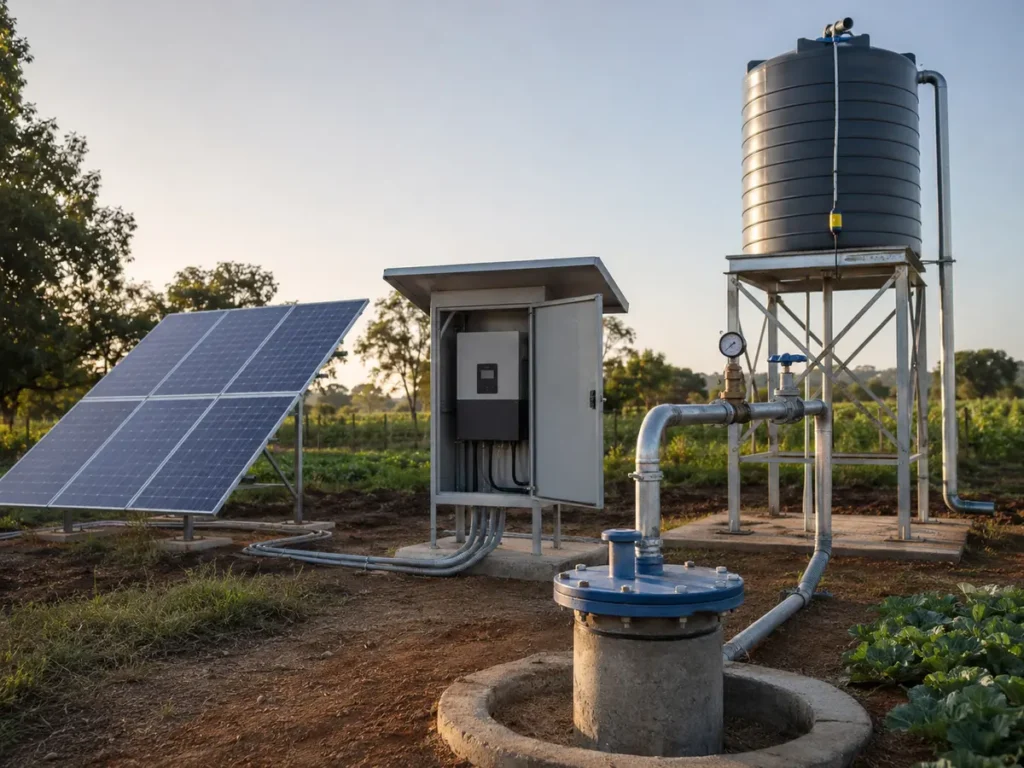
At first glance, a solar pump enquiry with panels, an inverter, and a pump seems almost complete. We understand why…